
Humanity’s fascination with the cosmos is as old as our ability to write and leave records of our thoughts behind for newer generations. Long before the invention of the telescope, ancient civilizations gazed at the night sky, interpreting the movement of celestial bodies through the lens of myth, religion, and prophecy. Over the centuries, our understanding of space has changed drastically, shifting from the geocentric belief that Earth sat at the center of all things to the realization that we inhabit a small rocky outpost in an unfathomably large universe. This realization did not diminish our interest in the universe. On the contrary, as science began to map the stars and calculate the distances between galaxies, the void became a frontier to be explored.
Space travel has been a cornerstone of the science fiction genre since its earliest works. The genre utilizes the vastness of the universe to explore whether there’s life out there or if we are alone in the cosmos, forcing characters and audiences alike to confront the terrifying and awe-inspiring scale of reality. These stories often serve as an examination of how humanity can escape the constraints of a single planet, testing the limits of our technology and psychological endurance in the face of absolute isolation. Unsurprisingly, the medium of film embraced these themes almost immediately upon its inception. Georges Méliès’ short film A Trip to the Moon established the visual archetypes for space travel over a century ago, proving that our cinematic imagination frequently outpaces our physical reach. In the decades since, the astronaut has become a cinematic proxy for the human spirit, representing the intersection of individual bravery and collective scientific ambition.
By prioritizing the rigorous scientific methodology required to establish extraterrestrial communication, Contact distinguishes itself as a unique entry within sci-fi’s astronaut subgenre. The narrative centers on Ellie Arroway (Jodie Foster), an astronomer whose pursuit of a mysterious signal from the Vega star system triggers a profound global conflict between scientific discovery and institutionalized belief. Although the majority of Contact‘s runtime explores the earthly consequences of this first contact, the eventual transition into a space voyage forces a confrontation with the metaphysical boundaries of time and memory. This emphasis on ideological friction allows the film to examine the human cost of progress, positioning the discovery of alien intelligence as a catalyst for a total reevaluation of terrestrial identity. Furthermore, Contact‘s commitment to astrophysical realism ensures that even the most surreal sequences possess a tangible weight.
6) Solaris

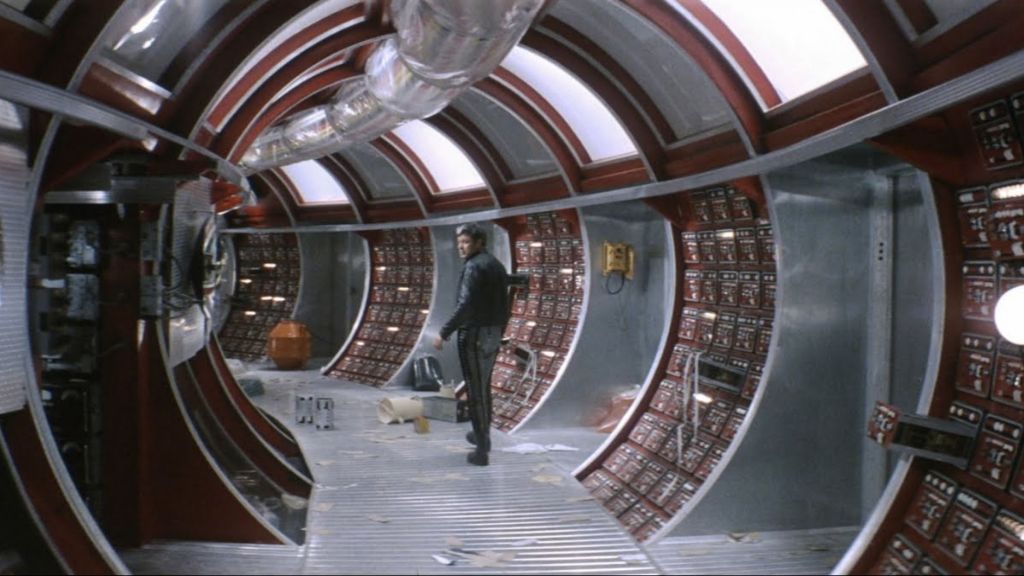
The 1972 adaptation of Solaris serves as a hauntingly beautiful counterpoint to the more optimistic tropes of Western science fiction. The film follows psychologist Kris Kelvin (Donatas Banionis) as he travels to a space station orbiting a sentient oceanic planet to investigate the declining mental health of the remaining crew. Rather than focusing on the mechanics of flight or the wonders of technology, Solaris examines the astronauts’ subconsciousness as the planet begins to manifest “visitors” from the crew’s past. As a result, the film’s atmospheric pacing and philosophical density of the narrative elevate it into a dark meditation on the limitations of human communication and the impossibility of truly understanding the alien. On top of that, even decades after its release, Solaris‘s visual of the intelligent ocean remains a pinnacle of practical effect design, evoking a sense of cosmic dread.
5) Moon
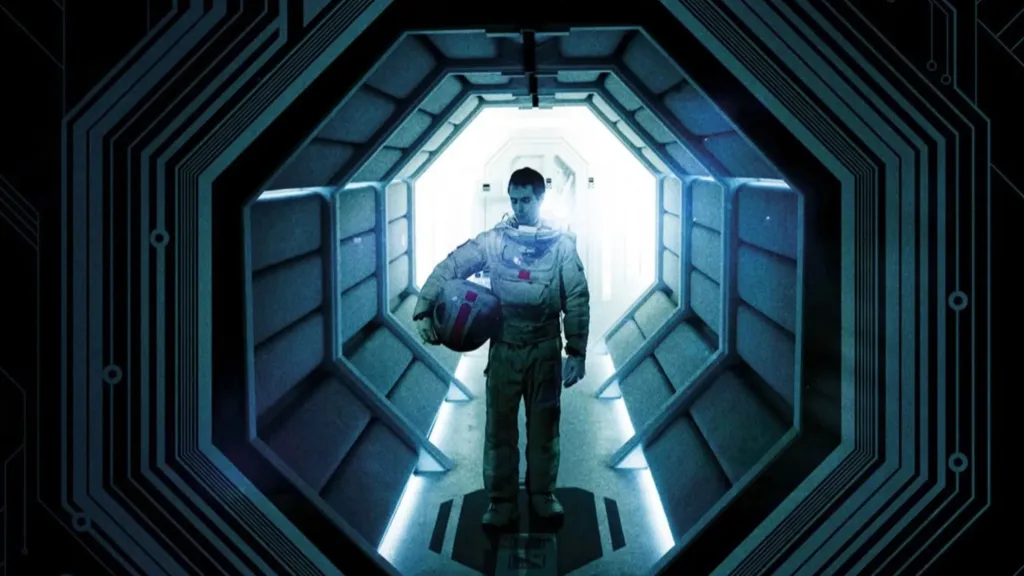
Duncan Jones delivered a claustrophobic masterpiece with Moon, a film that relies almost entirely on the solitary performance of a single actor to convey the physical and psychological toll of lunar isolation. In the movie, astronaut Sam Bell (Sam Rockwell) is nearing the end of a three-year mining contract on the far side of the Moon when a series of strange occurrences forces him to question his identity and the ethics of his corporate employers. As the narrative reveals the dark reality behind his presence on the base, the film shifts from a survival story into a poignant examination of individual autonomy and corporate exploitation. The relationship between Sam and the robotic assistant GERTY (voiced by Kevin Spacey) adds unexpected warmth to a world otherwise defined by cold efficiency, making the eventual revelation of Moon‘s secrets even more devastating.
4) The Martian

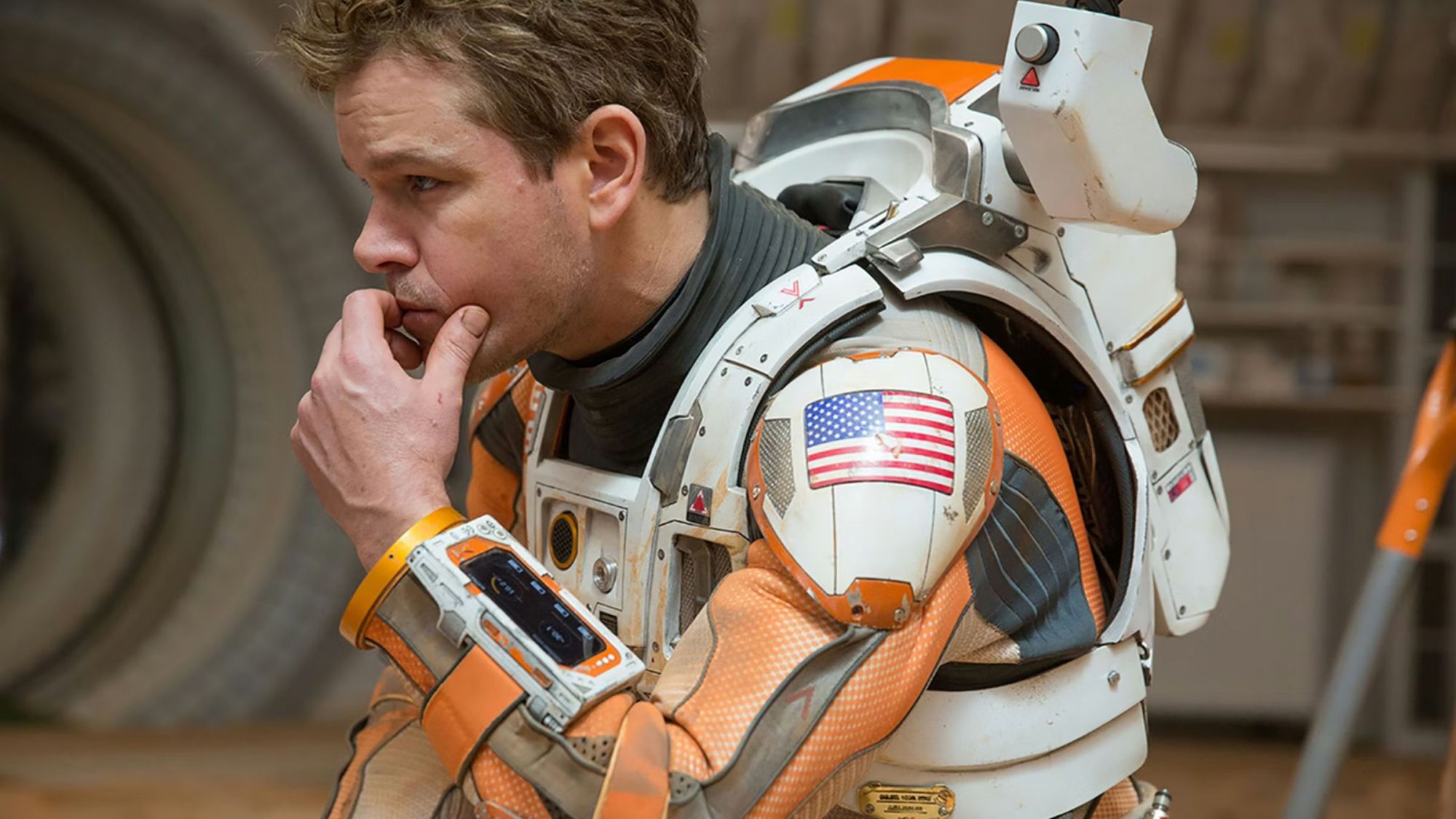
The Martian revitalized the astronaut genre by celebrating the ingenuity and resilience required to survive in an environment that is actively hostile to human life. Directed by Ridley Scott, the film maintains a remarkably optimistic tone, emphasizing the power of logic and the scientific method over existential despair. The premise of The Martian is quite simple. After being accidentally left behind on the Red Planet, Mark Watney (Matt Damon) must utilize his expertise as a botanist to prolong his life while NASA works on a rescue mission millions of miles away. Still, Scott grounds its high-stakes drama in the actual physics of Martian survival, making the act of problem-solving feel like the ultimate heroic feat. In addition, the ensemble cast back on Earth provides a sense of global unity, showing how the survival of a single person can galvanize the entire species.
3) Interstellar
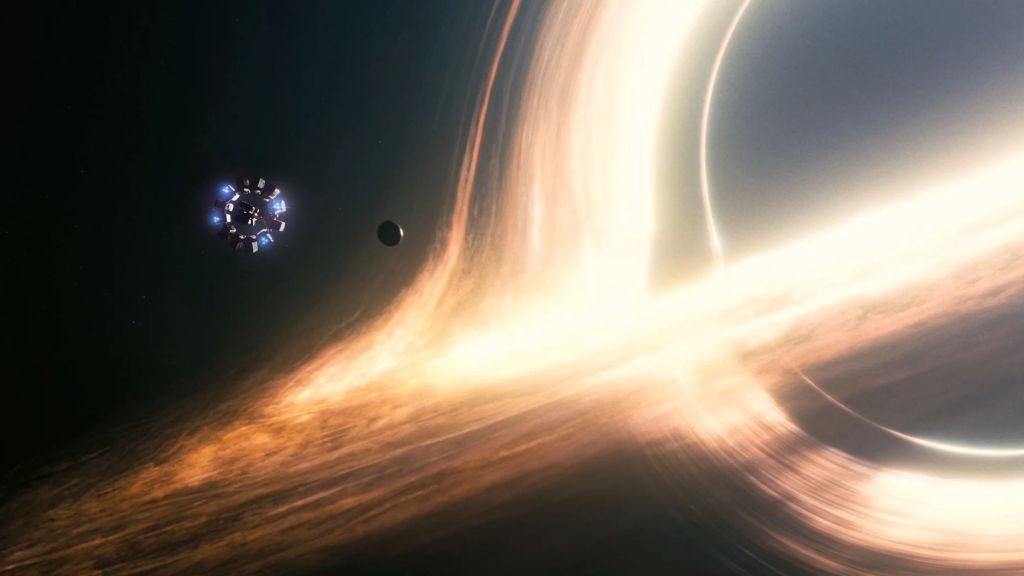
Christopher Nolan utilized Interstellar to weave together a narrative that is both an ambitious exploration of theoretical physics and a deeply grounded family drama. Following a pilot named Cooper (Matthew McConaughey) on a desperate mission through a wormhole to find a habitable home for a dying humanity, the film presents breathtaking visualizations of black holes and time dilation that were developed through actual scientific research. Beyond the cosmic scale of the adventure, the heart of the story remains the bond between a father and daughter, arguing that love can serve as a bridge across dimensions and time itself. This intersection of complex astrophysical concepts and raw human sentimentality ensures that the production remains a landmark of modern science fiction.
2) Alien
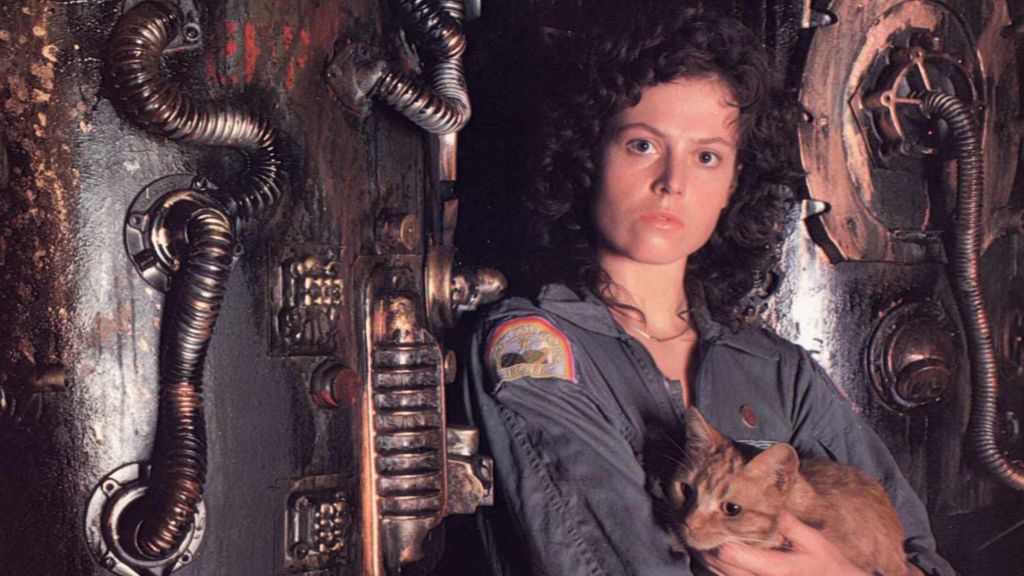
Establishing the “used future” aesthetic that would influence a generation of science fiction, Alien strips away the glamor of space travel to reveal a grimy, industrial landscape. Ridley Scott’s meticulous production design creates a sense of technological claustrophobia, where the ship itself becomes a metallic tomb that offers no refuge from the creature lurking in the shadows. Furthermore, the crew of the Nostromo, led by the indomitable Ellen Ripley (Sigourney Weaver), is presented as blue-collar laborers rather than intrepid explorers, making their encounter with a perfect predatory organism feel remarkably grounded. This emphasis on the vulnerability of the human body against an indifferent universe allows the film to function as both a terrifying horror story and a definitive astronaut drama. The psychological tension of the hunt remains unparalleled, as the narrative slowly isolates Ripley from her companions, forcing her to rely on raw instinct to survive.
1) 2001: A Space Odyssey
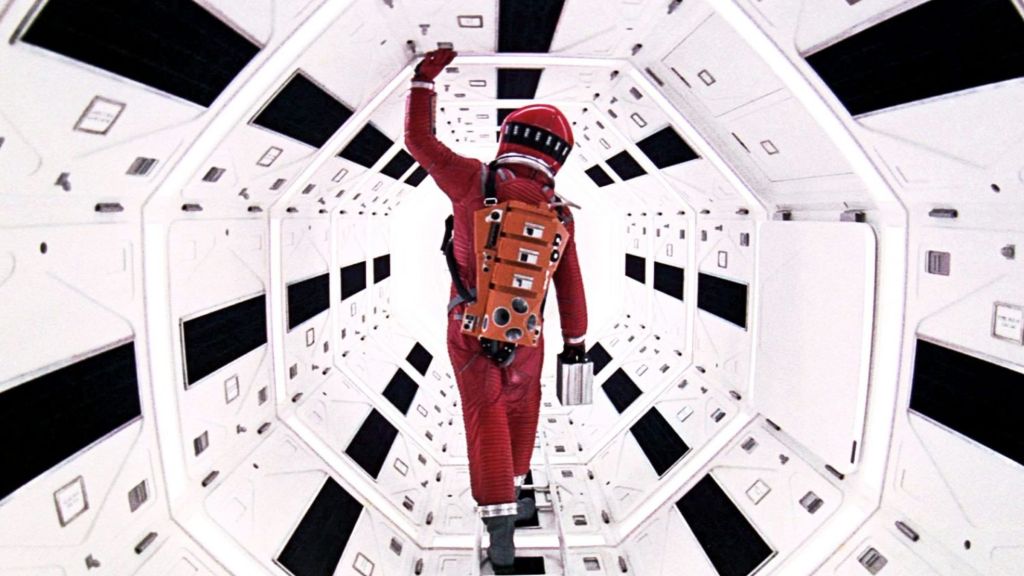
Standing at the absolute pinnacle of the genre, 2001: A Space Odyssey is the foundational masterpiece that defined the visual and philosophical language of the astronaut in cinema. Directed by Stanley Kubrick, the film chronicles the evolution of intelligence from prehistoric tools to a transcendent voyage toward the stars. Kubrick’s decision to eschew traditional dialogue in favor of classical music and silent sequences allows the audience to experience the awe and terror of the void with singular intensity. In addition, the practical effects and rotating sets remain more convincing than most modern digital offerings, making deep space exploration feel surprisingly realistic. While the movie’s refusal to offer easy answers makes it a controversial entry in the sci-fi canon, 2001: A Space Odyssey remains an essential piece of art that continues to challenge our understanding of our place in the universe.
Which astronaut-led sci-fi journey do you think best captures the terrifying beauty of the final frontier? Leave a comment below and join the conversation now in the ComicBook Forum!
Source link
-

-

-

-
-


