
Some movies follow trends, while the truly great films create them. This is the case in any genre, but the versatility of horror storytelling makes it more apparent when a popular movie inspires a slew of like-minded features. A new style of horror or a fresh take on a creature can dictate the coming years of macabre entertainment.
Ranging from supernatural frights to masked killers with the ability to be in multiple places at once, the following horror movie masterpieces left a permanent impact on the genre. Upon their premiere, they weren’t just viewed as fantastic horror movies, but also as blueprints for future creators to follow.
8
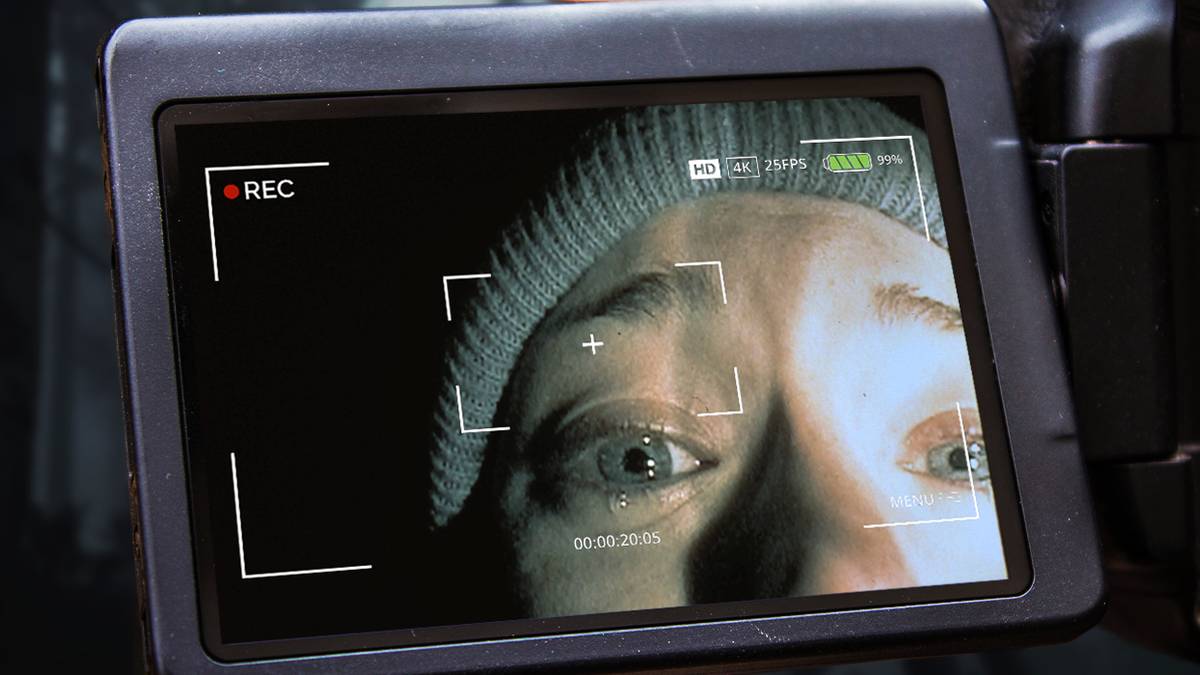
‘The Blair Witch Project’ (1999)
Admittedly, calling The Blair Witch Project a masterpiece is being generous, but the influence of the cautionary tale about bringing a backup map cannot be ignored. The Blair Witch Project was not the first movie to use found footage as a storytelling device, but after the film pulled in over $200 million at the box office, studios were quick to give unknown actors a camcorder and enough food for two days.
Without The Blair Witch Project, it’s unlikely that Paranormal Activity would have been picked up for wide release distribution, or if the fantastic Rec would have been made at all. Although The Blair Witch Project owed its success to a brilliant marketing campaign, leaving audiences to question if what they were watching was real, a lesson was learned. Gory kills that required large budgets weren’t necessary; the setting just needed to be realistic enough to make audiences temporarily forget that large studios don’t release snuff films.
7
‘Them!’ (1954)


Giant ants search for the world’s biggest picnic to ruin in the creature feature Them! When mutated, gargantuan ants are discovered in the New Mexico desert, a group of scientists and trained military personnel scramble to contain the threat and not die in the process. Unfortunately, the bugs are reproducing faster than the human’s ability to kill them, which could mean a new dominant species is in line to take over the Earth.
For its time, Them! featured jaw-dropping special effects that made audiences squirm in their seats at the sight of the giant ants closing in on their human prey. Playing on the fears of atomic power, Them! was a commercial and critical hit, receiving an Academy Award nomination for its visual effects. Studios looking to cash in on the new craze had an easy formula to follow, which was to look at small things on the ground, make them giant, and have them chase screaming people on a big screen. Before long, moviegoers could buy a ticket to see films like Tarantula, starring, you guessed it, a big spider.
6
‘Scream’ (1996)


As a commentary on slashers, Scream didn’t make the blueprint for the sub-genre, but it redesigned how they would look moving forward. The Wes Craven film about a group of teens stalked by a scary movie-obsessed killer came at a time when horror movies were radioactive properties for studios, with every studio giving the genre a wide berth. However, Scream offered audiences self-aware humor and a compelling whodunit instead of a high body count of nameless victims.
Audiences assumed they had seen everything slashers had to offer, and they weren’t exactly wrong, thanks to a high churn rate of low-budget features in the ’80s. Scream served as the satirical final nail in the coffin of slashers, but a cast of talented newcomers and a strong script by Kevin Williamson struck a chord. In the wake of earning more than $100 million domestically, movies like I Know What You Did Last Summer and Urban Legend were the first in a long line of imitators to follow Scream’s winning formula.
5
‘Alien’ (1979)
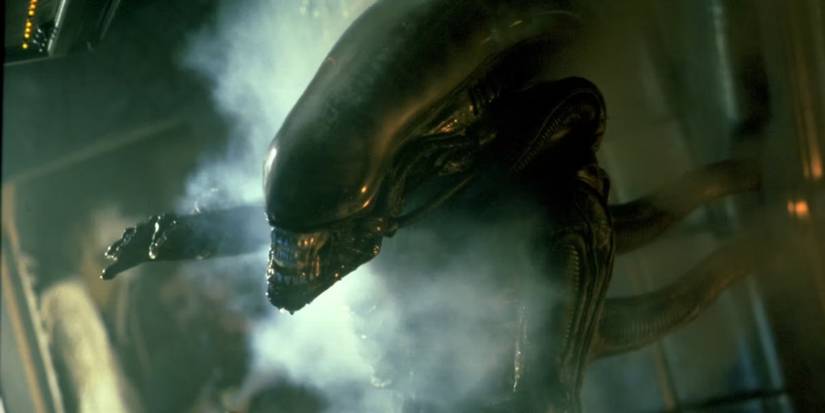
Horror and science fiction were expertly blended in Ridley Scott’s influential scarefest Alien. The film follows the unfortunate decision of a deep-space crew who divert course to check out a distress signal on their way back to Earth. When one of their own is attacked by an unusual creature, they unwittingly bring a monstrous stowaway on their ship that will hunt them without mercy.
Even though Alien features one of the scariest monsters in all of cinema, it’s the claustrophobic, psychological horror that elevated the film into a story worthy of emulation. Despite the space setting and horrific creature, the human characters established a relatable connection for the audience that future films made sure to take note of. Alien’s DNA can be found in movies like Event Horizon, The Thing, and the film starring the Xenomorphs’ future enemy, Predator.
4
‘The Exorcist’ (1973)
The Exorcist is one of the most terrifying movies ever made, still boasting the ability to scar moviegoers with its unsettling visuals. Linda Blair became an iconic face of horror as Regan MacNeil, a young girl who is possessed by a powerful demon. Unsure of who to turn to, Regan’s mother, Chris (Ellen Burstyn), receives help from brave Catholic priests who attempt a dangerous exorcism to save the soul of the girl.
The Exorcist wasn’t the first movie to feature an exorcism, but the film’s runaway success, which brought in $430 million worldwide and an Academy Award nomination for Best Picture, would inspire copycats. The realistic approach to horror that relied less on jump scares and more on creating an atmosphere of dread through the assistance of religious taboos would be used in later films like The Omen in 1976. Major modern franchises like The Conjuring follow the same spiritual path with a more commercially-minded approach, giving the audience earnest heroes who stand against all manner of demonic evil.
3
‘The Haunting’ (1963)

In the 1963 masterwork The Haunting, a group of strangers comes to regret searching for proof of paranormal activity. The Hill House estate is rumored to be cursed, trapping the souls who died on its grounds, which is precisely why Dr. John Markway (Richard Johnson) wants to investigate its claims. To verify the existence of ghosts, Markway organizes a study of the house by inviting a select group of research assistants to stay on the property with him. For assistant Eleanor Lance (Julie Harris), a woman harboring intense guilt about her mother’s passing, the house may be too powerful for her to bear.
An adaptation of Shirley Jackson’s classic novel The Haunting of Hill House, The Haunting influence is felt in every piece of fiction involving a cursed home. Setting aside remakes like the special effects-heavy The Haunting in 1999 and Mike Flanagan’s brilliant reimagining of the story in the Netflix limited-series The Haunting of Hill House, some of the most famous works in horror owe a debt to Hill House. Movies like The Amityville Horror and The Shining take the concept in different directions, but the notion of the house itself as the evil to contend with traces back to The Haunting’s use of psychological manipulation.
2
‘Halloween’ (1978)

If John Carpenter had never made another movie after Halloween, he would still be one of the most important names in horror. The film’s story is simple and perfect, following the return of killer Michael Myers (Nick Castle) to his hometown of Haddonfield, Illinois, after he escapes from a psychiatric hospital. Donning a mask and finding the closest sharp object, he carves a path through inspecting victims on Halloween until he encounters the most resilient babysitter that ever was in Laurie Strode (Jamie Lee Curtis).
When looking at the origin of the modern slasher, Halloween and the 1974 Black Christmas are the two films that fundamentally influenced the structure everyone is familiar with. Whereas we don’t see the killer in Black Christmas, Halloween gives us a boogeyman in Michael Myers that the sub-genre predominantly tried to replicate in one form or another moving forward. A series of kills focused on teenage victims, a silent killer, and a final girl survivor who faces off with the villain at the end are all horror hallmarks that Halloween popularized. With these primary ingredients, a horror movie could be successful without a large budget, guaranteeing an avalanche of similar films would soon follow.
1
‘Night of the Living Dead’ (1968)

One of the most game-changing horror movies to ever come out is George A. Romero’s Night of the Living Dead. When the dead become inexplicably reanimated and quite hungry, a group of strangers barricades themselves into a remote farmhouse. Without any news of a safe place to go or reinforcements, the group will have to rely on one another to survive a nightmarish predicament.
Some movies provide a fresh spin on an old idea, but Night of the Living Dead gave birth to one of the most lucrative sub-genres in horror. Zombie fiction before Night of the Living Dead was rooted in voodoo stories that would feature forms of mind-control, but the shambling zombie craving a mouthful of brain came from Romero’s black-and-white masterpiece. Shows like The Walking Dead and comedies such as the cult-classic Shaun of the Dead owe their existence to the indie feature made for roughly $114,000.
Source link
-

-

-

-
-


