Some directors make a glorious career, others make a glorious moment. We crave the former. We marvel over the Hitchcocks and Spielbergs. We like it how they keep shooting banger after banger.
And yet, we can’t brush off the mystical allure of those single glorious moment makers. They drop a nuclear masterpiece and vanish. Or worse, they don’t vanish, stay in the game, but keep producing work that never quite recaptures the initial magic. It’s the cinematic equivalent of a band that gives one hit that stays with the audience forever, and the rest? The follow-up tracks stay on Spotify just so you can skip them. Take Macarena from Los del Río, for instance.
Before we get to the list, I want to get one thing off the docket. Orson Welles. Some of you might expect him to show up on this list. But I believe that expectation is the product of a lazy myth. He doesn’t belong here. Not by a long shot. Yes, Citizen Kane (1941) is the big boss, but Welles didn’t create one shining moment and disappeared. His The Magnificent Ambersons (1942), Touch of Evil (1958), The Trial (1962), and Chimes at Midnight (1965) are all critically established works—even in their mutilated studio-cut forms. His reputation doesn’t rest on one single movie. Citizen Kane might be the face of his identity, but his reputation is held high by many other factors: reinventing narrative structure, defining deep focus cinematography, being a radical editor and sound designer, and fighting studios like it was a blood sport. All this is a legit body of work, not a fluke. He wasn’t exhausted or creatively blocked; he was underfunded and, by and large, sabotaged by studios. If there is an article on tragic directorial careers, I will include him. This is not his territory.
Having said that, now it’s time to see who these magic one-film wonders are.
Why and How Breakout Films Freeze a Director’s Reputation
Half of the listed directors here have directed literally just one movie in their lifetime. But that’s not the primary focus of this article. This article is about those whose reputation as a filmmaker is inextricably tied to only one single title. Why does that happen? When they can make one good movie, what stops them from making another?
This happens when their one good film feels complete in itself. The idea, the mood and tone, the moment, and the director’s creative voice align so perfectly that repetition becomes impossible. Their later work (if they attempt) may be competent, even ambitious, but at the same time, they can’t manage to disengage from the filmmaking spirit of their dominant movie. This translates to their follow-up works becoming variations, instead of progress.
But this is the personal factor. There is also the industry side to it. A breakout success creates unreasonable expectations. Budgets get bigger, but so does the scrutiny. Everyone wants in on the success 2.0, and suddenly it becomes group work. Creative freedom shrinks. How the director deals with this situation depends on what kind of person he/she is. Some respond by doubling down, some drift away. The success (or the lack thereof) has an impact on the director, which passes on the same vibe onto the next project—again, if it happens. Either way, the original film keeps winning the comparison battle, and the director loses every rematch.
The Directors Defined by One Film
1. Charles Laughton (The Night of the Hunter, 1955)
Laughton was a powerhouse actor. He even had the Best Actor Oscar in his pocket. His creative force drove him to make this movie. It was a Southern Gothic fairytale fused with religious menace. The visuals are intriguing even by today’s standards. It gave us Robert Mitchum’s iconic “LOVE” and “HATE” knuckle tattoos. But the 50s’ critics didn’t get it. It was branded as weird and unnatural. It failed on release, but in retrospect, the movie aged very well. It is now considered a cult classic and one of the most visually stunning movies ever made. But the original critique and backlash crushed Laughton, and he never made another movie.
2. Herk Harvey (Carnival of Souls, 1962)
![Carnival of Souls (1962) ORIGINAL TRAILER [HD 1080p]](https://i.ytimg.com/vi/tqMEbW7Pe2I/hqdefault.jpg)
Harvey was an industrial/corporate filmmaker who made educational films. He decided to make a feature film on a shoestring budget, around $30-33,0000, and was shot primarily on weekends using guerrilla tactics. The resultant film had stark visuals, a dream logic that created a ghostly atmosphere that filmmakers, such as George Romero and David Lynch, dug into for inspiration. Sadly, Harvey chose to stick with the safe option and returned to educational films. So his name remains inseparable from this one.
3. Leonard Kastle (The Honeymoon Killers, 1970)

Here is a fun trivia: Martin Scorsese was first hired to direct this film, but was fired because he worked too slowly. Later, Kastle, an opera composer with zero filmmaking experience, was hired to direct. His first choice was to strip away all the stylistic elements and set a stark, gritty tone for the film. The finished work was marked by blunt violence, lack of moral comfort, and his refusal to soften the characters. As a result, its banality created a deeply unsettling feeling. Kastle didn’t dabble in direction again and left behind this gem as his only shining directorial moment.
4. Barbara Loden (Wanda, 1970)

Primarily an actress, Loden decided to direct a film. Perhaps she was inspired by who she was married to at the time, Elia Kazan. And she didn’t disappoint. The movie was the portrait of a woman drifting through life in the Rust Belt. It was so raw that it almost felt like a documentary. It was the time when Hollywood produced polished stories, but Wanda’s grainy, unglamorous take on female alienation felt harsh, intense, and authentically realistic. Again, Kazan-influence can’t be discarded. In the coming years, she struggled to get funding, her marriage deteriorated, and she battled breast cancer. She passed away prematurely and left us with Wanda, her only directorial legacy.
5. Michael Cimino (The Deer Hunter, 1978)

Cimino had made one more movie before The Deer Hunter, but it was this one where he truly arrived, he delivered, and he conquered. The film combined intimacy and scale with uncommon confidence. It swept five Oscars, including Best Picture and Best Director. It was hailed as the definitive Vietnam War movie. Hollywood enthusiastically gave him everything he needed to continue the streak. And then he made Heaven’s Gate (1980), a movie that was a phenomenal critical and commercial dud. It was such a big flop that it bankrupted United Artists. From here on, it was a downward spiral. This case is particularly sad. At one moment, he had everything; the next, everything was gone.
6. Tony Kaye (American History X, 1998)

This was Kaye’s debut feature, and it was great, to say the least. It had confrontational, unsettling imagery delivered with controlled intensity. It left a lasting mark. But things soured on the editing table. He initiated an unprecedented conflict with the studio and Edward Norton over the final cut, and it consumed him. “Consumed him” is an understatement; he literally spent $100,000 of his own money on advertisements attacking the studio and Norton. He tried to have his name removed from the credits. After having burned (or nuked) all the possible bridges, he became a walking cautionary tale and didn’t work on another project until 2006. With American History X, Kaye delivered a really good movie (a classic, actually), but he also delivered a massive blow to his own career and ended up being a one-movie wonder.
7. Richard Kelly (Donnie Darko, 2001)
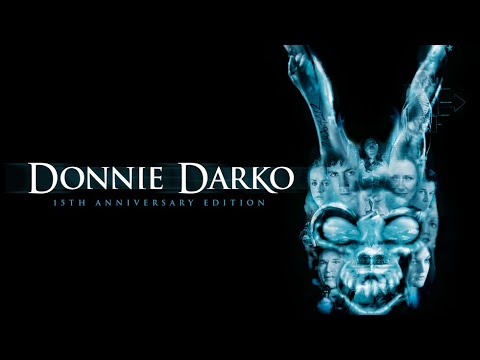
Donnie Darko’s interesting mishmash of teen angst, time loops, and giant rabbits, all wrapped in 80s nostalgia, instantly made it a cult classic. Unfortunately, his follow-up movies, Southland Tales (2006) and The Box (2009), tried to explain too much and ended up being a chaotic jumble that confused the audience as well as the critics. He hasn’t made a movie after that. Technically, he is still active; for years, he has been working on a lot of unproduced projects, writing, developing complex and interconnected stories, and there are plans to adapt Southland Tales into animation. Nothing concrete, though. It would be nice to see him come out of the “one-film-wonder” tag. Fingers crossed.
8. Neil Blomkamp (District 9, 2009)

The refreshing and innovative aspect of District 9 was that it was a sci-fi spectacle with a grounded social commentary. I mean, an allegory about apartheid featuring aliens. A true revelation. It even received four Oscar nominations, including Best Picture and Best Adapted Screenplay. His later films, however, lost that grounding emotional clarity and instead relied heavily on concept and effects. It seemed like he was recycling the same aesthetic without trying to find a strong narrative backing. He is still working, he is still young, so there is scope to expect more. Until then, he might have to stay under the shadow of his only masterpiece.
Source link
-

-

-

-
-