
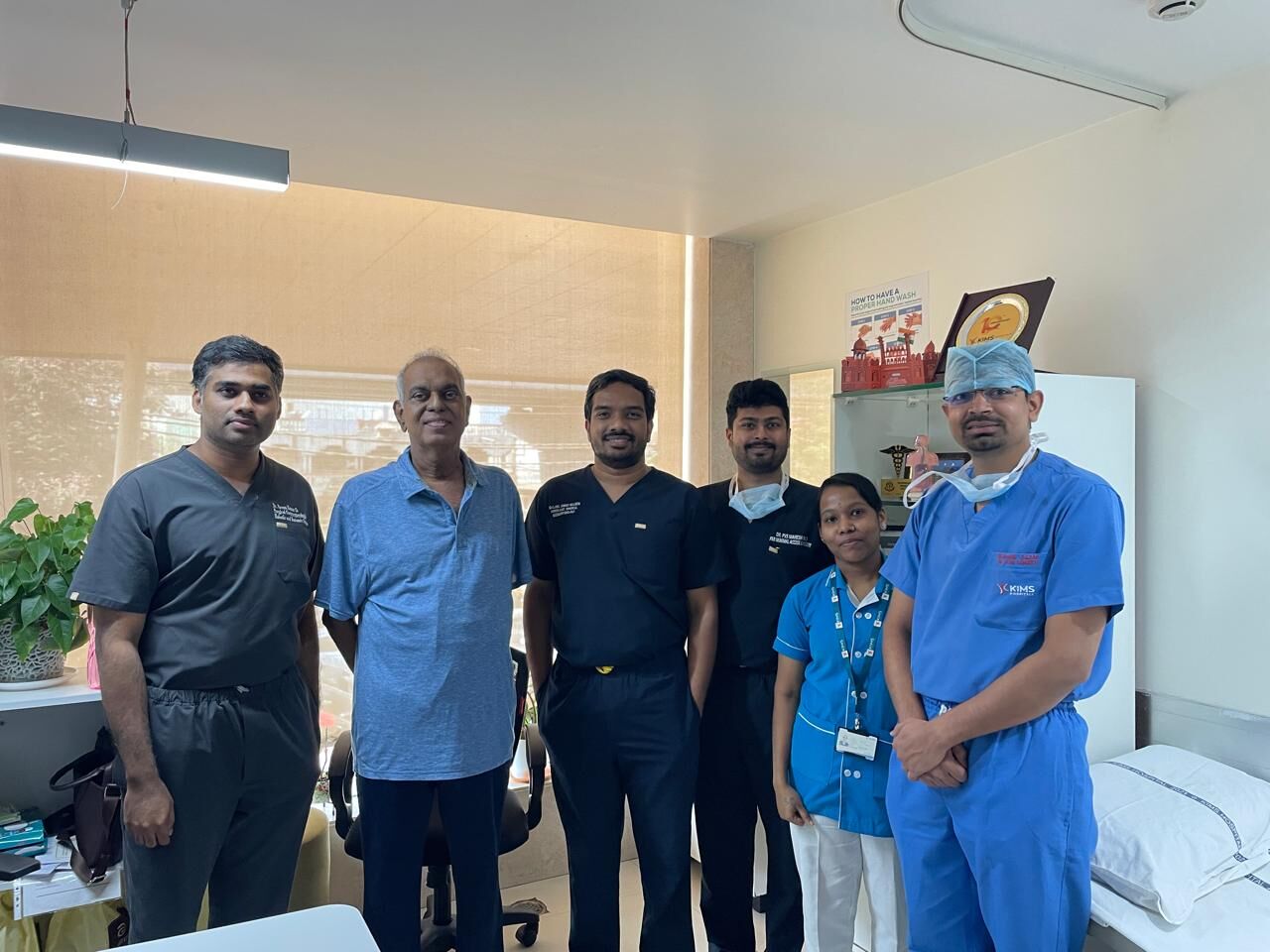
Hyderabad: Surgeons at KIMS Hospitals, Kondapur, have successfully performed a world-first laparoscopic surgery on a patient facing an incredibly rare combination of life-threatening conditions.
The medical team, led by Consultant Surgical Gastroenterologist Dr Naveen Kumar CH, performed a complex ‘keyhole’ procedure on a patient who had previously received a kidney transplant and was subsequently diagnosed with pancreatic cancer.
While similar cases have been treated with traditional ‘open’ surgery, notably at the Mayo Clinic in the US, this is the first time the entire procedure has been completed using minimally invasive laparoscopy.
The ‘perfect storm’ of medical challenges
The patient’s medical history made the surgery a high-stakes gamble. The primary hurdles included:
1. Immune System Risks: Because of the prior kidney transplant, the patient was on three different immunosuppressive drugs. This meant their body had a very limited ability to fight infection, leading to a reported mortality risk of up to 50 per cent for major surgeries.
2. Complex Anatomy: The patient didn’t just have cancer; they also suffered from Polycystic Liver Disease (an enlarged liver with cysts) and a large cyst on the transplanted kidney itself.
3. Surgical Scarring: Having already undergone a bilateral nephrectomy (removal of both original kidneys), the abdomen was filled with scar tissue, making navigation extremely difficult.
How did the breakthrough occur?
The team performed a Laparoscopic Whipple’s surgery (pancreatoduodenectomy), which is widely considered one of the most difficult operations in digestive medicine.
The complexity increased when doctors discovered the cancer had involved the Superior Mesenteric Vein (SMV)—a vital blood vessel supplying the intestines. In a display of technical mastery, the surgeons managed to cut out the affected segment of the vein and repair it (vascular resection) entirely through small incisions, rather than opening the patient’s abdomen fully.
Why is the procedure so rare?
Medical experts point to three reasons why this specific case is a global breakthrough:
Vascular Repair via Keyhole: Very few medical centres worldwide have the skill to perform vascular resections (vein repairs) laparoscopically.
The ‘Transplant Factor’: Operating on a patient whose immune system is intentionally suppressed is a ‘medical tightrope walk’ due to the extreme risk of post-operative death or organ rejection.
Limited Operating Space: With a transplanted kidney and an enlarged, cystic liver taking up space, there was almost no room for the laparoscopic tools to move safely.
“Performing a major pancreatic surgery in a patient on immunosuppressive therapy is extremely risky,” said Dr Naveen Kumar. “This successful surgery highlights the growing capabilities of Hyderabad as a major global medical hub.”
Source link
-
-

-

-

-


