
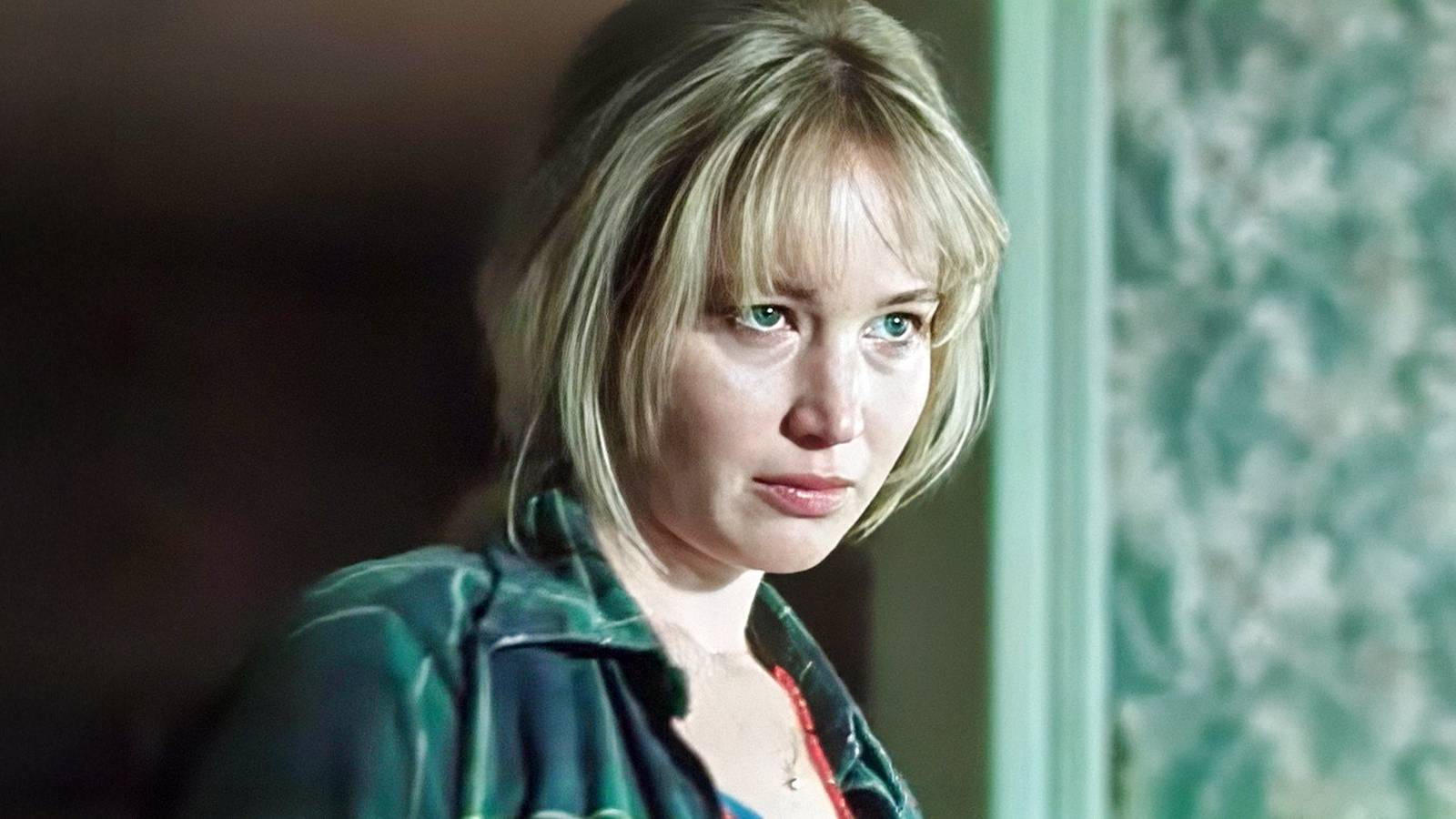
Lynne Ramsay‘s Die My Love, a psychological thriller about motherhood, mental fracture, and the violence of intimacy, was among the most celebrated psychological dramas of the year, and understandably so. Guaranteed to crawl under your skin, and set against suffocating rural Montana isolation that obliterates the myth of domestic peace, the film illustrates the brutal unraveling of Jennifer Lawrence‘s character’s postpartum descent.
It’s no wonder that it’s already cemented itself among Ramsay’s most haunting works. Whether we’re talking about the incredible performances (Lawrence and Pattinson are incredible) or the gripping, descending narrative, Die My Love provides audiences with a visceral kind of viewing experience that doesn’t comfort or explain, but rather confronts, asking audiences to sit inside female angst rather than observe it from a safe distance. If you finished the film craving more stories of this intensity, you’re in the right place. Below are 8 essential films like Die My Love that echo its thematic tones or narrative arcs.
8
‘Blue Valentine’ (2010)
Derek Cianfrance‘s Blue Valentine is a heart-wrenching tale of a marriage across timelines, and if Die My Love has gripped you with its raw dissection of love leaning into toxicity, this 2010 picture is guaranteed to deliver a similar unflinching story of quiet devastation. Starring Ryan Gosling and Michelle Williams in the lead roles, the film follows Dean and Cindy across dual timelines where their initial spark-filled bond dissolves into a present-day grind of resentment.
This indie must-see for romance enthusiasts does a wonderful job capturing every awkward silence and drunken fight, turning everyday life into a high-stakes drama. The parallels to Ramsay’s new film are in how both films chronicle relational splintering with bleakness and intimacy, with domestic routine almost turning into psychological dread. Visually, it’s also quite realistic, with Cianfrance’s desaturated, time-jumping handheld style adding a compelling layer of authenticity.
7
‘Diary of a Mad Housewife’ (1970)


Featuring a similar takedown of the inescapable domestic hell, Diary of a Mad Housewife is unflinching, satirical, and deliciously vengeful. Frank Perry‘s movie stars Carrie Snodgrass in her breakout role as Tina Balser, a chic NYC housewife drowning in her smug attorney husband Jonathan’s (Richard Benjamin) condescension and her batty daughters’ demands. Between a torrid affair with a writer (Frank Langella) and family blowouts, Tina plans her escape from the “perfect wife” role while spilling her rage into a private diary.
Like Die My Love, Diary of a Mad Housewife lasers in on a woman’s troubled psyche — both intellectually stifled, whose identities are eroded by the roles of wife and mother — cracking under challenging circumstances. It’s also got a stylish bite that leaves you smirking throughout while simultaneously keeping the narrative engaging and at times even oddly moving. For audiences who can get behind a good vintage picture, this hidden gem might be worth checking out.
6
‘Persona’ (1966)

Despite a different narrative, Ingmar Bergman‘s black-and-white fever dream might appeal to those fascinated by Die My Love‘s psychological complexity. In this 85-minute mind-bender, Liv Ullmann plays Elisabet, a famous stage actress who suddenly stops speaking in the middle of a performance. She’s then sent into a secluded seaside cottage to recover, with only a chatty young nurse (Bibi Andersson) for company. But what starts as a recovery journey quickly spirals into a power struggle where identities blur and merge.
While the films may not be carbon copies, Die My Love and Persona share profound DNA in their dissection of the female psyche under pressure. Both movies shed light on desperate rejections of societal expectations, with fractured identity being a recurrent topic. There’s also the fact that both films trap two characters in isolation — Grace with her husband, Elisabet with Alma — forcing proximity that breaks the other character and creates a toxic tango.
5
‘Melancholia’ (2011)


Unfolding in two different acts, each offering its own lens on despair, Melancholia is among von Trier‘s most memorable and accomplished works. In the first act, “Justine,” tracks a bride (Kirsten Dunst) whose severe depression dismantles her wedding day with precision. Then comes “Claire,” shifting the narrative to her sister (Charlotte Gainsbourg) as they retreat to a remote country estate, waiting for a rogue planet — with the fitting name of Melancholia — to collide with Earth. The roles flip here: the composed sister frays, while Justine discovers an eerie acceptance of the end.
If you’re looking for films similar to Die My Love, this might very well be worth checking out. In Melancholia, mental health is not just a subplot; it forms the very texture of the collapse. Justine’s depression feels tangible, amplified by the suffocating domestic confinement. Like Ramsay’s film, where Grace is trapped in the farmhouse, the sisters are restricted to a single, isolated state. Both movies explore how their emotional turmoil is interpreted as deviance, often misinterpreted by those around them, particularly male partners who struggle to grasp the depth of their struggles.
4
‘mother!’ (2017)

Also starring Lawrence in another memorable, powerhouse role, mother! follows an unnamed woman laboring to restore a remote, serene home alongside her writer husband (Javier Bardem). Their fragile domestic bliss splinters when uninvited guests arrive, and what begins as a mild intrusion quickly escalates into chaos, where crowds descend, and violence inevitably erupts.
In this bewildering journey, maternal sacrifice drives the horror. Much like Die My Love, Darren Aronofsky’s essential picture is essentially a story of a woman pushed to her limits — starring the same lead actress, no less — where primal and protective instincts erupt in destructive fury. Soon enough, the home becomes a nightmare where isolation transforms the estate into a crucible of torment. Narrative-wise, the two films also share some striking similarities, with both exploring disregard and erasure of female agency by male partners, framing the protagonist’s descent not as a flaw but as a desperate response to overwhelming circumstances.
3
‘Repulsion’ (1965)

Following the withdrawn Belgian manicurist Carol Ledoux (Catherine Deneuve in a career-defining role), Repulsion charts a slow and suffocating psychological collapse rooted in isolation and repression. The film follows Carol as she moves through life with a rigid, almost fragile detachment, visibly repulsed by male attention and physical intimacy. When her sister Helen (Yvonne Furneaux) leaves for a holiday with her lover, Carol is left alone in the apartment.
The domestic space begins to decay in tandem with Carol’s mind in a short while — cracks split the walls, hands emerge from nowhere to grope her, and food decomposes. Naturally, her fear curdles into haunting descending paranoia, which then erupts into sudden and brutal violence. At its core, the film is about female isolation and its consequences, centering on a woman in a confined domestic space where silence becomes oppressive and home almost a prison. Her descent is framed as a response to violation, pressure, and profound emotional abandonment.
2
‘We Need to Talk About Kevin’ (2011)

Tilda Swinton commands the screen as Eva, delivering a devastating performance that arguably ranks among the best in her career so far. Eva is a former travel writer whose once-expansive life contracts into the suffocating terrain of motherhood. Ever since he was an infant, her son Kevin (Ezra Miller) exhibits an unsettling detachment that curdles into outright malice.
An unmistakably Lynne Ramsay picture, We Need to Talk About Kevin is told through fractured, non-linear fragments that make its narrative all the more interesting. The movie charts Eva’s growing alienation and culminates in the unthinkable, highlighting how motherhood is the true horror here. Like Die My Love, the film dissects motherhood as a psychic warfare where domestic isolation sharpens the blade, with some even arguing it is the most horrifying film about the topic.
1
‘A Woman Under the Influence’ (1974)

If you liked Die My Love, watch the most-picked movie in the Criterion Collection, A Woman Under the Influence — be it for Gena Rowlands‘ show-stopping performance — one of cinema’s most ferociously exposed — as Mabel Longhetti, a working-class wife and mother whose emotional volatility refuses to stay politely contained, or the suffocating narrative in which her character oscillates between warmth and misalignment, unsettling everyone around her. Her husband Nick (Peter Falk) responds to her breakdown not with understanding but control, eventually committing her to a mental institution, much like Lawrence’s character near the end of the film.
Cassavetes’ A Woman Under the Influence is foundational female-breakdown cinema, framing mental collapse as a response to the grinding, constant pressure of marriage, motherhood, emotional erasure, and the need to appear perfectly composed despite all of it. Much like Grace’s feral postpartum rage, Mabel’s volatility unsettles precisely because it feels incredibly human in a home that functions as a pressure cooker. Visually, there are some similarities as well, with Cassavetes’ handheld camerawork and invasive close-ups feeling quite modern.


A Woman Under The Influence
- Release Date
-
November 18, 1974
- Runtime
-
155 minutes
- Director
-
John Cassavetes
- Writers
-
John Cassavetes
Cast



Source link
-

-

-
-

-


