
A good rock ‘n’ roll movie remains a tough prospect. Why? It’s a question that has remained elusive for years, and for 2026, the rabbit hole beckons.
That’s why, coming to you from the screening room at Glide Magazine HQ, we’ve decided to do a bit of research. Every first Friday of the month, we’ll take a look at a vintage rock movie: good, bad, or otherwise. Everything from fictional bands (Josie and the Pussycats) to biopics (A Complete Unknown) to documentaries that changed bands’ careers (Metallica: Some Kind of Monster) to notorious cinematic misfires (Led Zeppelin’s The Song Remains the Same) is its own unique thing.
Let’s concede right now that a lot are, um, not that great. Why not start with one that actually works?
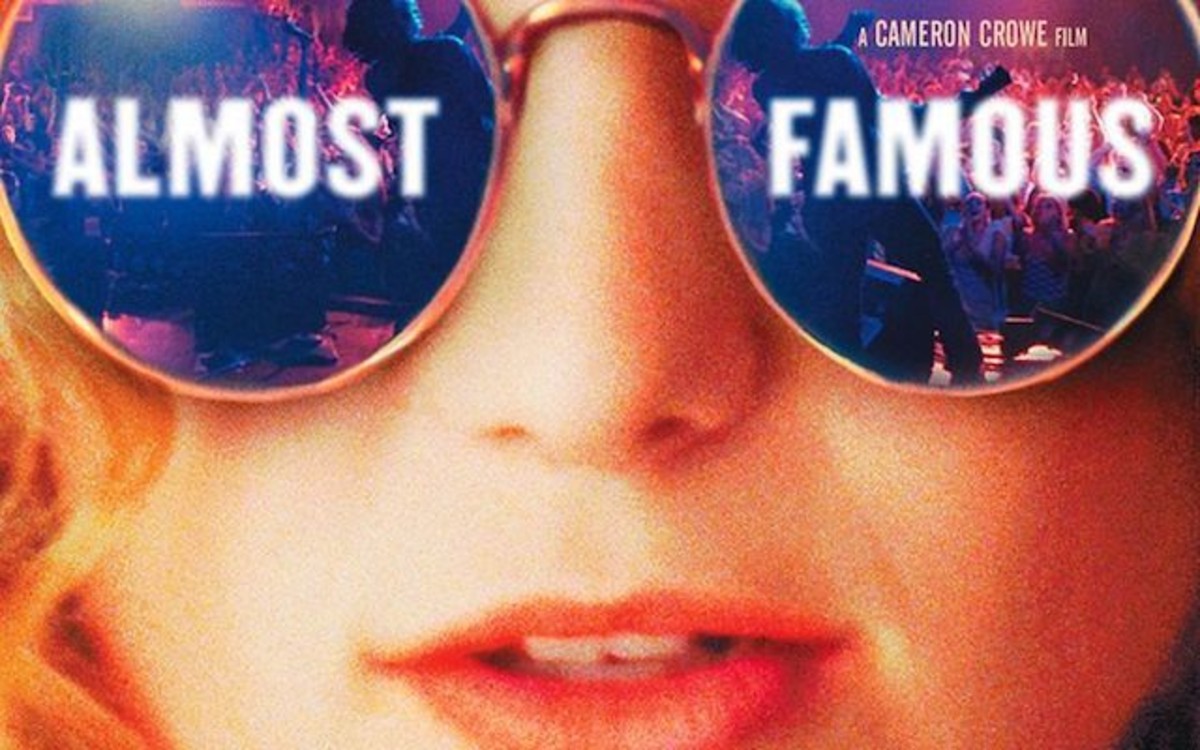
If a poll existed, there’s a non-zero chance that Almost Famous (2000) would be the popular choice for the best rock flick.
And there are many reasons to like the movie. Almost Famous is the fictional story of teenage journalist William Miller, who talks his way into a Rolling Stone article that gets him in way over his head. Along the way he meets up with the fictional band Stillwater, best described as a mix of Led Zeppelin and the Allman Brothers Band. In his efforts to get the story, he becomes enmeshed with the colorful cast of characters surrounding the band, most notably groupie (muse and/or “band aid”) Penny Lane (Kate Hudson).
William also meets up with legendary rock writer Lester Bangs (a real person, played in a standout performance by Philip Seymour Hoffman), who rails against inauthentic rock music and may as well be the voice of complaint about why rock movies rarely work.
This mix of real and imagined elements works particularly well for Almost Famous, giving the film a grounded feel that is close to historical fiction or old docudrama.
The movie, written and directed by Cameron Crowe, was inspired by his own life. He also worked for Rolling Stone as a teen, witnessing firsthand the debauchery of the ‘70s rock era lovingly portrayed in the film. His career contains several gems besides Almost Famous, notably Fast Times at Ridgemont High (1982) and Say Anything (1989).
And it’s hard to believe, but the film takes place in 1973, so the fictional events depicted in it occurred 27 years earlier, when it was released in 2000. And here we are, 26 years later. Almost Famous didn’t do well at the box office, but it has settled into the role of a beloved classic that should be better known.
One of the best aspects of the film is the tone. It’s classified as comedy, but veers towards dramedy. It is funny, but affectionately funny. Viewers aren’t asked to laugh at the characters, but instead at the situations they find themselves in or their reactions to them. They remain mostly sympathetic or are redeemed by the end.
Consider the unboxing of the band’s t-shirt, one of the funniest in the movie. Anyone who has ever been involved in a band or creative endeavor knows how real this is. And, yes, there is obviously mocking of egos. But the movie fundamentally likes the characters.

There are, essentially, two big reasons why this movie works. Before the reasons are examined, keep in mind that this will include a minor spoiler. It’s not particularly a plot-based film, but if you somehow haven’t seen this 26-year-old film, make haste!
The first reason the film is good is that the original music is high quality and seems genuine. This is a credit to the vision of Cameron Crowe—well, the whole thing is his vision—but Nancy Wilson of Heart was a collaborator on the music (as well as Crowe’s wife at the time of the film). As a long-time Zep devotee, she conjured up some riffs that play like fan fiction in the best way. Perfect for a film like this. In fact, songs like “Fever Dog” are so convincing that they could easily slip into a ‘70s classic rock playlist without a second thought (and do on the soundtrack itself).
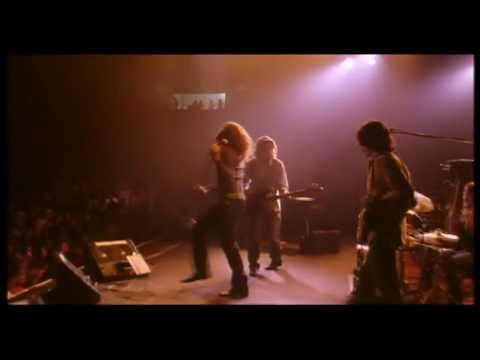
The concert scenes themselves are well-staged and don’t have the fake look that plagued Trap (2024), for example. The side shots are particularly effective at capturing William’s POV and the excitement of being close to a live show.
Almost Famous deftly weaves new music with classic songs. For example, in the concert scene, Penny Lane reminds William to live in the moment with the music. Contrast that to the group sing-along in the bus, which is a moment drenched in the feel-good power of an old song if there ever was one, the power of each individual’s meaning growing with the whole.
And given the premise of this rock ‘n’ roll film series, there’s no rule that the music has to be original. In fact, with Almost Famous, the mix of original material and classic rock staples enforces the dual nature of what a rock movie should be.

On one hand, the nature of rock ‘n’ roll is that it’s rebellious and new, preferably surging forward. Many of us associate the genre with coming-of-age. And we do see that theme in youth conflicting with parents, via William and his worried mother, who constantly reminds him, “Don’t do drugs!” More importantly, William’s older sister, Anita, gives him a stack of classic LPs as if they’re magic items, which they are. The keys to transformation.
On the other hand, music can evoke powerful feelings of community and nostalgia, with each listener sharing the song while giving it personal meaning. In the film’s most well-known scene, the band, crew, and various hangers-on are shown singing along with Elton John’s “Tiny Dancer.” If you know the song, you can’t help yourself. And it’s definitely not rebellious.
New and old, simultaneously. Two sides of the same coin.
The second reason the movie is so successful is that the characters are great, with one huge flaw.
There is no question that this movie has problematic attitudes towards women, particularly the female lead, Penny Lane. It’s true that rock ‘n’ roll is pretty checkered in this category anyway and the story is set in 1973. Historically, it unfortunately tracks.
But the film was made in 2000 and makes light of men well into adulthood wanting to pursue high school girls. We collectively knew better by then, or were at least well on the road to learning. In addition, the relationship between Penny and William reaches its climax when he confesses his love and kisses her after she passes out on quaaludes from a suicide attempt. It’s like an icky Sleeping Beauty, and it’s hard to watch in 2026, despite William being a sweet and awkward kid.
As far as William and the guys in Stillwater, Crowe nails it. He manages to make the band members larger than life while remaining believable. This is an almost impossible line to walk and is the key problem in many rock movies.
Let’s call it the Buckethead Paradox, and it goes like this: the real-life rock stars are so larger than life that you can’t make up fictional credible versions. There is no way someone like Buckethead would come out of a writer’s room and make it to a screen. A guy who never shows his face, wears a KFC bucket on his head, records in a chicken coop, throws action figures at his audience, does break dancing, and is obsessed with Disneyland? Nope. It’s an extreme example, but who could make up Lady Gaga? Prince? Ozzy?
Put simply, the Buckethead Paradox states that if Buckethead didn’t exist, you couldn’t credibly make him up.
A perfect example of this problem is the absolutely terrible Rock Star (2001) with Jennifer Aniston and “Marky” Mark Wahlberg. While a romcom, the basic premise is Judas Priest getting a new singer from a cover band, and it had potential as an actual story. Instead, you get a low-rent pseudo-parody that couldn’t be more of a lowest-common-denominator. The characters are not particularly outrageous,s yet are completely without credibility and over-the-top. This kind of contradiction should violate some law of physics.
Need further proof? A writer’s room could come up with a character named DJ A$$Wipe one week and have it rejected as too silly. Then the next week, we’re forced to endure as someone coincidentally named DJ A$$Wipe goes viral on TikTok with an inane catchy banger.
Or consider another Crowe film, Singles (1992). The music for this film is amazing, and the soundtrack includes classics from Pearl Jam and Soundgarden. But the main rock ‘n’ roll character, the derp derpy Cliff Poncier, is written doorknob stupid and plays like a “grunge” stock player from Saturday Night Live. The character is admittedly supposed to be funny, but comes off like an idiot in a terrible wig. And say what you will about Cliff, Crowe clearly intended the Seattle music to be a serious part of the film, and the character who carries that storyline is simply a doofus. Almost Famous never suggests you laugh at the characters in this fashion.
When Stillwater guitarist Russell Hammond hits a high school party and takes LSD, you know it’s a bad decision, but you get it on some fundamental level. He’s a stressed-out guy blowing off some steam. And when he’s up on the roof of the house yelling, “I’m a Golden God,” you’re still laughing with him, because this will inevitably be a funny story in the future when he’s looking back for his memoir.
The awful song that Cliff leaves on Janet’s voicemail near the end of Singles will never be anything but cringey.
The character of teenage William Miller (Patrick Fugit) works great as a focal point for the story in Almost Famous. He has a fish-out-of-water perspective that allows viewers to see the scene from an outsider’s point of view, and Crowe’s casting of an unknown was reportedly meant to heighten the sense of the actor feeling overwhelmed on a big Hollywood set. And a journalist observes, a perfect role for a main character in a film like this.
Equally brilliant is Kate Hudson as Penny Lane, and it’s the role that launched her career. One has to wonder if, on some Freudian level, Chris Robinson of the Black Crowes was marrying Penny Lane in his mind when he married Kate Hudson. The pictures of them together certainly didn’t hurt the two-bit psychology.
The script gave Billy Crudup a lot to work with as Stillwater guitarist Russell Hammond, and his arc is the movie’s strongest. He reminds us that we love our rock stars and forgive their foibles, even to our own detriment. Despite their flaws, we’ve all been crushed again and again by the passing of a beloved music icon, and more trouble lies ahead on that front.
So let Almost Famous stand as one of the testaments to an era that will soon belong only to history. The film owns reams of the two basic requirements for a good rock ‘n’ roll movie: good music and something to say about it; and credible, engaging characters.
Now about those other rock ‘n’ roll movies. Look out next month for 2001’s Josie and the Pussycats…
Source link
-

-

-

-

-


