
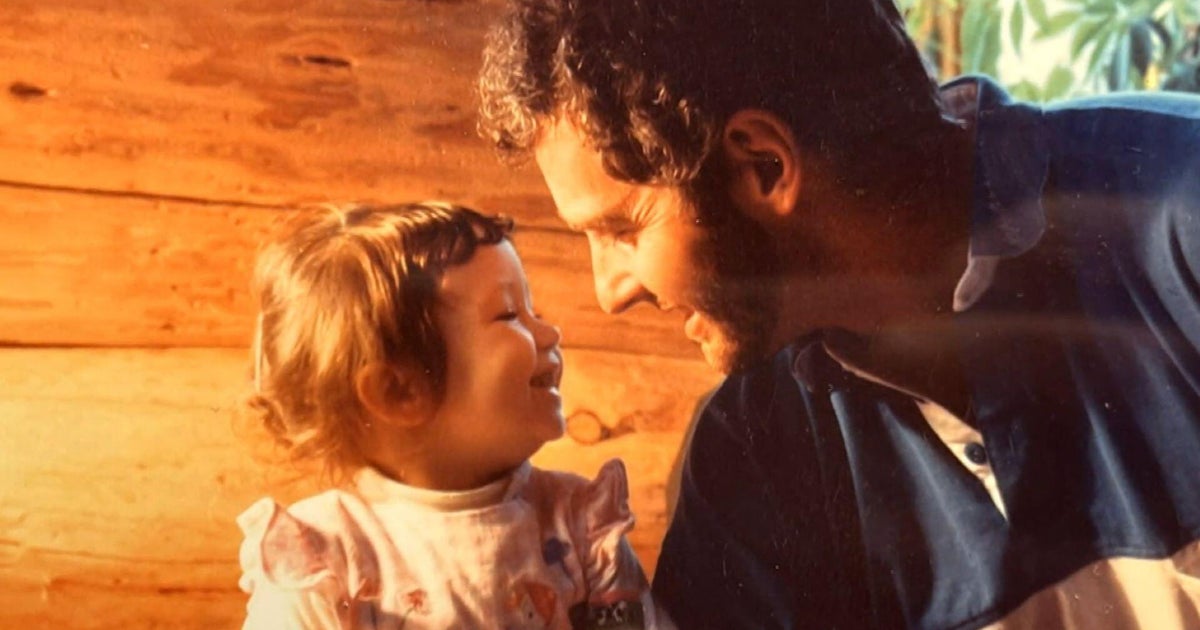
It was Thursday, Dec. 1, 1988, when Deborah Atrops, known as Debe, was found murdered in her car, next to a construction site in Beaverton, Oregon. Debe had been reported missing two days earlier by her estranged husband, Bob Atrops, who lived about five miles away on a rural road.
Washington County District Attorney’s Office
On the night she went missing, Bob says Debe, who was then 30 years old, never arrived to pick up their baby, Rhianna, as expected.
Allison Brown: It think that it’s important for everyone to know that just because a case goes unsolved doesn’t mean that it’s forgotten.
Allison Brown is a senior deputy district attorney in Washington County Oregon, who, along with attorney Chris Lewman, joined a team of investigators working on Debe’s unsolved murder. Brown says they hoped talking to the original detectives, witnesses, and looking at the evidence again, might give the old investigation new momentum.
Allison Brown: There were opportunities for forensic analysis that were not available in 1988.
DEBE ATROPS DISAPPEARS
Debe Atrops was last seen alive on Tuesday, Nov. 29, 1988. Bob Atrops called the Tigard, Oregon, police that night at 9:40 p.m.
DISPATCHER: This is Tigard Police. May I help you?
BOB ATROPS: … My wife is running about three hours overdue from a hair appointment. I was getting a little concerned. … We live in Sherwood. …
DISPATCHER: OK, what’s her name? …
BOB ATROPS: Deborah Atrops.
DISPATCHER: OK, and what kind of vehicle would she have been driving?
BOB ATROPS: It’d be a black Honda Accord.
Bob told the dispatcher Debe hadn’t shown up after an appointment in Tigard, about eight miles from his house, at a hair salon called Razz Ma Tazz.
BOB ATROPS: Called and let it ring, ring, ring about 20 times …
DISPATCHER: It would probably be easier for you to make a run down her path to, you know, how she would go … than it would be for us.
Family home video 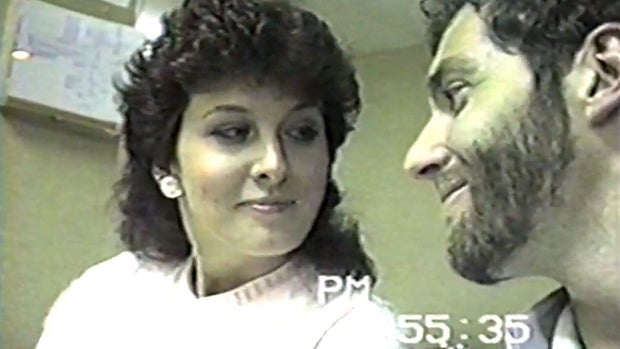

Bob says he drove the route and saw no sign of Debe. He called Tigard police back at 10:25 p.m.
DISPATCHER: Why don’t we give it another hour … and, if you haven’t heard anything, give me a call back.
Bob did call back — a third time — at 11:29 p.m.
BOB ATROPS: Hey, this is Bob Atrops again. Have you heard anything or—?
DISPATCHER: No, and the guys have gone out and looked. It’s real foggy out, but they have checked around the area.
DISPATCHER: … Did you go to the Razz Ma Tazz and see if her car was there at all?
BOB ATROPS: Yeah, I did. I drove up there’s no car …
DISPATCHER: There’s no friends or anything she might have gone to visit?
BOB ATROPS: No. Checked. Called everyone I can think of.
But the one call Bob did not make that night was to Debe.
DISPATCHER: OK sir, we have checked around the Sherwood area and we can’t find her car at all.
The dispatcher suggested Bob call the Washington County Sheriff, which he did at 11:34 p.m., and they opened a missing person’s case the next morning. But Debe Atrops would not be a missing person for long.
Det. Michael O’Connell: Even though I’ve been retired for years, it still kind of hung over me.
Washington County Sheriff’s Detective Michael O’Connell remembers responding to the scene when Debe’s car was found. The license plates had been taken off, the window was open and the keys were inside. O’Connell’s partner called Bob Atrops.
DETECTIVE LAZENBY: With you being the husband —
BOB ATROPS: Uh-huh.
DETECTIVE LAZENBY: — we need permission. We’d like to search the car …
BOB ATROPS: OK.
DETECTIVE LAZENBY: And I’d like to know if that’d be alright with you.
BOB ATROPS: Sure.
A few minutes later police found Debe’s body face down in the trunk.
Det. Michael O’Connell: She was nicely dressed. … Still had her coat on … Looked like she’d been placed somewhat carefully in the trunk.
Washington County District Attorney’s Office 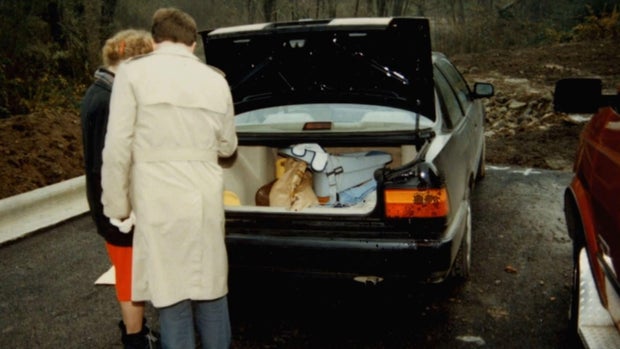
Police say Debe had been strangled, and there were no signs of sexual assault. There was mud on her coat and shoes, the front passenger tire and the steering wheel of the car. Law enforcement scoured her vehicle for evidence.
Det. Michael O’Connell: It looked like someone may have tried to wipe down the hood. There were, like, broad clothing swipes, like, someone maybe was trying to destroy fingerprints.
O’Connell and his partner went to Bob’s house to tell him they had found his wife’s body. A witness who saw Bob later that day told the cold case team Bob was “very calm, much calmer than I would expect.”
Allison Brown | Prosecutor: It wasn’t consistent with a grieving, estranged husband.
Debe’s stepfather, Ed Holland, says her mother, Gloria, who was close to Debe, was overwhelmed with grief.
Ed Holland: She broke down … and I held her, and that’s all I could do … She just laid there, sobbing.
Police searched outside Bob’s home for any further clues.
Det. Michael O’Connell: The driveway was a mix of mud, dirt, and gravel. And it looked like … her car may have driven through some of the mud.
Bob had said Debe was last there about a week before her murder. Police took photos of the tire tracks outside his house and collected soil from his driveway and lawn.
Det. Michael O’Connell: Just to make sure we weren’t missing anything.
Police never found any tire tracks that matched Debe’s car on Bob’s property. Yet Bob Atrops was an obvious suspect. But he wasn’t the only man in Debe’s life. Since she had moved out five months before, Debe had been dating—and those relationships were complicated.
Ed Holland: Debe had very good taste and was a good judge of people, but a terrible judge of men. Every man that she seemed to hook up with was a problem.
WHO KILLED DEBE ATROPS?
Rhianna Stephens: It was great growing up with my dad. He was an amazing dad.
Rhianna Stephens 
Natalie Morales: Do you have memories of him being hands on? …
Rhianna Stephens: Yeah. My dad was very hands on … I knew that I was his number one.
Rhianna Stephens: I remember being at my grandpa’s house with my cousin, going through old photo albums and finding a picture of this woman. And I was like, “Who’s that?” And she just kind of was like, “That’s your mom.” … From that point on, I always remember knowing the story.
Debe Atrops’ daughter Rhianna Stephens says she learned about her mother’s murder when she was 6 or 7 years old. She says growing up, her dad only shared fond memories of her mom.
Rhianna Stephens: I didn’t know that they had separated. … Anything that I had ever heard about her was always good from him.
But things were not always good in Bob and Debe’s marriage. Debe’s stepfather, Ed Holland, remembers meeting Bob, a construction product salesman, and talking to Debe’s mother about how quickly Bob and Debe walked down the aisle.
Darlene Lufkin 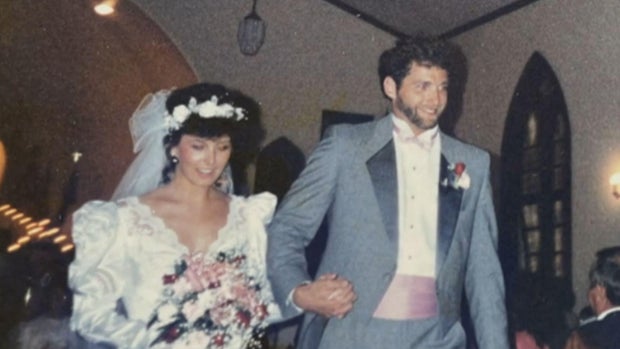
Ed Holland: They were still in a courtship when they got married. … I said to Gloria, I said, “This is way too fast.” … She says, “Well, if they’re in love, why not?”
Debe’s friend Darlene Lufkin says, like Holland, she was not confident the relationship had a strong foundation.
Natalie Morales: How long did they know each other?
Darlene Lufkin: Just a few months it seems like. … It takes time to get to know someone. And I don’t think she really knew Bob yet.
Bob and Debe got married in June 1987 and adopted Rhianna the following March.
Because of conflicts in their marriage, just a few months after bringing Rhianna home, Debe moved into her own apartment in Salem, 30 miles away from Bob. Investigators say Debe had soon reconnected with an old boyfriend, Jeff Freeburg.
Natalie Morales: You said he was the one for her, perhaps …
Darlene Lufkin: That’s the one she kept wanting to go back to. … She really, really liked him. And I don’t think he was just ready for that kind of relationship yet.
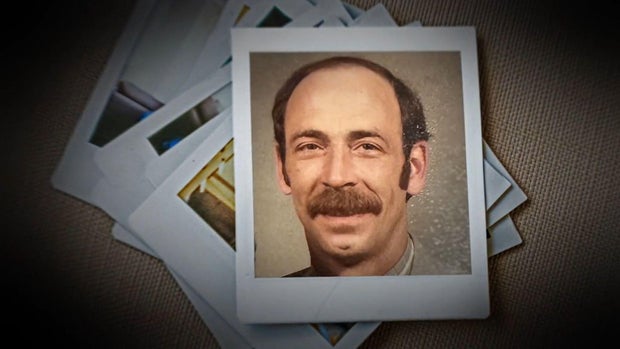
By September 1988, Debe had a new boyfriend—a man she met at work—named John Pearson. Pearson was separated from his wife and had two young boys.
Darlene Lufkin: But I remember she was on the phone at my house once with him. She handed me the phone, and he said how much he was looking forward to meeting me and the girls. …
Darlene Lufkin: When Debe was seeing people for some reason, she wanted them to meet me and my girls.
Lufkin says she and Debe had grown close in their 20s when Darlene was a single mom.
Darlene Lufkin: She’s really the only friend I had that enjoyed spending time with my daughters. And I treasured that.
In that autumn of 1988, although Debe was dating Pearson, she stayed in touch with Freeburg. He loaned Debe $8,000.
Natalie Morales: He had lent her money to buy… a car. Could there have been motive in that?
Allison Brown: He was wealthy … So, I think he was happy to help Debe.
Back in 1988, detectives had asked Freeburg for his alibi on the night Debe was last seen alive— and he said he was home except for going out briefly to get some dinner.
Det. O’Connell: He seemed very straightforward. Didn’t hesitate to answer our questions. Didn’t seem to be hiding anything.
Police had also questioned John Pearson, who said he was with his children and his estranged wife that night. Pearson knew about Debe’s hair appointment and gave detectives a detailed description of many items inside her car.
Natalie Morales: John Pearson … told police back then that there was a Burger King bag … as well as a box with cranberries and a child car seat. … Seems like a lot of details about … the car.
Allison Brown: Yeah.
Pearson also told police there “wasn’t enough room in the trunk for a body” and that “stuff would have to have been taken out” … but O’Connell says Pearson had seemed truthful back in 1988.
Det. O’Connell: He was mostly accessible. … Didn’t appear to be trying to throw us off or anything.
And prosecutors Chris Lewman and Allison Brown say there is an innocent reason John Pearson knew so much about Debe’s car.
Allison Brown: They were seeing each other every day. … I mean, something to look into for sure, which is why they did multiple interviews of John Pearson and a polygraph in 1988. …
Natalie Morales: And did he pass the polygraph?
Allison Brown: He did. And he was willing to do it and basically do everything that they asked him to do.
Bob Atrops hired a lawyer a week after Debe’s body was found and declined to take a polygraph. Detective O’Connell says, Bob did not seem very worried about finding out who killed his wife.
Det. O’Connell: He was kind of removed. … just kind of distant.
O’Connell and his partner looked into the calls Bob said he made the night Debe went missing.
Bob told detectives he called the babysitter, Debe’s boss, and her parents while he was home waiting for her. They all confirmed he did call them that night – but there was a hitch. Those three calls were long distance and should have shown up on his phone bill.
Det. Michael O’Connell: That was a problem. Those phone calls were not there.
Rhianna Stephens 
By now detectives suspected Bob had killed Debe. They thought there was no record of those three phone calls because Bob was out of the house that evening disposing of Debe’s car and her body. Police began looking for evidence Bob made those calls from somewhere else.
Det. Michael O’Connell: It involved checking payphones. … We looked at every angle. … We struck out.
They did not find proof that Bob was lying or evidence connecting him to Debe’s murder.
Det. Michael O’Connell: I didn’t like the thought of it just remaining unsolved.
O’Connell and his partner had a final meeting with Bob in 1990—asking him to account for those missing calls, or to admit he had killed his wife. But Bob maintained his innocence.
Det. Michael O’Connell: And then it kind of went dead.
When the cold case team next interviewed Bob in 2022, they asked again about those phone calls and heard a very different story.
DET. WINFIELD: I’ll be honest with you, Bob. Your story that you’re telling us today is significantly different than what you told investigators back in the day … And so, my question is … what really did happen?
A NEW LOOK AT THE COLD CASE
Darlene Lufkin: We spent a lot of time … together. … We took the girls to the beach … went to … music in the park with picnic dinners.
It’s been more than 30 years since Darlene Lufkin last saw her friend Debe Atrops, but she says she still feels the loss.
Natalie Morales: Sounds like you have really fond memories of Debe.
Darlene Lufkin: Oh yeah. … I miss her every day still.
Lufkin, like many in Debe’s life, longed for answers and in 2022 she got one step closer when the cold case team sent Debe’s coat and those soil samples for testing.
Bob Atrops’ defense 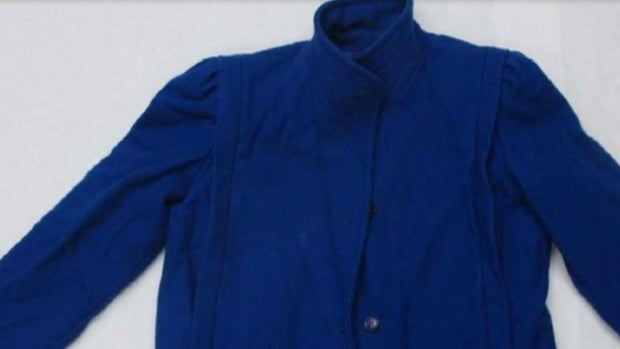
Allison Brown: The soil was sent to the FBI lab. The DNA was sent.
While they waited, the cold case team continued to examine Bob’s behavior back in 1988, which prosecutors say was suspicious from that first call.
Allison Brown: He calls law enforcement within, you know, probably 20 minutes of calling their friends and family and to us that seemed, a little quick … So, we believe he was attempting to … get his story out there and to portray himself as a concerned husband and try to … develop that narrative that he wanted to early on.
Detective O’Connell says he had the same feeling. Remember, Bob had called police four times that night.
Det. Michael O’Connell: What’s the Shakespeare quote? He protests too much? It was interesting to us that he was calling so frequently and so soon. … It didn’t seem normal.
The cold case team also turned their attention to the road where Debe’s car was found — next to that construction site. Bob’s former boss at Allied Building Products told them he believed Bob had a connection there.
Allison Brown: He was … selling roofing products … we knew, I knew that he was selling products in that area.
In 2022, the results from those DNA tests came back. The lab said they found a mixture of DNA on the collar and shoulder of Debe’s coat.
Allison Brown: They swabbed that area of her coat, because if you’re strangled, that would be the area … you’d have contact with.
The lab compared that sample from Debe’s coat to her boyfriend at the time, John Pearson.
Allison Brown: It’s not present.
And neither was her ex-boyfriend, Jeff Freeburg.
Allison Brown: Jeff Freeburg … not present.
But the lab said Bob could not be excluded as a contributor to that DNA mixture.
Chris Lewman: We can’t say it’s a match. It’s just, it’s moderate support that it’s more likely Mr. Atrops than an unknown individual.
Prosecutors admit, while the DNA from Debe’s coat excludes Freeburg and Pearson, it does not make a complete case against Bob Atrops.
Allison Brown: I think it’s another piece. … There are many, many different pieces. It was a very fact intensive case.
Another one of those pieces, they say, is the mud.
Allison Brown: This murder was connected to mud. Her body was covered in mud, there was mud on the outside of the car, on the inside of the car.
Washington County District Attorney’s Office 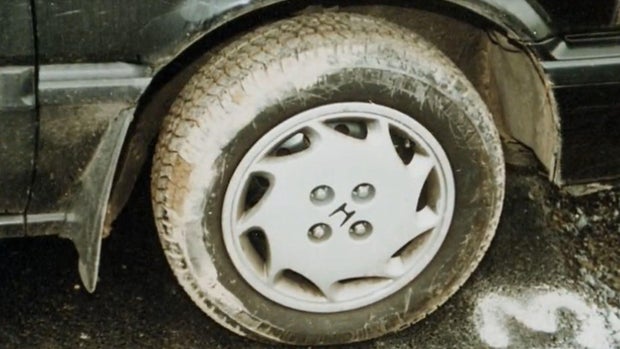
The FBI lab, which examined this evidence, concluded that the mud on Debe’s car tire did not match the mud where her car was found. However, that mud on the tire, they said, was “indistinguishable” from the mud from Bob’s lawn in color, composition and texture. This is evidence, prosecutors say, that Bob was lying when he said Debe did not come to his house the night she went missing.
Allison Brown: According to the defendant’s interview, she had not been to his house for about 10 days.
Bob Atrops hadn’t spoken to police about the case since that final conversation with detectives in 1990. But in 2022, he agreed to talk to the cold case team.
Investigators asked Bob about those calls to friends and family that didn’t appear on his phone bill back in 1988.
DET. WINFIELD: It is October 19th, 2022 … here with … Bob Atrops.
DET. WINFIELD: You made those phone calls?
BOB ATROPS: Yes.
DET. WINFIELD: From your house?
BOB ATROPS: Yes.
DET. WINFIELD: Using your home phone?
BOB ATROPS: With an MCI card.
DET. WINFIELD: No.
BOB ATROPS: Yes.
DET. WINFIELD: No.
Bob now said he had used an MCI calling card to make those missing long distance calls from home.
BOB ATROPS: Yeah, an MCI card from Allied Building Products …
DET. WINFIELD: That is not what you told investigators. … and you said, “I made those calls from my home phone.”
BOB ATROPS: Yes.
DET. WINFIELD: “Using my home long distance.”
BOB ATROPS: But you dial in, and … you punch in the code and then you can complete the long-distance call.
Prosecutors say Bob didn’t have that MCI calling card in 1988, and what’s more, prosecutor Chris Lewman says, this story doesn’t make sense.
Chris Lewman: In 1988, to make a calling card, you had to input about a 16-digit calling card number and then another six- or eight-digit code. And if you’re frantically looking for your wife, why take the time to do that, and enter all those numbers?
In 2023, prosecutors brought the case to a grand jury—who voted to indict.
Rhianna Stephens: I got a phone call on March 2nd of 2023 at five o’clock in the morning … that my dad had just been arrested. … I was just in shock.
Washington County District Attorney’s Office 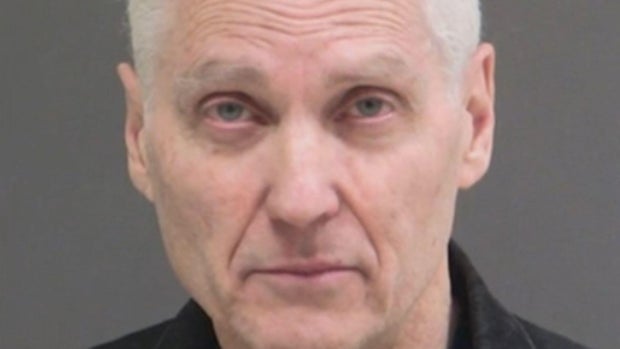
Rhianna says Bob is a loving dad, and a doting grandfather to her three children.
Natalie Morales: What was it like seeing your dad … front page story?
Rhianna Stephens: It was awful to see the news … making him out to be this terrible person that he just isn’t. …
Rhianna Stephens: He didn’t do this.
Cold case detectives spoke to Bob Atrops again after his arrest.
DET. WINFIELD: My opinion is, you’ve told yourself a story for the last 34 years, and you’ve told yourself the story over and over and over again to the point that it’s become the truth for you … It doesn’t make it true, but it makes it easier for you to tell that story.
BOB ATROPS: I don’t believe that, but OK.
DET. WINFIELD: What part don’t you believe?
BOB ATROPS: A story that I created, I guess. …
DET. WINFIELD: You don’t believe that you created a story?
BOB ATROPS: No.
DETECTIVE WINFIELD: OK. …
DETECTIVE WINFIELD: You just are not in a position to acknowledge that you played a role in her death.
BOB ATROPS: No, I did not.
Bob Atrops pleaded not guilty to Debe’s murder. Attorney April Yates argues it’s more likely Debe’s killer was her boyfriend at the time, John Pearson, than Bob.
April Yates: John Pearson not only had motive, he had opportunity. He knew where Debe Atrops was going to be. He knew about her hair appointment. And also, he knew an incredible amount of detail about her car.
But prosecutors say Pearson had nothing to do with Debe’s murder. Back in 1988 he told police that, about a week before the murder, Bob confronted Debe because he was suspicious she was in a new relationship. Pearson said Debe was afraid if Bob found out it was true, he would kill her. The prosecution planned to call Pearson as a witness in Bob Atrops’ upcoming trial.
Chris Lewman: We wanted to have him testify … because we found him credible.
But that would never happen. Pearson, who had been ill, and had an outstanding warrant for a DUI in Oregon, stopped responding to detectives. When authorities located him in Arizona, five days before opening arguments were to begin, John Pearson killed himself.
Janis Puracal: John Pearson fled the state … He was on the run.
Attorney Janis Puracal was part of the defense team.
Janis Puracal: Police find him in a trailer in the desert in Arizona. When police surround that trailer, he … ends his life, rather than coming back to Oregon to answer questions about Debe Atrops murder. Those are the facts. Prosecution can spin it all they want, but those are the facts.
DID BOB ATROPS MURDER HIS ESTRANGED WIFE?
Rhianna Stephens: I’m trying to be strong for my dad.
In spring 2025, Robert Atrops’ murder trial began at the Washington County Courthouse. Prosecutors worried the jury might get stuck on details they could not explain.
Allison Brown: In a case where we need to prove it beyond a reasonable doubt, we’re not going to be able to answer every single detail of what happened that night.
ALLISON BROWN (in court): Remember, the appointment’s supposed to end around 7:15 … By 9:40 p.m., he’s calling 911.
At the trial, which allowed audio but not video recording of witnesses, attorney Allison Brown argues that Bob Atrops intentionally misled the police — starting with those four calls he made to them the night Debe was last seen alive.
Allison Brown: He didn’t tell the law enforcement officials that they were separated, that they lived separately … So, he didn’t actually give them the information that they would need to find her.
Family photo 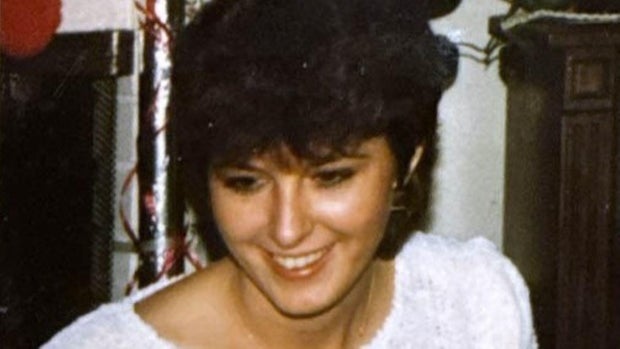
Bob didn’t tell police Debe lived in Salem until the next day. Even more incriminating, prosecutors say, is the fact that Bob Atrops did not call Debe the night she went missing — or ever.
Chris Lewman: He never called her apartment.
Allison Brown: … that would’ve been the first phone call, right? … Someone hasn’t showed up. You’re expecting them. You call them.
Natalie Morales: Mm.
Allison Brown: … not only was that not the first phone call, but he never made that phone call at all.
At trial, prosecutors played Bob’s interview with investigators in 2022 where he explained why he didn’t ever make that call.
DET. CAREY: Did you ever call Debe’s place?
BOB ATROPS: Her house? No … I didn’t even consider that as an option …
DET. CAREY: So, let me rephrase and correct me if I’m right, you never considered calling the place she lives?
BOB ATROPS: Not when she was supposed to be in our vicinity, no.
Prosecutors also want the jury to hear more about the troubles in Bob and Debe’s marriage. Debe’s friend Christy Knapp testified to an encounter with Bob at his house, soon after Debe moved out.
CHRISTY KNAPP (court audio): We went there to get some serving dishes. … We walked into the entry, and he just started freaking out and screaming. … He seemed really, really tall, and really scary. … It was terrifying.
Another friend, Tami Nelsen, told police in 1988 Debe had confided in her that Bob Atrops had choked her in a violent confrontation shortly before she moved out. Nelsen told the jury Debe was still worried about Bob after their separation.
ALLISON BROWN (court audio): What did she say she was concerned about?
TAMI NELSEN: Well, she was concerned that he’d kill her. … And I thought she was teasing to begin with … you know, or she was being dramatic.
ALLISON BROWN: Yeah.
TAMI NELSEN: And so, I turned around and I looked at her, and I saw that she was genuinely scared.
Nelsen had also told police in 1988 that a few months before her murder, Debe was worried about Bob finding out about her relationship with John Pearson. Nelsen later told the cold case team Debe had said, “If anything happens to me Bob did it.”
Allison Brown: Debe is predicting her own murder. She is telling friends and family if he finds out about this, he will kill me.
Natalie Morales: Mm-hmm.
Allison Brown: And she was right.
But in their cross-examinations, the defense suggests these stories Debe told are not reliable and they say Debe had a history of making up false tales.
April Yates: She had told different stories to different people, and these things were verifiably not true.
Some of Debe’s friends say she did tell questionable stories, often about her health. Darlene says she thought Debe might have done it for attention.
Darlene Lufkin: One time she said that she went to work out … her stomach flipped or something and she had to go get emergency help with it … It didn’t seem real to me.
Attorney April Yates says there is a simple explanation for why Bob Atrops didn’t call Debe that night—he had spoken to her stepfather, Ed Holland.
April Yates: Ed told Bob that he had been by Debe’s apartment … and she wasn’t home. … There was no reason for Bob to call.
April Yates: And the next morning, Debe’s parents went to her apartment again, as did law enforcement, so there was no reason for Bob to call or go there. The fact that the state is trying to make something out of that — it’s a red herring.
During trial, the babysitter and Debe’s stepfather testified that Bob had called them the night Debe went missing, which supports Bob’s story. Attorney Stephanie Pollan says the best explanation for why those so-called missing calls weren’t on his phone bill is that the billing equipment was faulty.
Stephanie Pollan: We found the engineer … and he testified that this equipment failed all the time.
But the cold case team believes Bob made those calls while he was out of the house, getting rid of evidence, to help him create a false alibi. And they say it was impossible to check every payphone in the area back in 1988.
Allison Brown: What was significant is he’s not where he said he was, he’s not at home. Why would he lie about where he was that night?
While the state emphasized the link between the mud on Debe’s tire and the soil from Bob Atrops’ front yard, the defense says that this soil is everywhere in the region and is as common as — dirt.
April Yates: This soil is everywhere. … My yard, her yard, the DA’s yard. It doesn’t make us suspects in a murder.
Back in 1988 police didn’t collect mud from Jeff Freeburg’s property, or John Pearson’s. They only took samples from where Debe’s car was found and from Bob Atrops’ driveway and lawn. Then there was the matter of the DNA from Debe’s coat.
April Yates: … the DNA in this case doesn’t tell the jury anything about who killed Debe Atrops.
Attorney Yates points out that the amount of DNA on Debe’s coat that the lab had said could be consistent with Bob Atrops was miniscule—the equivalent of about six skin cells.
April Yates: And this very low level of DNA is consistent with something called transfer DNA … People who have babies and shared custody transfer DNA all the time.
Natalie Morales: So, in your opinion, this DNA was not strong evidence?
April Yates: This DNA was not only not strong evidence—it doesn’t mean anything.
The defense argues there is a much more important DNA result from Debe’s autopsy.
Janis Puracal: One of the very first items that the lab tested for DNA were vaginal swabs taken from the autopsy.
Attorney Janis Puracal specializes in evidence that can lead to wrongful convictions. She says the DNA from Debe’s autopsy does not point to Bob Atrops.
Janis Puracal: The semen came from John Pearson. … and the likelihood ratio … is 94.6 sextillion. … it’s an enormous number.
Prineville, Arizona, Police Department 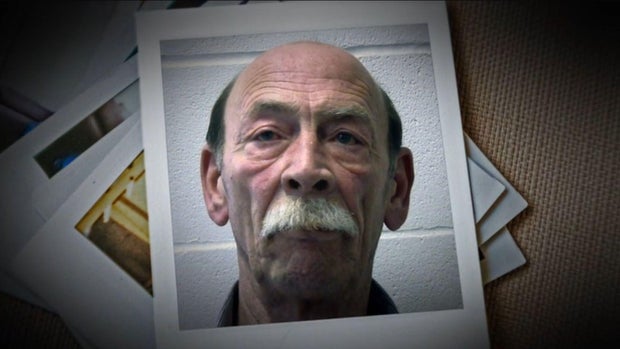
And she points out Pearson’s DNA at autopsy contradicts his statement to police from 2022.
Janis Puracal: John Pearson told law enforcement that he did not have sexual contact with Debe Atrops in the 72 hours before she was murdered, and definitely not on the day that she was murdered. But they found that semen … two days later, at the autopsy. Everything is telling us that that … was most likely deposited on the day that she was murdered.
And the defense reminds the jury, John Pearson was avoiding the cold case team in the months leading up to his suicide. In its closing statement, the defense says the state just doesn’t have enough to make its case against Bob Atrops.
But prosecutors argue all of the pieces point in one direction — to Bob Atrops.
Allison Brown: Like you hear: motive, means and opportunity, he had it all.
Now, after two weeks of testimony, it is time for the jury to decide.
Allison Brown: We didn’t know if that would be enough or not. … it’s incredibly nerve-wracking.
“WE ARE GRIEVING SOMEONE THAT IS STILL ALIVE”
CBS News 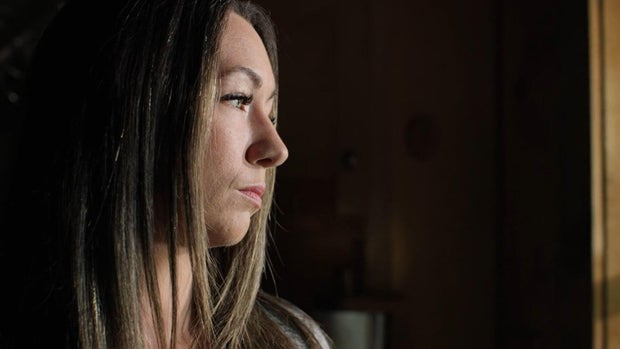
Natalie Morales: What did you think before the jury left to go deliberate? Did you feel confident?
Rhianna Stephens: I didn’t feel confident. I just— because of the fear of the unknown. … I don’t feel like any evidence was actually given that proves my dad did this. … because he didn’t. There is no evidence that he did this.
On April 17, 2025, the jury reached a decision.
Stephanie Pollan: It was six hours that they were deliberating. … we thought that that was a quick verdict and that could be a good thing.
JUDGE OSCAR GARCIA (court audio): My understanding, the jury has a verdict in this case. Is that correct?
FOREPERSON: Correct. …
JUDGE OSCAR GARCIA: To the charge of murder in the second degree, the jury has found the defendant guilty.
Guilty. Thirty-seven years after her death, Robert Atrops was found guilty of murdering Debe Atrops.
April Yates: It was like the room went dead silent … and everything was still in that moment.
Rhianna Stephens: We all crumbled. We are grieving someone that is still alive. …
Natalie Morales: Were you able to say anything to your father in that moment right after?
Rhianna Stephens: No. I —
Natalie Morales: Hug him, nothing?
Rhianna Stephens: I haven’t been able to hug my dad in over two years.
April Yates: We had so many family and friends of Bob behind us. … It was really hard, for them especially, to see this happen to their loved one.
Natalie Morales: I could see it’s hard for you, too.
April Yates: It is hard. It’s hard to have an innocent client get convicted.
Prosecutors say they are glad that justice was served.
Natalie Morales: This case took 37 years to finally be resolved. Are you satisfied that we know the truth about what happened to Debe Atrops?
Allison Brown: Yeah, absolutely … There’s no other people … no other suspects, no one else with the motive. … We feel absolutely a hundred percent sure that he’s the one who committed this crime.
Prosecutors are confident the investigation proved the other men in Debe’s life, including Jeff Freeburg, were not involved in her murder. Freeburg declined “48 Hours”‘ request to comment on the case.
Allison Brown: There just really wasn’t any information that pointed in the direction of Jeff Freeburg … he gave his DNA freely … There really just wasn’t any motive, evidence, or anything else that caused him to be a significant suspect.
And, they say, John Pearson’s suicide was an unrelated tragedy.
Chris Lewman: He had an open criminal case …I believe he thought they were there to arrest him for this misdemeanor warrant and took his life.
Allison Brown: There was quite a bit of investigation that was done by our detective after he committed suicide to show it had nothing to do with guilt for Debe’s murder.
When “48 Hours” reached out in 2025, Pearson’s lawyer declined to comment on the case. Prosecutors say Pearson’s family told them he had wanted to testify at Bob’s trial.
Chris Lewman: I thought that it would be important for him to … relay all the things he knew, including those statements that Debe made back in 1988, that … Bob’s going to kill me if he finds out about us.
As for the defense’s argument that Debe had a history of making up stories, prosecutors say this is unfortunately consistent with life inside an abusive relationship.
Allison Brown: When someone’s going through a domestic violence situation, they are in a way living a lie.
Natalie Morales: Bob’s side of the courtroom … was full. … Did that strike you as interesting?
Allison Brown: It depends on the case.
Chris Lewman: Yeah, I mean, I think he had a large support system and it’s not uncommon for people … in a domestic abuse situation to kind of go unknown as a DV abuser … And I think Bob was good at that. I mean, he was a salesman.
After all these years, Darlene Lufkin says she thinks the jury got it right.
Darlene Lufkin: I had my suspicions all along …
Natalie Morales: You believed that that was the right verdict?
Darlene Lufkin: I do. … I just feel that the question’s been answered now.
At her father’s sentencing in July 2025, Rhianna Stephens made an emotional appeal for leniency.
CBS News 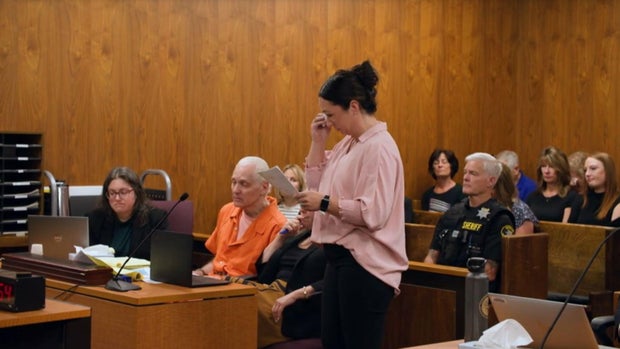
RHIANNA STEPHENS (in court): When I was 8 months old, someone robbed me of getting to have a life with my mom, there to support my every milestone. … Thirty-six years later, I’m being robbed of my father, the man that was there for all of those milestones. … I need him in my life.
Attorney Pollan read a letter from Bob Atrops’ current wife who has been married to him since 2011.
STEPHANIE POLLAN (reading letter in court): “My husband has always been a devoted and loving father to his daughter.”
Despite these appeals, the judge sentenced Robert Atrops to life in prison with the possibility of parole after 25 years.
Natalie Morales: When you lost your mom at a young age, and you said, now you grieve your dad who’s still alive, how do you make sense of what’s happening?
Rhianna Stephens: I can’t make sense of what’s happening. I just have to live through it and keep fighting.
Ed Holland 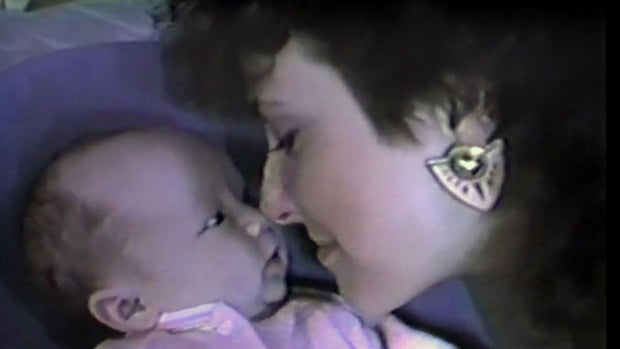
Darlene Lufkin: She truly loved Rhianna …
Natalie Morales: What do you want people to know about your friend, Debe?
Darlene Lufkin: That she didn’t deserve this … that she was a light that should still be here.
Natalie Morales: Do you think about your mother now?
Rhianna Stephens: I do think about her. I wonder what life would’ve been like. … had I gotten to live … my whole life, grow up having my mom.
Robert Atrops will be eligible for parole in 2048. He will be 93 years old.
Produced by Sarah Prior. Ken Blum and Grayce Arlotta-Berner are the editors. Chelsea Narvaez is the field producer. Rebecca Laflam is the associate producer. Danielle Austen, Cindy Cesare, and Sara Ely Hulse are the development producers. Lourdes Aguiar is the senior producer. Nancy Kramer is the executive story editor. Judy Tygard is the executive producer.
Source link
-
-
-

-

-


