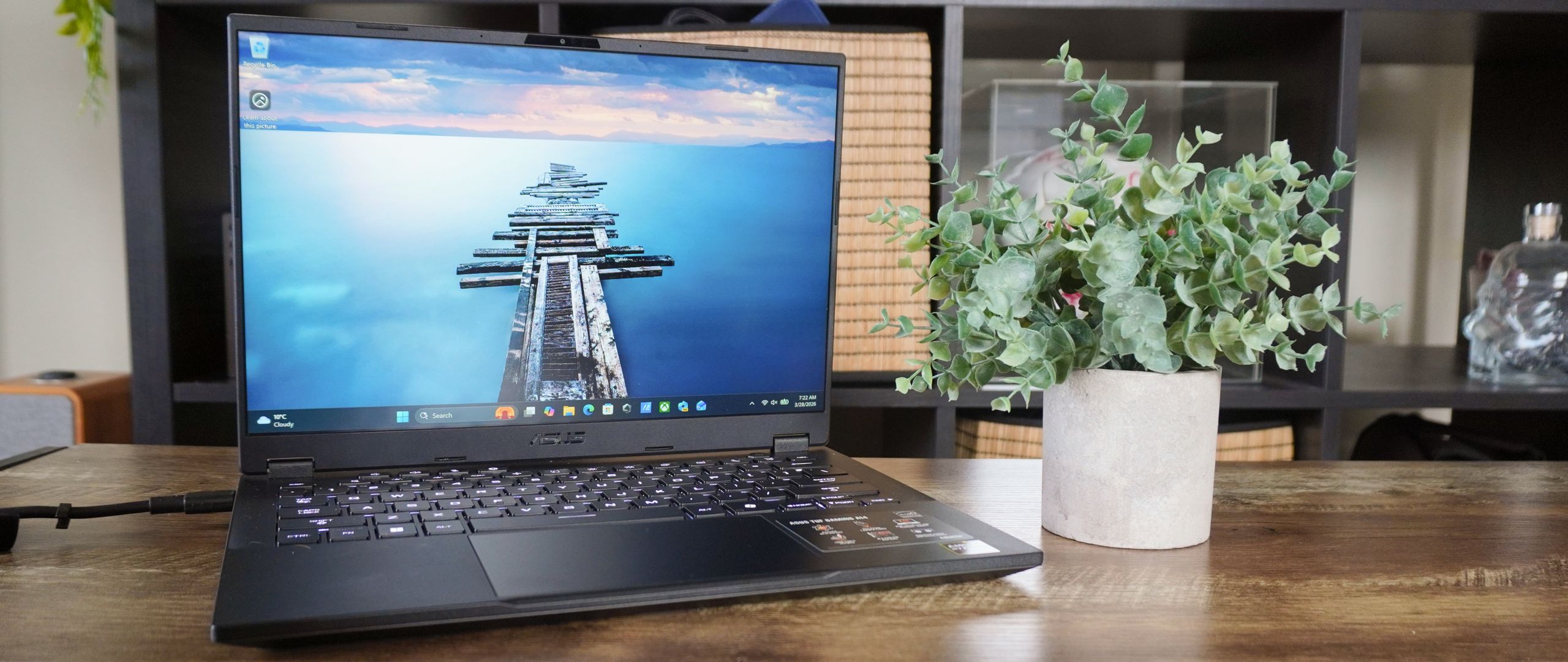
Oh, Asus TUF Gaming A14. Why do you hurt me so? You started so strong two years ago and even managed to be my personal favorite gaming laptop I’d tried over the past few years. Then there was a modest upgrade to RTX 5060 with a price bump — I let it slide mostly. But now, we’re through the looking glass with the 2026 model. It’s a classic situation of “appearances can be deceiving.”
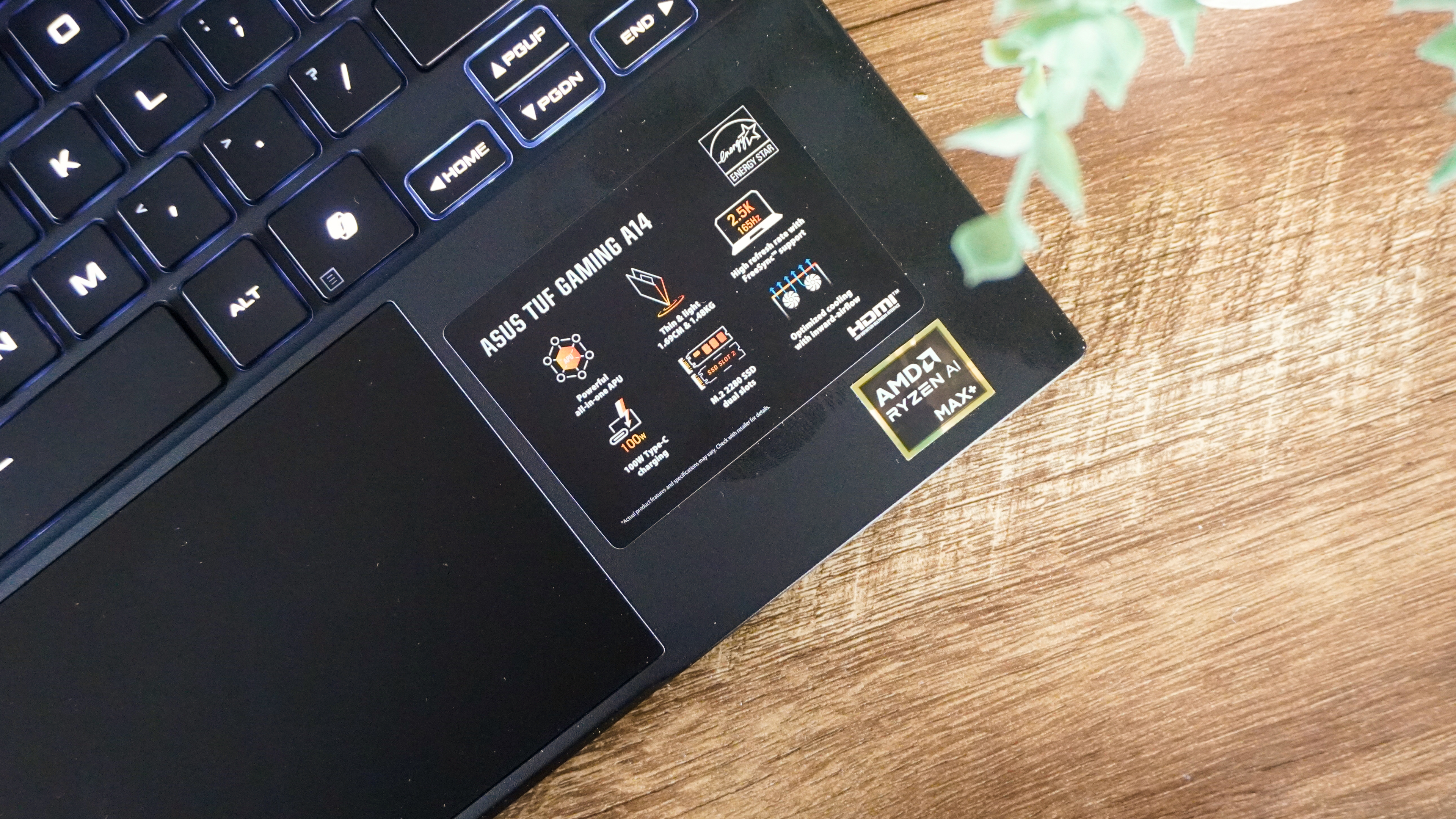
Because after correctly predicting the rise of integrated graphics in laptops, this year’s A14 got my mind spinning with the AMD Ryzen AI Max+ 392 chipset: the mid-ranger to the chip you find in the ROG Flow Z13 that still packs that same massive 40-core GPU. The benefits of this, of course, are lofty levels of performance paired with the power efficiency of not having to run an entire separate dedicated graphics card.
The stage was set and I was ready to have my mind changed with this Strix Halo glow up. And did it happen? …No. Asus is outside of my window with a boombox playing Peter Gabriel’s “In Your Eyes,” and I’m hiding beneath the window sill.
Now let me be clear, that’s not because this is a terrible laptop. For all intents and purposes, it’s a decent machine. The switch to this all-in-one monster chip has done wonders for its prosumer productivity side of things. But I can’t ignore that $2,199 price tag — a massive $500 bump over last year’s model, which just so happens to play games better, handle high temperatures better, and have a longer battery life.
It’s the right laptop at the wrong price, and definitely at the wrong time as RAMageddon has made me feel pretty confident about my break up. When the going gets TUF, save yourself some cash and go for last year’s model.
Asus TUF Gaming A14: Cheat Sheet
- What is it? This is a mid-range 14-inch gaming laptop
- Who is it for? It’s ideal for portable PC gamers who want a solid 1080p/1440p system that isn’t awkward to carry around.
- What does it cost? You can pick one up for $2,199.
- What’s good about it? The switch to Strix Halo has vastly improved productivity speeds (especially in content creation), and you’re getting that same sleek body, QHD+ panel and ergonomics.
- What’s not so good? Gaming, battery life and heat management fall behind its older (cheaper) sibling, price has increased by a massive $500, and AMD’s still making it awkward to actually have the GPU perform well out the box.
Asus TUF Gaming A14: Specs
|
Price |
$2,199 |
|
APU |
AMD Ryzen AI Max+ 392 |
|
RAM |
32GB LPDDR5 |
|
Storage |
1TB PCIe Gen 4×4 SSD |
|
Display |
14-inch 2.5K 2560 x 1600 pixels, IPS display, 165Hz |
|
Ports |
2x USB 3.2 Gen 2 Type-A, 1x USB 4 Type-C, 1x USB 3.2 Gen 2 Type-C, 1x HDMI 2.1, 1x 3.5mm audio combo jack, Micro-SD card reader |
|
Battery |
73Wh |
|
Wireless connectivity |
Wi-Fi 6E and Bluetooth 5.3 |
|
Dimensions |
12.2 x 8.9 x 0.7 inches |
|
Weight |
3.3 pounds |
Asus TUF Gaming A14: The ups
Let’s start with the positives. Because to Asus’ credit, Strix Halo is a productivity speed boost and even though the hardware remains unchanged, it’s still pretty top notch in the gaming laptop space.
Same great display and design with some tweaks
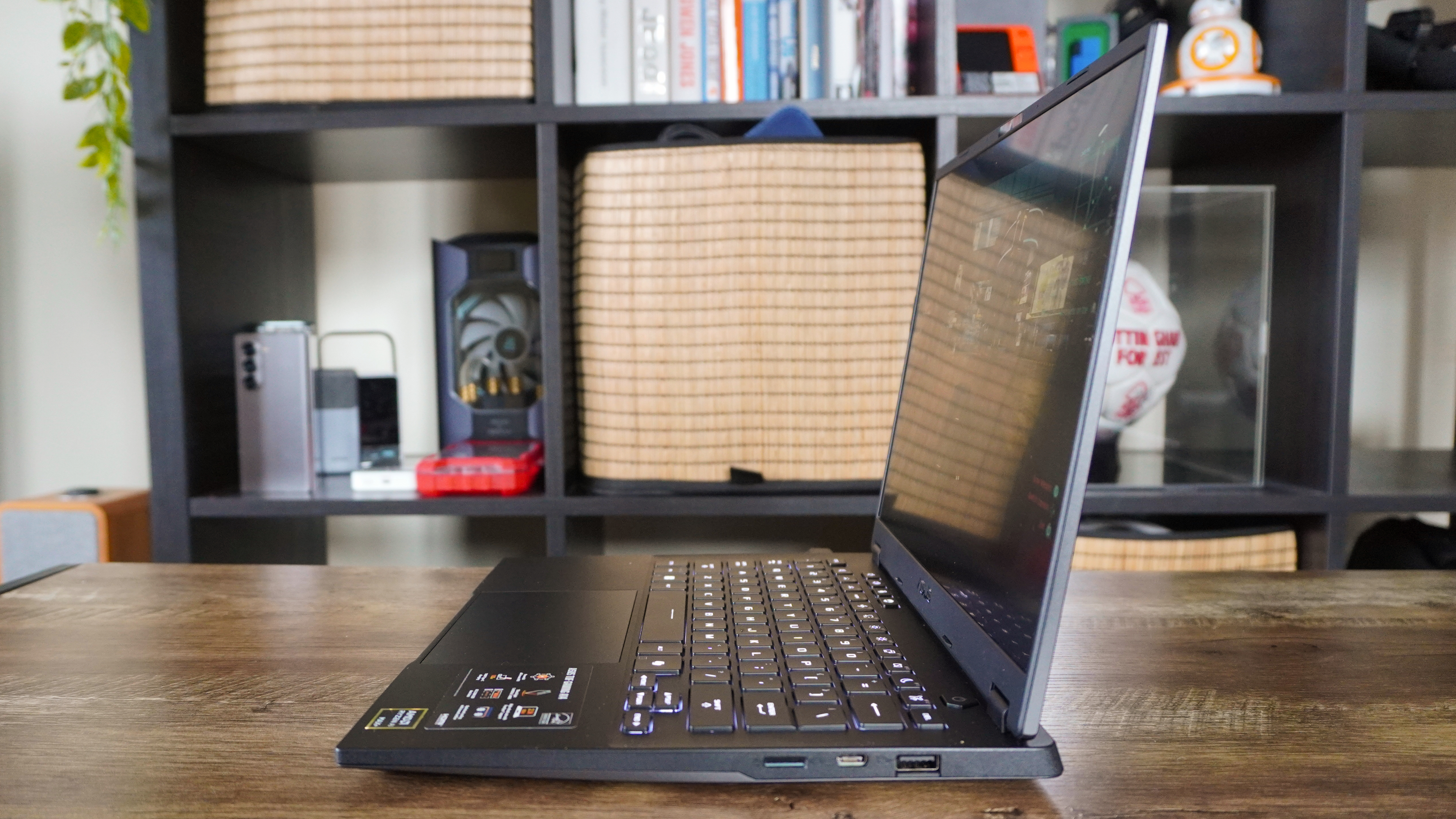

Credit to Asus — they’ve kept the things I like about this system in the looks and works. Build quality feels familiarly premium to the touch with a metallic top and bottom, the keyboard feels great to type on and that re-engineered ventilation is there to take air in through the top deck and out the bottom.
Then there’s the QHD+ panel that is decently bright and respectably color accurate with some vividity for those key flash floods of color like speeding through Mexico in “Forza Horizon 5.”
|
Laptop |
Average display brightness (nits) |
DCI-P3 (closest to 100% is best) |
|---|---|---|
|
Asus TUF Gaming A14 (2026) |
389.2 |
82.1% |
|
Asus TUF Gaming A14 (2025) |
393.6 |
80.8% |
|
Lenovo LOQ 15 |
315 |
81.1% |
Would I have loved OLED? Absolutely. Is this more than good enough for the task at hand? For sure.
Productivity boosts
If there’s one big good thing that can be said about the new Strix Halo internals, it’s that it does nicely equalize the general performance with gaming prowess. You can seriously get some stuff done quickly here.
|
Laptop |
Geekbench 6 multicore |
Handbrake (transcode 4K video to 1080p mm:ss) |
Geekbench AI (Quantized GPU score) |
|---|---|---|---|
|
Asus TUF Gaming A14 (2026) |
17334 |
02:45 |
18262 |
|
Asus TUF Gaming A14 (2025 – RTX 5060) |
13024 |
04:24 |
13509 |
|
Lenovo LOQ 15 (RTX 5060) |
9713 |
04:56 |
12918 |
Whether it’s the snappiness of opening up a web browser, stretching the multitasking of many tabs, or processing advanced photo edits, this didn’t hang one iota. And with that massive GPU, local AI processing is also a breeze too — comfortably holding a 14-billion parameter model without any hitches or slowdown in its processing time. Nice!
Asus TUF Gaming A14: The downs
Value for money’s out the window and AMD’s hiding the main reason you’d buy this laptop behind a few settings screens. It’s gutting to someone who really wanted this to succeed.
Price-to-performance is way off
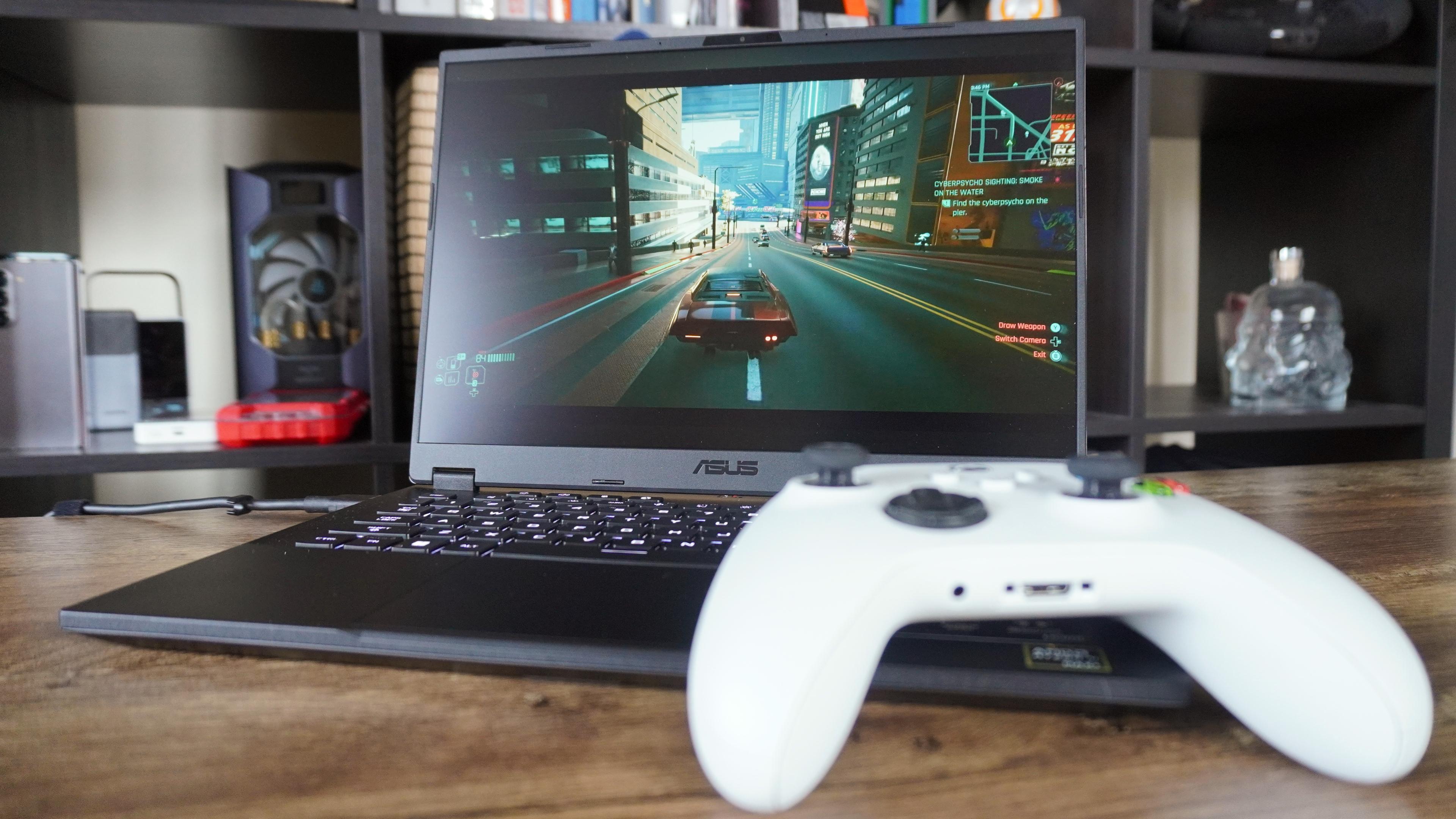
So you’ve felt just how fast this can be in your day-to-day creativity. Let’s move over to gaming and…well…I’ll let the numbers speak for themselves.
|
Laptop |
3DMark Fire Strike |
3DMark Speed Way |
3DMark Port Royal |
|---|---|---|---|
|
Asus TUF Gaming A14 (2026) |
23310 |
657 |
3277 |
|
Asus TUF Gaming A14 (2025 – RTX 5060) |
25609 |
2571 |
6300 |
|
Lenovo LOQ 15 (RTX 5060) |
26250 |
2772 |
2432 |
I’ll forgive it for ray tracing, as the RDNA 3.5 architecture was never really at its strongest in this crucible, and on a laptop screen, it’s not necessarily the biggest deal breaker to miss out on some shinier objects and reflections.
But when you take the $2,199 price of this “mid-range” gaming system and face it with last year’s A14 and the cheaper Lenovo LOQ 15, you start to see you get a bit short changed — both when you’ve got VRAM set to default (0.5 GB) and when you max it out (24 GB as tested here).
|
Laptop |
Cyberpunk 2077 (1080p Ultra settings) |
Black Myth: Wukong (1600p Medium) |
Doom: The Dark Ages (1080p) |
|---|---|---|---|
|
Asus TUF Gaming A14 (2026) |
26.32 FPS |
41 FPS |
36.24 FPS |
|
Asus TUF Gaming A14 (2025 – RTX 5060) |
32.33 FPS |
43 FPS |
55.63 FPS |
|
Lenovo LOQ 15 (RTX 5060) |
31.84 FPS |
n/a (does not have 1600p display) |
58 FPS |
But it gets worse, as thermal management and battery life have taken a dip here too.
|
Laptop |
Keyboard temperature (Fahrenheit) |
Battery life test result (web browsing hh:mm) |
Gaming battery life test (hh:mm) |
|---|---|---|---|
|
Asus TUF Gaming A14 (2026) |
92 degrees |
09:07 |
01:08 |
|
Asus TUF Gaming A14 (2025 – RTX 5060) |
91.7 degrees |
11:10 |
01:45 |
|
Lenovo LOQ 15 (RTX 5060) |
82.9 degrees |
06:50 |
01:22 |
Now I know some of these pricing woes come down to the RAM price crisis, and there’s no two ways around how much that sucks. But if anything, that should make us more aware of better value for money in gaming laptops, and honestly? Even the more premium ROG Zephyrus G14 is better value.
Just AMD things
Image 1 of 2

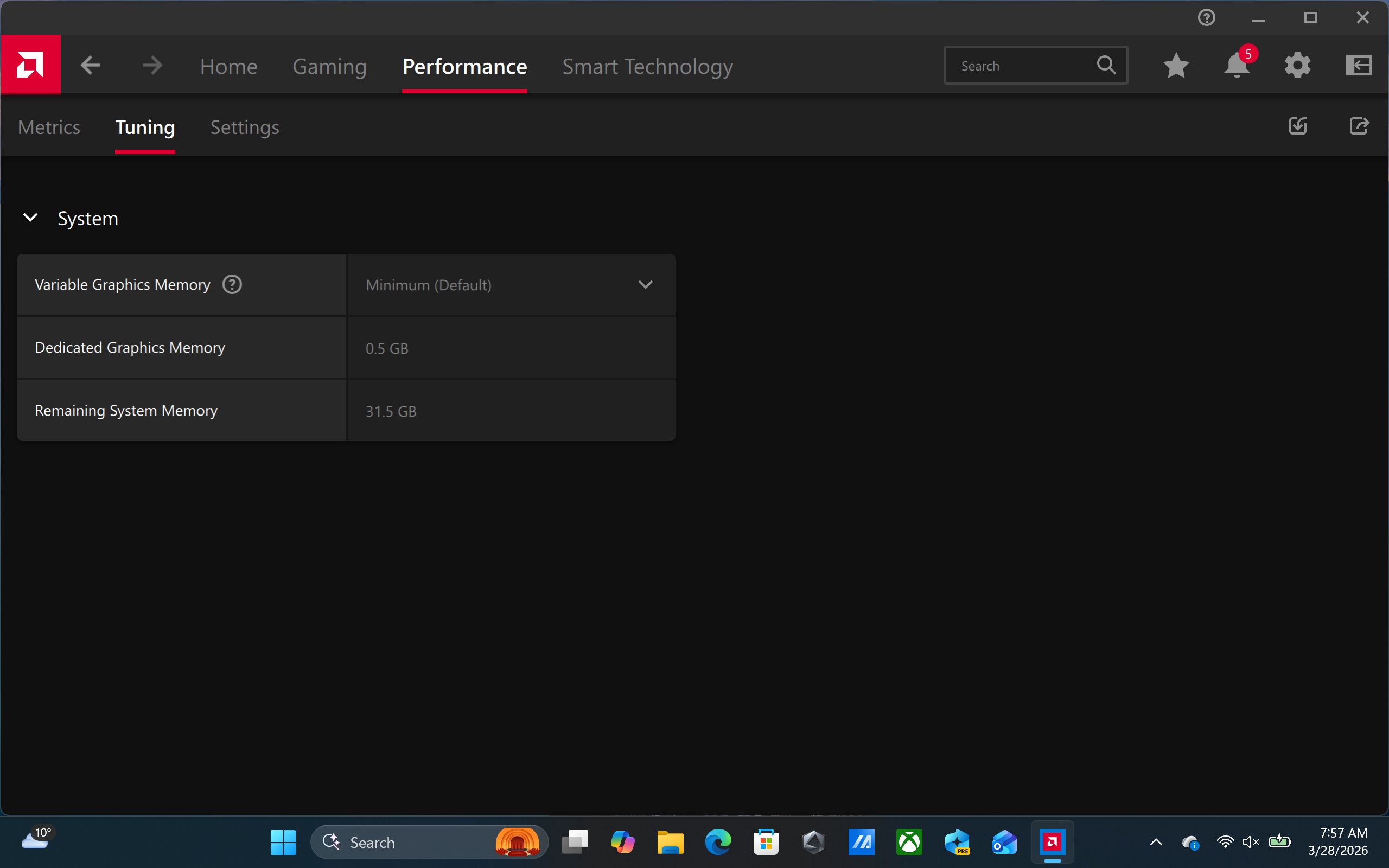
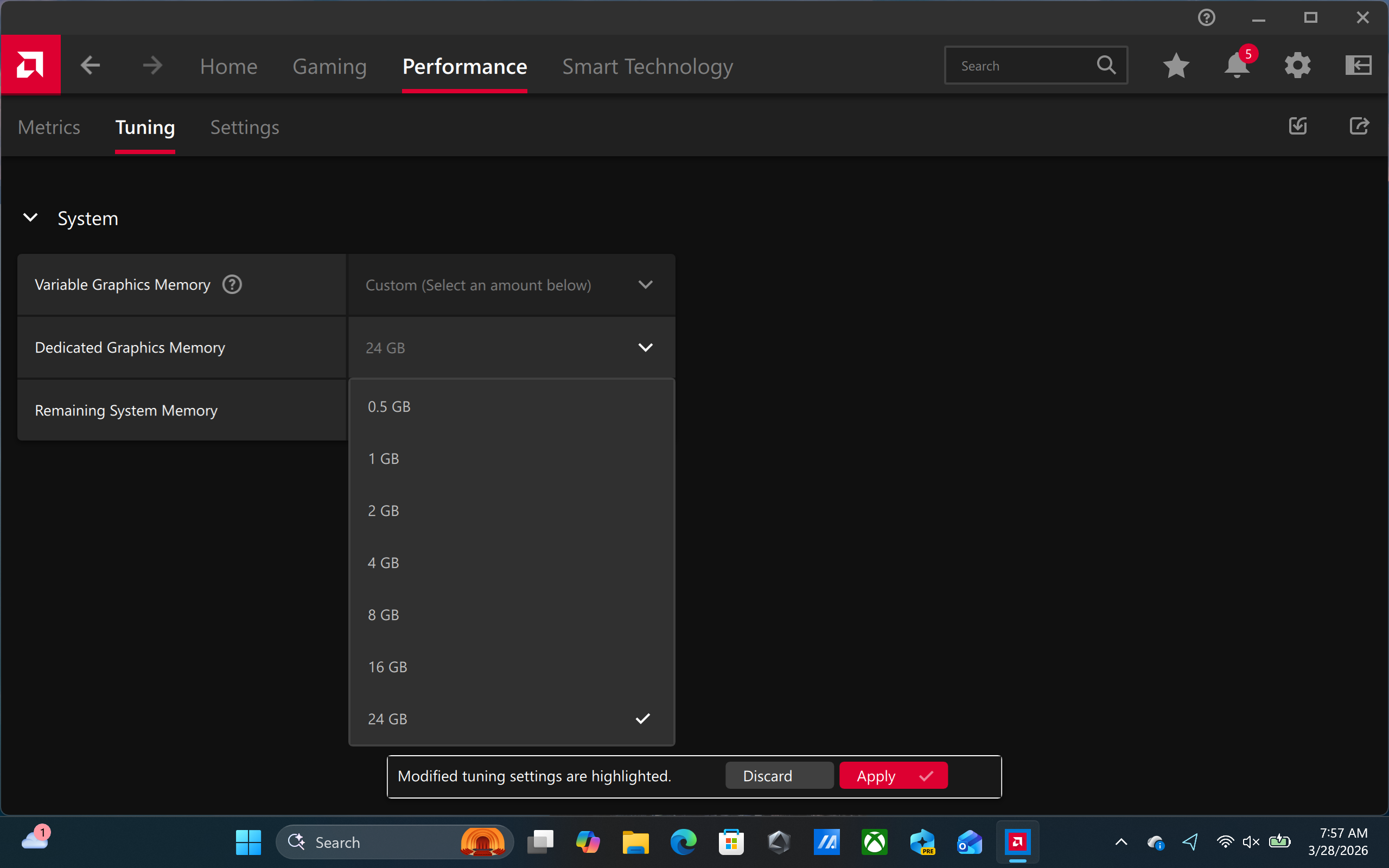
And speaking of the video memory thing, why on Earth is it that after over a year into the Strix Halo era, we’re still being left with the default slither of memory dedicated to the GPU? I know that most of us know this already, and dip into the AMD settings to tinker.
But for an experiment, I gave this to my non-techie friend and told him to play games for a day. The report the next day was simple: he went back to his PS5 after an hour because the TUF A14 was so choppy.
If he didn’t know that VRAM allocation is set to 512MB (that’s megabytes…with an M) by default, then what does that say for anyone else who buys it? Change this for Strix Halo gaming laptops now — it’s a difference of literally 20-30% in performance as I found.
Asus TUF Gaming A14: Verdict
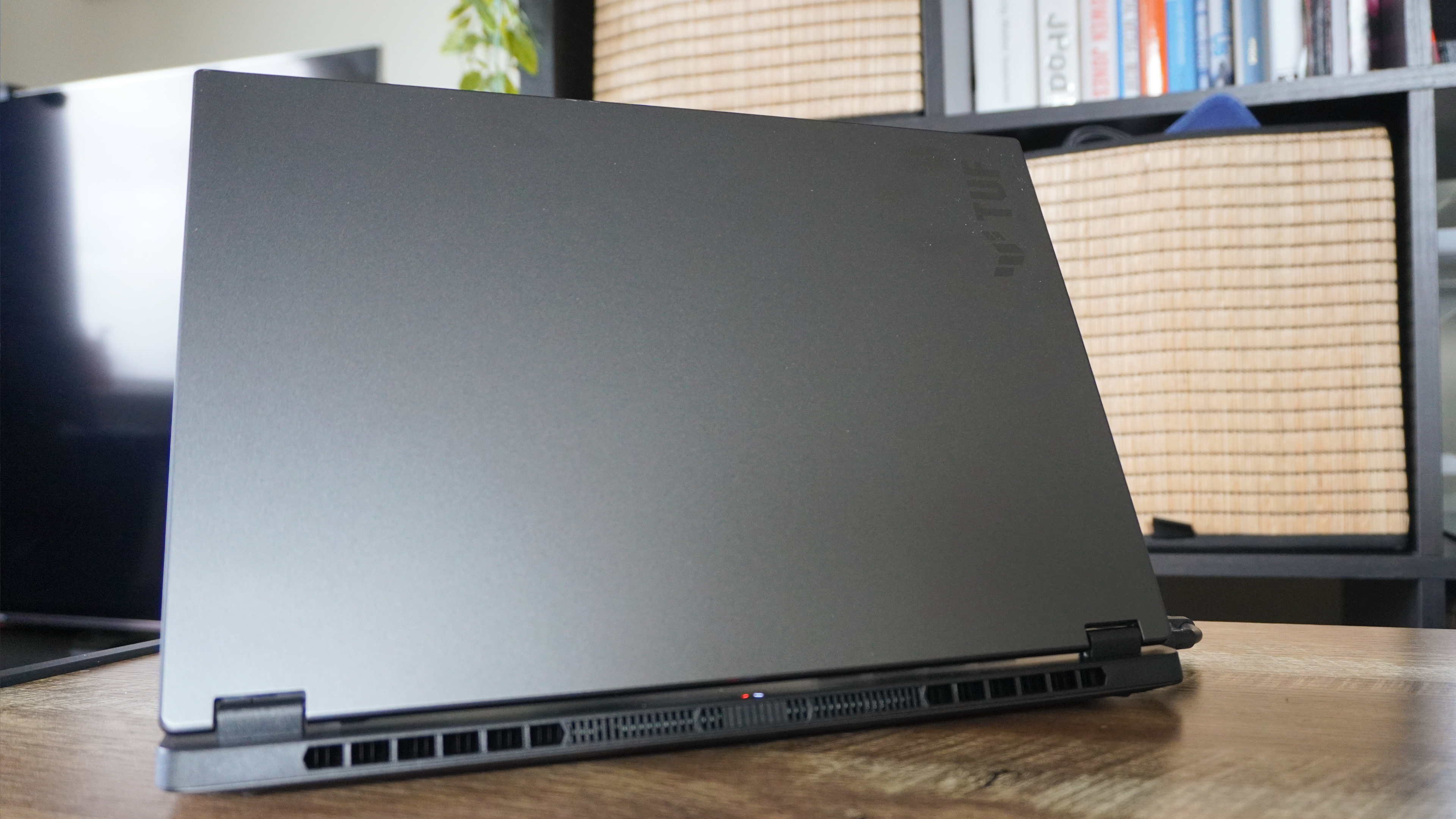
The Asus TUF Gaming A14 has a serious identity crisis that makes it hard to trust. On the face of it, it’s a good laptop. But I can’t look past that huge price tag and the subsequent downgrade in gaming performance and battery life that you get.
It’s like charging you more for less — the laptop equivalent of Chili’s shrinkflation. I hope that in the future, we remember this laptop is supposed to be the affordable arm of the ROG Zephyrus G14. The hatchback you walk out the dealership with when you’re lured in by the supercar.
But at the moment, it’s in no man’s land.
Source link