
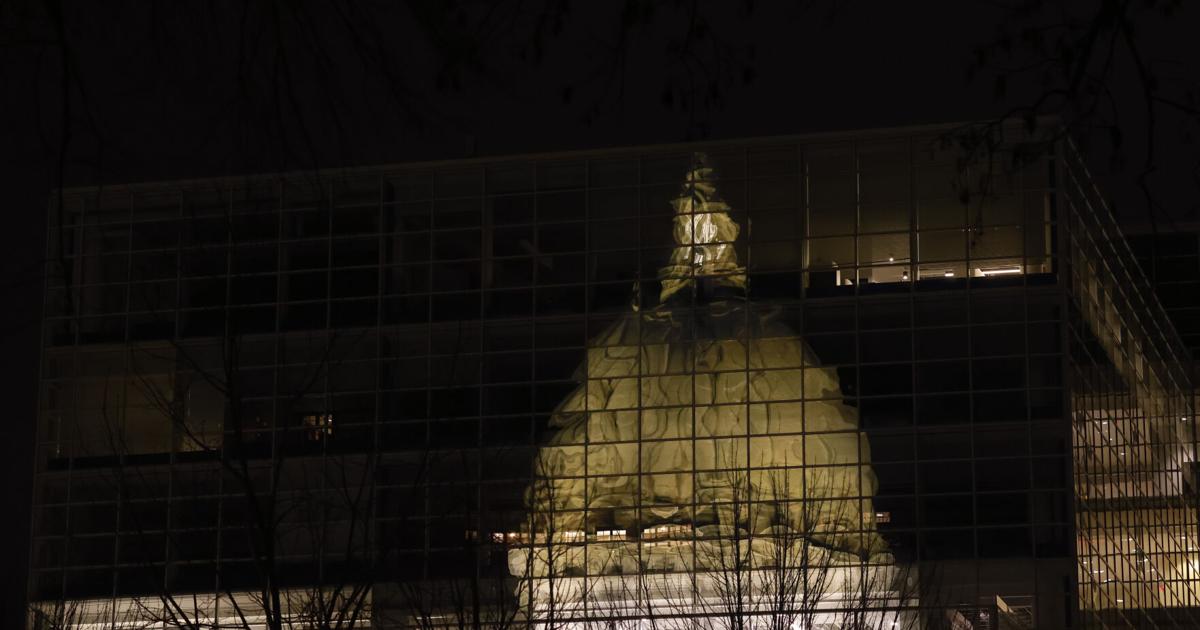
Wisconsin has another jam-packed election season in 2026, and for the first time in years, the future of which party holds power at the Capitol and controls state government is truly up in the air.
Over the summer, Democratic Gov. Tony Evers announced he would retire at the end of his current term, leaving the seat of the state’s chief executive wide open for the first time since 2010. A long list of Democrats have jumped in the race to replace him, and two Republicans have also announced bids.
In the state Legislature, Democrats also see a chance to flip at least the Senate if not the Assembly after the state’s legislative maps were redrawn to be more competitive.
But nothing is certain, said University of Wisconsin-La Crosse political science professor Anthony Chergosky. He said it’s completely possible for Democrats to win a trifecta and control both the Legislature and the governor’s seat, but Republicans also stand a chance. The power could also be split between the parties again, he said.
“There is genuine uncertainty in a way that we have not seen in a long time about the balance of power in Wisconsin government. When we look ahead to this election cycle, I mean, pick your combination,” Chergosky said. “Mix and match your options and all of them are on the table.”
Who will replace Tony Evers?
The marquee race in this battle for control over Wisconsin’s government is the gubernatorial race, according to University of Wisconsin-Madison political science professor Barry Burden.
“It feels as though either party could win that race. And statewide races for governor have been very close in recent years, and it’s likely to set the tone for everything else on the ballot,” Burden said.
A lot will determine who wins the November race. But first, the parties will endure a primary to determine their nominee. That election will take place on Aug. 11.
Former Wisconsin Lt. Gov. Mandela Barnes is among eight Democrats running for governor but may have the strongest name recognition statewide as a former U.S. Senate candidate.
So far, eight Democrats are gunning for their party’s nomination: former U.S. Senate candidate and former Lt. Gov. Mandela Barnes; current Lt. Gov. Sara Rodriquez; Milwaukee County Executive David Crowley; state Rep. Francesca Hong of Madison; previous gubernatorial candidate and state Sen. Kelda Roys of Madison; Missy Hughes, the former head of the Wisconsin Economic Development Corp.; former state Rep. Brett Hulsey; and Carthage College political science student Zachary Roper.
On the Republican side, U.S. Rep. Tom Tiffany of Minocqua and Washington County Executive Josh Schoemann are duking it out.


U.S. Rep. Tom Tiffany is considered the front-runner in the Republican primary race for the Wisconsin governor’s office. He so far faces Washington County Executive Josh Schoemann.
While Barnes and Tiffany have emerged as the frontrunners, both Burden and Chergosky said there is plenty of time for things to change in both parties’ races, especially with such a late primary.
National politics will likely play a big role in this race. Democrats will have a slight advantage, Burden said, because midterm elections are usually more favorable for whichever party is not in control of the White House. In 2018, during President Donald Trump’s first term, Evers beat incumbent Republican Gov. Scott Walker, one drop in what was considered a “blue wave” of elections across the country.
Even though the national mood will play a role in down-ballot races, Chergosky said that in elections for governor, the candidate’s personality and individual attributes sometimes matter most.
“I fully expect that candidate quality will play a substantial role in shaping the outcome of the election. That’s what makes it hard to size up,” Chergosky said.
Which party will be in the majority?
The main story in recent state legislative elections has been over how large of a majority Republicans could win. But in 2026, the conversation is shifting to whether they will hold majority power at all.
“Which is really a completely different topic, because the party that has the majority in the legislative chamber controls the agenda and controls which bills do and do not come up for a vote,” Chergosky said.
Most Wisconsinites won’t have a competitive state legislative race on their ballot, but there are a handful of districts in each chamber that could be decisive.
The Senate is a more optimistic goal for Democrats, Chergosky said, largely because they gained so much ground in 2024. Republicans currently control the Senate with a 18-15 majority. Democrats need to flip two seats to win control, and four districts are seen as competitive battlegrounds, according to an analysis by Marquette University research fellow John Johnson.
The Assembly is more of an uphill battle for Democrats because there is a bigger gap to close. Right now, Republicans hold control with a 54-45 majority, meaning Democrats need to flip at least five seats to take control. Johnson identified six battleground districts in the Assembly.
The road to controlling both chambers may run through southwest Dane County. According to Johnson’s analysis, the 17th Senate District, which Republican Sen. Howard Marklein represents, and Assembly District 51, which Republican Rep. Todd Novak represents, are both up for grabs.
Much is out of the candidates’ control in legislative races. The candidate for governor matters a lot even in Assembly and Senate elections, Burden said, because voters often cast a straight ticket for one party. National politics, the economy and approval ratings of both parties will also play a factor, Chergosky said.
It’s hard to say which party has the upper hand in the battle for legislative control, according to Burden.
“Republicans have more incumbents, so that’s a good thing for their party — if you have more people in office who have won and are known to voters and can raise money and have had successful campaigns before,” he said. “But it also means they have more seats they need to defend to hold their majority.”
Other races to watch
In addition to the legislative and executive races, Wisconsinites will decide a few other notable elections in 2026.
Congress: A number of toss-up districts nationwide could decide who controls the U.S. House of Representatives, where the margin is razor-thin, and Wisconsin’s 3rd Congressional District is one of them.
In that race, Republican Rep. Derrick Van Orden is likely to face a rematch with Democrat Rebecca Cooke in November. Van Orden beat Cooke in 2024 with just under 3% of the vote, and both the Cook Political Report and the University of Virginia’s Center for Politics rank the race as a toss-up.
Wisconsin attorney general: Another important statewide race voters might overlook is the race for attorney general, Burden said.
Democratic Attorney General Josh Kaul is running for reelection, and Republican Fond du Lac County District Eric Toney is running against him. Kaul beat Toney in 2022 by just over 1% of the vote.
The state attorney general role is important in defining criminal justice policy in the state, deciding what kinds of lawsuits the state joins, and defending state agencies and state offices, Burden said. He and Chergosky both said this race will be notable, as well, because Kaul has been adamant in fighting against Trump, joining other Democratic attorneys general across the country in suing the administration.
“It’s not something that voters maybe pay day-to-day attention to, but it’s just so important for all kinds of things: environmental regulations, education policy, legal settlements, the kind of divides over gender and race issues in schools and businesses and other places, immigration — it’s a long list of things where the attorney general is involved. So that’s just a race that deserves more attention than it typically gets,” Burden said.
Wisconsin Supreme Court: In the spring, Wisconsinites will also vote in a state Supreme Court race for the third time since 2023. Right now, liberal Court of Appeals Judge Chris Taylor and conservative Court of Appeals Judge Maria Lazar are vying for the open seat of retiring conservative Justice Rebecca Bradley.
This race won’t be as consequential as the previous two Supreme Court races Wisconsin voters have seen on their ballot — when they elected liberals Janet Protasiewicz in 2023 and Susan Crawford in 2025 — and the temperature is likely to be much lower, Burden said, because ideological control isn’t in question.
No matter who wins in April, liberals will continue to control the court until at least 2028. But either side has a chance to chip away at or build onto the current makeup of the court.
“If Chris Taylor wins, then the liberals open up a 5-2 majority, and at that point, that is a mountain to climb for conservatives who wish to win back majority control,” Chergosky said.
Wisconsin’s spring primary will be held on Feb. 17, and the spring general election on April 7. In the fall, the primary will be held on Aug. 11, and the general election will be held on Nov. 3.
Source link
-

-

-

-

-


