

For months I’ve been waking up at 3 a.m. with anxiety — a doctor shared this trick to falling asleep in seconds and it’s a game changer for my sleep
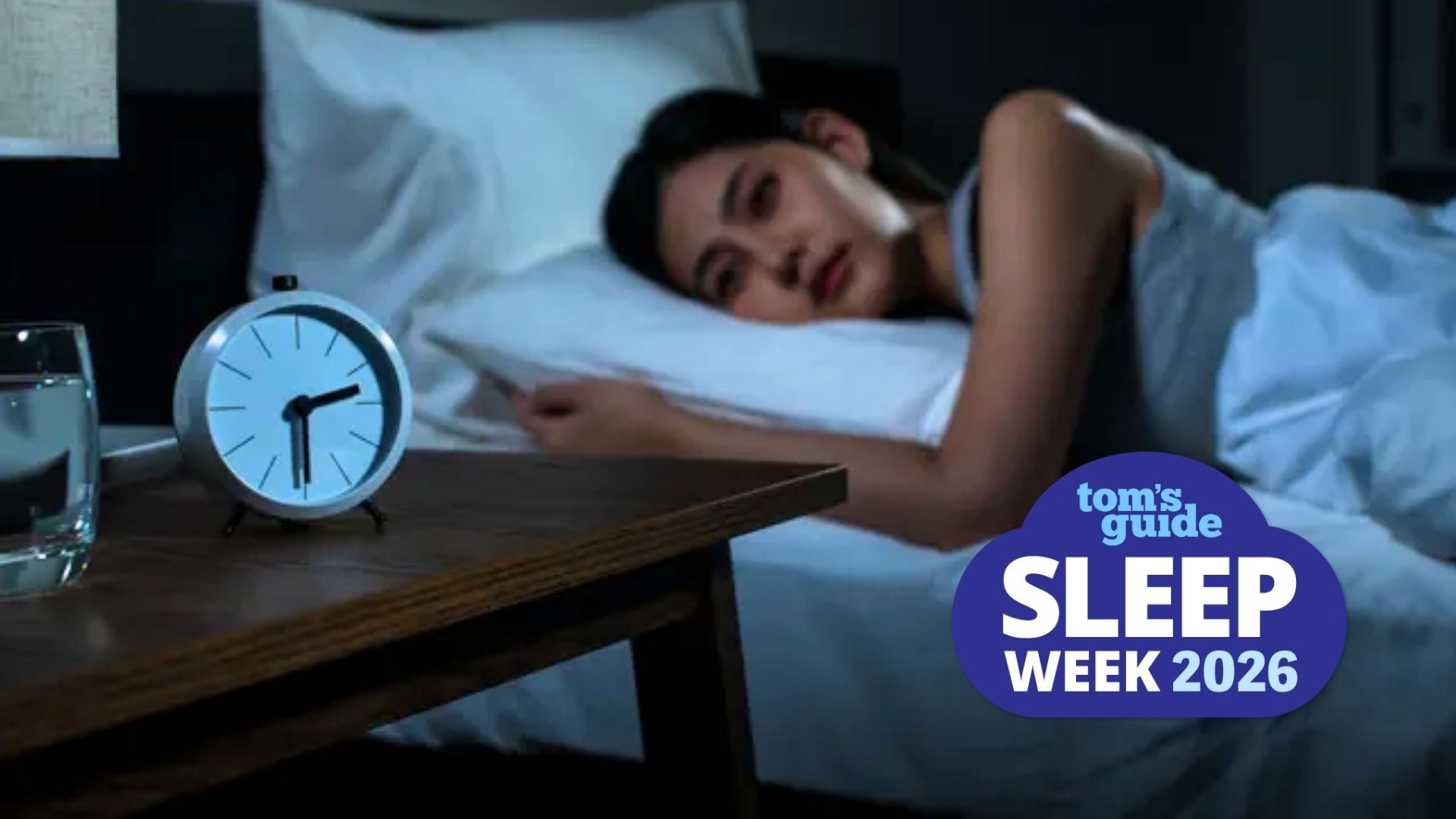
Stress and anxiety caused by hormone fluctuations means that waking up at 3 a.m. has been plaguing my sleep for months. In these moments of staring at the ceiling, heart pounding and thoughts racing, falling back to sleep feels like an impossibility.
Tired and disheartened, I spoke to Dr William Lu, a sleep medicine physician, for the sleep method he recommends for soothing nighttime anxiety and falling back to sleep fast. His answer? Cognitive shuffling, a relaxation technique that helps halt sleep-stealing rumination in its tracks.
Since trying it, cognitive shuffling is now my go-to method for falling back to sleep in seconds. Here, I’ll explore in closer detail what cognitive shuffling is, why it works and how you can try it tonight to fall back to sleep fast.
Key take-aways: At a glance
- Cognitive shuffling is a science-backed way to fall asleep fast
- To do it, pick a random letter, then think of different words beginning with that letter
- Thinking of random words stops your mind from focusing on anxious thoughts
- In turn, that helps you to relax and fall asleep quickly again
- Cognitive shuffling was developed by Dr Luc P. Beaudoin when researching the brain during sleep and how somnolent versus insomnolent words affect how quickly or slowly you fall asleep.
What is cognitive shuffling and how does it ease nighttime anxiety and help you fall asleep fast?
Cognitive shuffling is a relaxation method that helps quieten racing thoughts, which is something that I often struggle with when lying awake at 3 a.m.
From the tasks I might have forgotten (but suddenly remember in the dead of night), to my endless to-do list the following day — my brain often whirs with activity when it should be asleep.
However, cognitive shuffling — a method that ‘shuffles’ your thoughts — helps disengage your brain and lull you into sleep.
It’s a technique that was developed by Canadian scientist, Dr. Luc P. Beaudoin when researching what happens to our brains when we fall asleep.
As we drift off, our thoughts become less structured and cognitive shuffling mimics that fragmentation and essentially tricks our brains into sleep.
It’s effective for easing anxiety because it occupies your working memory just enough to prevent rumination without stimulating the brain
Dr William Lu
“Cognitive shuffling is a technique to help you fall asleep where you deliberately imagine a series of unrelated, neutral images or scenarios, like a random group of objects, so your mind stops fixating on anxious thoughts and drifts toward sleep,” explains Dr Lu, medical director at Dreem Health.
Since trying it, cognitive shuffling is now my go-to method for falling asleep fast — whether that’s at my 10pm bedtime or when anxiety leaves me wide-eyed and frantic at 3 a.m.
“It’s effective for easing anxiety because it occupies your working memory just enough to prevent rumination without stimulating the brain, essentially distracting your mind from stress while keeping your body relaxed,” explains Dr. Lu, also a board-certified neuropsychologist. Keen to try it? Here’s how.
How to practice cognitive shuffling to fall asleep fast
There’s no app, wearable or specialist equipment required in order to practice cognitive shuffling — you don’t even have to open your eyes if you don’t want to.
It’s a technique that helps break negative thought cycles by focusing on random words that have no association with each other.
It might sound complicated, but it isn’t. It’s even a method I’ve since shared with my children, and works for them too.

To start, I make sure that I’m lying comfortably and that my bedroom has been optimized for sleep. That basically means that anything that could stop me from sleeping (or has actually woken me up) has been addressed.
That could be opening a window to cool the room, grabbing a sleep mask from the nightstand to block out ambient light or popping in a pair of earplugs to drown out any noise.
Next, I think of a word. It could be anything, as long as it doesn’t throw up any negative associations. Let’s say that it’s ‘sleep.’
I then cycle through each letter of the word, thinking of a handful of words or objects that begin with each letter, spending a second or two thinking of the word. For example:
S — socks, slippers, satsumas…
L — lights, lemons, leaf…
E — eight, elevate, eyes…
E — explorer, enter, ensure
P — potato, people, pickle
Again, make sure that the words are neutral and don’t throw up any negative associations. If you find your mind wondering back to a negative thought cycle, just think of a new word and start again.
Since trying cognitive shuffling I often don’t get past the second letter before falling asleep — it’s simply that effective at switching off my brain for sleep.
3 other tried and tested methods to soothe anxiety and fall back asleep

However, if you also find yourself awake at night, it’s not the only sleep method at your disposal.
“Other strategies for falling back asleep include keeping the lights low, doing slow, deep breathing, practicing progressive muscle relaxation, or gently journaling any racing thoughts to offload’ them from your mind — some people also benefit from a brief mindfulness or body-scan meditation,” says Dr. Lu.
Listed below are other tried and tested techniques for falling back to sleep fast from our team.
The 15-minute sleep rule

Senior Sleep Writer Ruth Jones swears by the 15 minute sleep rule when she’s struggling to fall asleep. If she hasn’t fallen asleep within 15 minutes of going to bed (it can be longer, if you prefer), she gets out of bed.
While it sounds counterintuitive, switching from trying to sleep to a low-stimulation activity, such as reading or journaling, helps break the cycle of rumination.
Since Ruth recommended it, I find that taking a break from trying to sleep helps in times of high anxiety — moments where my heart is racing and I can’t catch my breath.
In these moments I get out of bed and leave the room entirely. I tend to do something relaxing and methodical, like folding laundry.
Once the feeling of anxiety has worn off, I go back to bed and tend to fall back to sleep quickly.
4-7-8 Method
The 4-7-8 breathing method was developed by Dr. Andrew Weil, and is now a popular stress relieving technique.
To begin, first exhale and empty your lungs of air. Next, inhale for 4 seconds, hold the breath for 7 seconds and exhale for 8 seconds.
Repeat this cycle a further 3-4 more times. You’ll notice in between each cycle how the feeling of anxiety slowly dissipates.
As well as being a stress-busting breathing exercise to practice when you can’t sleep, I find it a useful way to calm my nervous system during the day.
Put down your phone and pick up a book

If you find yourself awake at 3 a.m., the temptation is to reach for your phone — don’t. The screen will immediately bathe your bedroom in sleep-stealing blue light, which will send your melatonin(the hormone that helps you feel sleepy) levels plummeting.
Instead, Senior Staff Writer Frances Daniels always keeps a book on her nightstand. Like cognitive shuffling, the act of reading helps break the cycle of rumination and overthinking, which calms the nervous system and helps you feel sleepy again.

Follow Digitpatrox on Google News and add us as a preferred source to get our up-to-date news, analysis, and reviews in your feeds.
Source link
