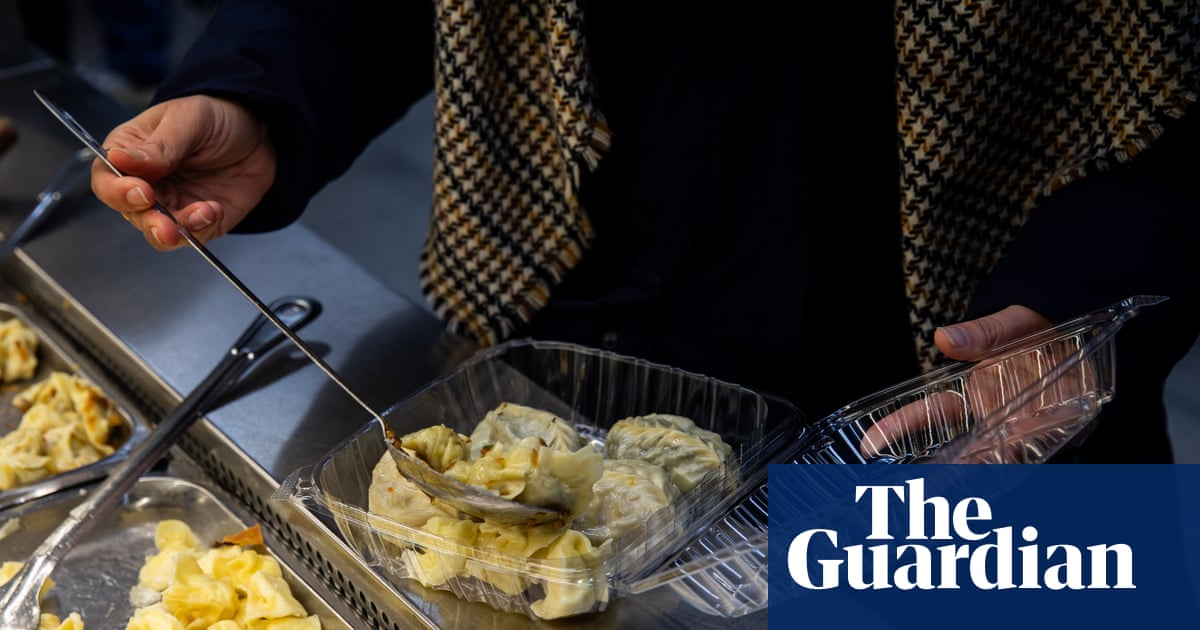
When I first stepped into the Tashkent Supermarket in Brighton Beach, I could barely get around. The store was bustling, packed with the familiar unsmiling faces of post-Soviet people eager to get their hands on foods like manty – intricately shaped dumplings filled with minced beef, onion and, depending on where you’re from, pumpkin for the subtle sweetness. Or chak-chak, a dessert made of small pieces of fried golden dough held together by honey syrup. Kompot, too, a drink made by simmering seasonal or dried fruits.
Growing up in Kazakhstan, these were staples in school cafeterias and at home. Manty was one of the first dishes my mom taught me to make – I thought she was a magician, the way she rolled the stretchy dough out so wide and thin, yet thick enough to hold the filling without tearing. I was rarely allowed to have soda or sugary drinks, but homemade kompot with fruits and berries from our garden was an exception. And though I never mastered chak-chak, the store-bought version was always a treat. As I got older and traveled across other former Soviet republics, I found comfort in knowing I would always find plov and samsas at eateries in Moscow, Baku and Tbilisi.
When I moved to New York City in 2019, I felt that instant sense of familiarity at Tashkent, the largest and at the time closest supermarket specializing in Central Asian food. I would regularly make the hour-and-a-half journey to the far end of Brooklyn, stocking up on my favorite spices and grains like buckwheat, or grechka, before lugging all the goods back on to the B train to upper Manhattan.
Bottom: Plov with lamb.
Photograph: Julius Constantine Motal/The GuardianThis year, the journey felt less like a pilgrimage, as the newest Tashkent Supermarket opened in Manhattan’s trendy West Village, known not only for its easy subway access but also for its abundance of influencers. Since March, food bloggers have brought a newfound popularity to the store on social media, turning often overlooked Central Asian food into must-tries for curious New Yorkers. Perhaps most notorious is Tashkent’s hot bar, with its plov – a rice and meat dish infused with cumin and carrots – and samsas, meat or potato pastries wrapped in the flakiest dough imaginable and dotted with black sesame seeds. Accounts such as sistersnacking and babytamago have taken viewers through this hot bar, its countless dishes spread across illuminated warming trays, and urged them not to sleep on the smoked fish counter. Mayor-elect Zohran Mamdani gave his own rave review for Tashkent’s manty.
When Odiljon Tursunov and his family arrived in the United States in the early 2000s, they couldn’t find the traditional bread and homemade halal sausages they ate back home in Uzbekistan. So they opened the first Tashkent in 2012 in Coney Island, right after Hurricane Sandy hit, naming it for the capital of Uzbekistan. Over the years, it grew from one storefront to five New York locations, as well as a wholesale sausage company and slaughterhouse facility in New Jersey.
Bottom: Customers check out.
Photograph: Julius Constantine Motal/The GuardianAs of 2019, more than 1.2 million people from former Soviet republics live in the US. Part of Tashkent’s success came from strategically opening locations across Brooklyn and Queens where a large number of Central Asian immigrants – Kazakhs, Kyrgyzes, Uzbeks, Tajiks, Turkmens – as well as eastern Europeans settled. “Forest Hills has a very large Uzbeki Bukharian population,” said Misa Khayriddinova, head of accounting and human resources for Tashkent, who herself is originally from Bukhara, Uzbekistan. “The Coney Island and Brighton Beach locations are predominantly where Uzbeki people settled after immigrating here, and there’s a lot of Russians and Ukrainians who immigrated here in the 1990s.”
With the West Village location, the owners are accommodating their existing customer base while also introducing new customers to distinct flavors from the Central Asian diaspora.
Historically, people in regions that are now Kazakhstan, Kyrgyzstan and Turkmenistan were nomadic, relying on dishes heavy in meat and dairy, while people in settled populations that are now Uzbekistan and Tajikistan cultivated crops such as carrots, rice and cumin. Proximity to China and Iran affected the gastronomy of the region, once the heart of the Silk Road. But nothing was as significant in reshaping the cuisine as the formation of the Soviet Union in 1922. The nearly 70-year rule not only spread Russian and Slavic dishes to Central Asia but also brought on shortages of food, shifts in agriculture and collectivization of farms, transforming the flavors of the region as people adapted.
Tashkent sources products from the former Soviet Union, including a variety of cheeses from Georgia, bread from Ukraine, and wholesale nuts and raisins from Uzbekistan. “It’s a fusion of both American products and Central Asian products,” Khayriddinova said.
Due to Manhattan real estate costs, along with the impact of congestion pricing on delivery trucks, Tashkent raised the prices on hot foods by at least a dollar this year. Aziz Muzdybayev, a Kazakh immigrant, also noticed the West Village location had fewer deals when he stopped by with his family. “We don’t really go to Trader Joe’s or Whole Foods,” Muzdybayev said. “When [we] miss the food from home and want the food your body is craving, we like driving down to Brighton, getting a portion of plov and a couple of ayran drinks, and then walking over to the beach to spend time with family.”
Jesse Badash, who lives in Queens and works in Manhattan, excitedly anticipated the West Village location opening for a while. “I’m very interested in Georgian and Azerbaijani food. The prices seem a little bit more expensive than the one in Brighton, but reasonable. The figs were ridiculously cheap,” Badash said as he browsed the store with a friend.
For Khayriddinova, seeing Tashkent’s signature green grocery bags in the wild is a major point of pride. “Central Asia is not well known,” she said. “For us to be the first brand to introduce the beautiful taste and authenticity of Uzbeki culture and food is wonderful. It highlights a lot of what Central Asia actually is: the hospitality, the unique taste of what we offer.”
One Tuesday evening, I headed to the West Village Tashkent during the post-work dinner rush. I didn’t hear as much Russian or other Central Asian languages as I would in Brooklyn. But as I shuffled from one end of the crowded market to the other, I watched someone at the salad bar curiously inspect the herring under the fur coat while another filled a container with olivier, both staples of New Year’s Eve. Among the bright lights and crowded shelves, I saw newcomers willing to try unfamiliar dishes, and instantly recognized the longtime patrons searching for familiar tastes that brought back memories. It gave me a rare sense of recognition – recognition of my food and culture that for so long had been flattened into the legacy of the former Soviet Union, despite having a rich identity of its own.
-
-

-

-

-