

How much sleep babies and children need each night
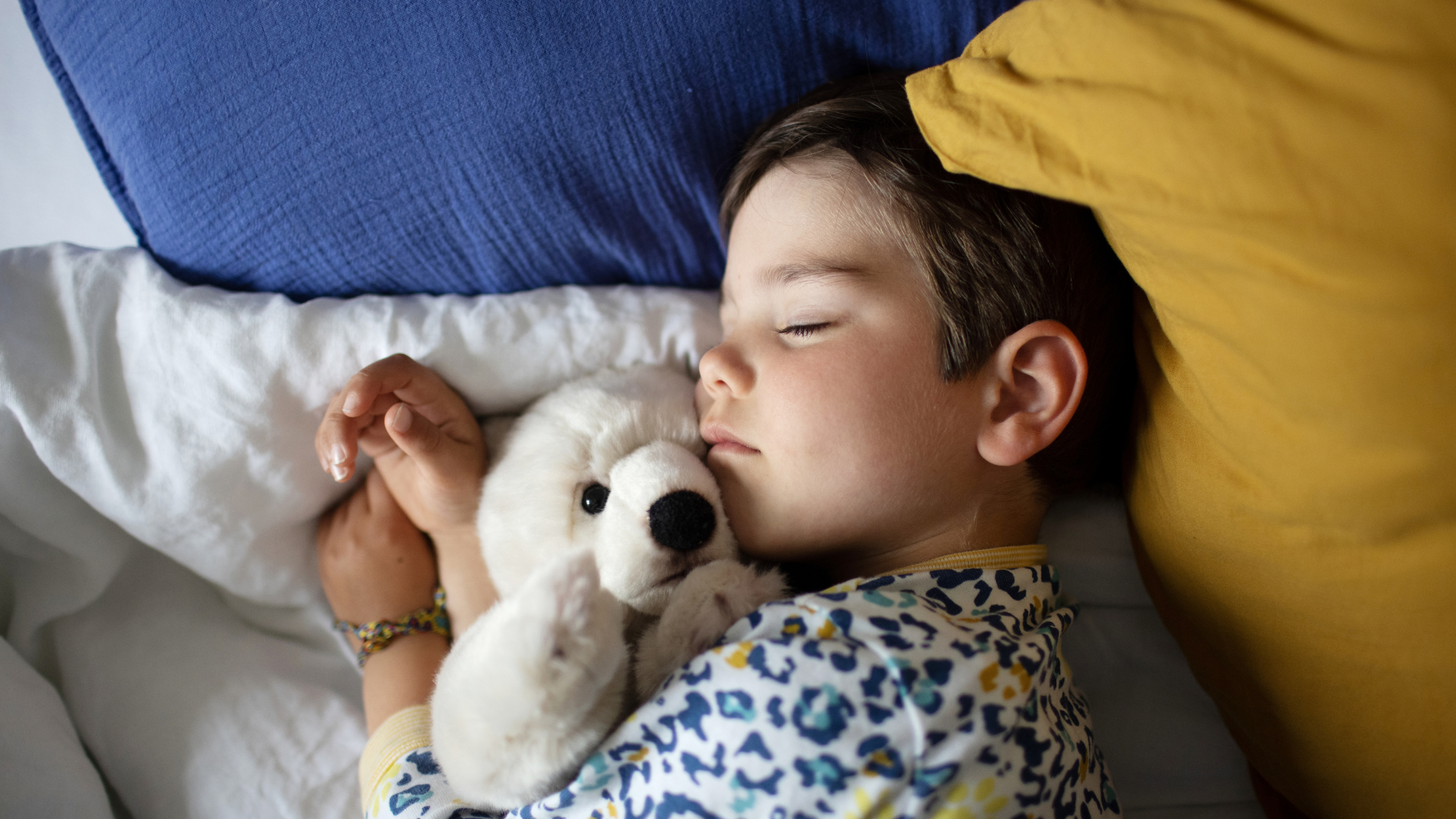
As an adult, enjoying a good night’s sleep helps your body to rest and recover, it strengthens your immune system, helps your brain to process your experiences and what you’ve learned that day, and form new memories. When you’ve slept well, you also feel more energised and focused.
But for babies and children, more sleep is needed as it plays a fundamental role in helping to shape their brain and memory development. Sleep is also vital to help with infant and child growth. But similar to adults, babies and children can differ in how much sleep they need, and how well they rest.
To understand why sleep is so important for babies and children, and what can really help if your baby or child has issues with sleeping well, we’ve spoken with two pediatric experts to find out more.
Key takeaways: At a glance
- Babies and children need considerably more sleep than adults.
- This is because they’re growing and learning more rapidly than at any other time in their life.
- Young babies need the most sleep, with around as much as 16 hours.
- On average, children aged 3-5 years old need 10-13 hours a night.
- Most kids aged 6-12 years need around 9-12 hours a night.
- Consistent bedtime and wake times are key to helping your child develop a good relationship with sleep.
Why babies and children need more sleep
“Babies and children are growing and learning at a more rapid rate than humans do at any other time in our lives,” explains Dr. Jennifer Stiff, a pediatrician at Norton Children’s Hospital.
“The high level of REM sleep that infants and children have helps them process this constant influx of new information,” she says.
“Sleep is not an inactive state for babies and children, but rather it is a complex process that allows for the nervous system to rest and reset, for essential growth hormones to be produced, for memory conversion to support learning, and for regulation to support emotional processing,” explains Debbie Gerken, a neonatal ICU nurse, certified pediatric gentle sleep coach, and founder of Sleep Like a Baby Consulting.
“Babies and children need more sleep than adults because they are growing and developing at such rapid rates that more sleep is needed to allow for this critical work to occur,” she adds.
How much sleep do babies need?
When considering how much sleep an infant needs at any age, it’s important to understand that there is a range of what is considered normal, Gerken says.
“Factors that can impact a child’s need for sleep include temperament, development, health history, their feeding ability, and if a baby was born full term or prematurely,” she explains.
Below are the recommended hours of sleep for babies and children from the American Academy of Sleep Medicine and the National Sleep Foundation.

4-6 months
According to the AASM, babies of this age should sleep 12 to 16 hours (including naps) of every 24 hours.
The NSF advice is similar, they suggest 12 to 15 hours of sleep each day.
6-9 months
Between 6 and 9 months, babies also need 12 to 16 hours (including naps) of every 24 hours according to the AASM, while the NSF recommends 12 to 15 hours of sleep a day.
9-11 months
Athough your baby is getting older, the AASM says they still need 12 to 16 hours of sleep (including naps) per 24 hours, and the NSF advises 12 to 15 hours of sleep.
12 months-2 years
The NSF recommends 11 and 14 hours of sleep for toddlers aged between 1-2 years. The advice of the AASM is aligned with this, they suggest 11 to 14 hours (including naps) of sleep every 24 hours.
How much sleep do children aged 3-12 years need?

“Like adults, children at any age have a healthy range of what is expected to be normal for sleep durations,” Gerken advises.
“Some children have a higher sleep need than others, and some may need to hold onto a nap for longer compared to others.”
Below are the guideline amounts of sleep for children aged between 3 and
3-5 years
The AASM recommends children of this age should get 10 to 13 hours of sleep (including naps) over each 24 hour period. NSF also recommends 10 to 13 hours sleep each day for 3-5 year olds.
6-12 years
When they are 6 to 12 years of age, the AASM recommends your child gets 9 to 12 hours of sleep every 24 hours, while the NSF suggests 9 to 11 hours of sleep for children between 9 and 12 (though it’s worth noting that they actually include 13 year olds in this bracket too).
How does this differ to other people?
The American Academy of Sleep Medicine recommends teenagers aged between 13-18 should get 8-10 hours sleep.
Then, as we age further the amount of sleep advised drops slightly. According to the National Sleep Foundation (NSF), it’s recommended that adults aged 18-64 sleep for between seven to nine hours per night.
For people aged 65 and over, the NSF suggests you may need a little less sleep. For this reason, seven to eight hours of sleep per night is recommended for older adults.
Pediatric sleep advice for babies and children
If your baby or child is having difficulty getting the right amount of sleep per night, our two pediatric experts have shared their best advice.
Prioritize and protect day sleep

For babies and children, sleep isn’t confined to nighttime, and it’s just as important to focus on that daytime rest.
“Day sleep is needed to support a child being able to go into night sleep without overtiredness,” Gerken explains.
While adults may find they fall asleep faster when they are overtired, she says, that isn’t the case for little ones.
“Overtiredness works in the opposite way for babies and children, as this can cause more resistance to sleep, shorter sleep stretches, and less than ideal sleep quantity and sleep quality.”
Gerken advises parents should focus on age-appropriate wake windows, and aim for their baby or child to get the amount of sleep required for their age, even if support with contact or motion sleep is needed.
Consistency is key
“My personal opinion is that sleep issues are the most challenging part of parenting in babies and young children,” Dr. Stiff says.
When she encounters families who are experiencing sleep issues, the pediatrician’s first recommendation is “consistency,” as it’s key in developing a sleep routine in a baby or young child.
“This involves having a similar routine that starts and ends around the same time each night in a consistent environment,” she explains.
Gerken adds that this is key to regulating a baby or child’s circadian rhythm. “If some days a baby wakes very early, and other days they wake two hours later to start their day, this can lead to the circadian rhythm becoming dysregulated. Keeping to a regular sleep and wake routine can help babies and children to naturally get tired and stay within sleep.”
Tweak wind down routines

Ensuring your child’s wind down routine is conducive to sleep may involve tweaking it slightly, particularly if screens are involved.
“It is recommended that all of us, including children, turn off all screens at least one hour before bed,” Dr. Stiff advises.
“By a combination of blue light and cognitive stimulation, screens interrupt our natural melatonin (the sleep hormone). Many families find screens to be a part of their wind down routine, but books, coloring activities, or other quiet play are a better sleep-friendly alternative.”
There is mixed evidence about how much blue light impacts sleep, with some research indicating it may “decrease in sleep quality and sleep duration,” while a recent study finding that it only resulted in a 2.7 minute delay in sleep onset. However Dr. Stiff’s recommendation of stopping screen use an hour before bed is echoed by other child health experts.
Meanwhile, Gerken explains that routines which are carried out in the same order every pre-sleep time help to signal to an infant or child’s brain that sleep is coming.
“Having a regular pre-sleep routine allows their brain to begin to move from an alert state to a calmer one. Ensuring babies and children can rest in a dark, cool and quiet environment will support better, and more consolidated, restorative sleep,” she says.
Source link
