Is your bed getting uncomfortable?
Is your mattress old or sagging? It could be time to upgrade, and you can find the right bed for your body and sleep needs in our best mattress of 2026 guide.
Whether you work from home or dislike being outside in cold weather, it’s tempting to spend all day curled up under a blanket at this time of year. While a day at home can sometimes be just what you need to reset, sleep experts are urging caution.
But even as a sleep writer who should know better, I’ll admit I’m more inclined to stay home over winter, logging into work in darkness and logging off after the sun has set. And I’ve certainly found it harder to fall and stay asleep at night after one of these days indoors.
I called upon brainwave researcher Dr. Patrick Porter to find out how your brain and body responds to staying at home all day, and crucially, how this impacts your sleep at night. Here’s what I discovered…


Patrick K. Porter, PhD is an award-winning author, educator, consultant, entrepreneur, and speaker. He was a co-developer of the MC2, the first personal light & sound brain training machine. Now, he’s known as the founder of Brain Tap Tech, a headset that uses light and sound technology to help people achieve brain fitness, overcome stress, and enjoy superb sleep among other benefits.
The circadian consequence
Your sleep is thrown off when you stay indoors all day because it disrupts your body’s circadian rhythm, aka your internal clock.
Dr. Porter explains: “When we stay indoors and largely inactive all day, the first thing to suffer is the brain’s ability to keep time.”
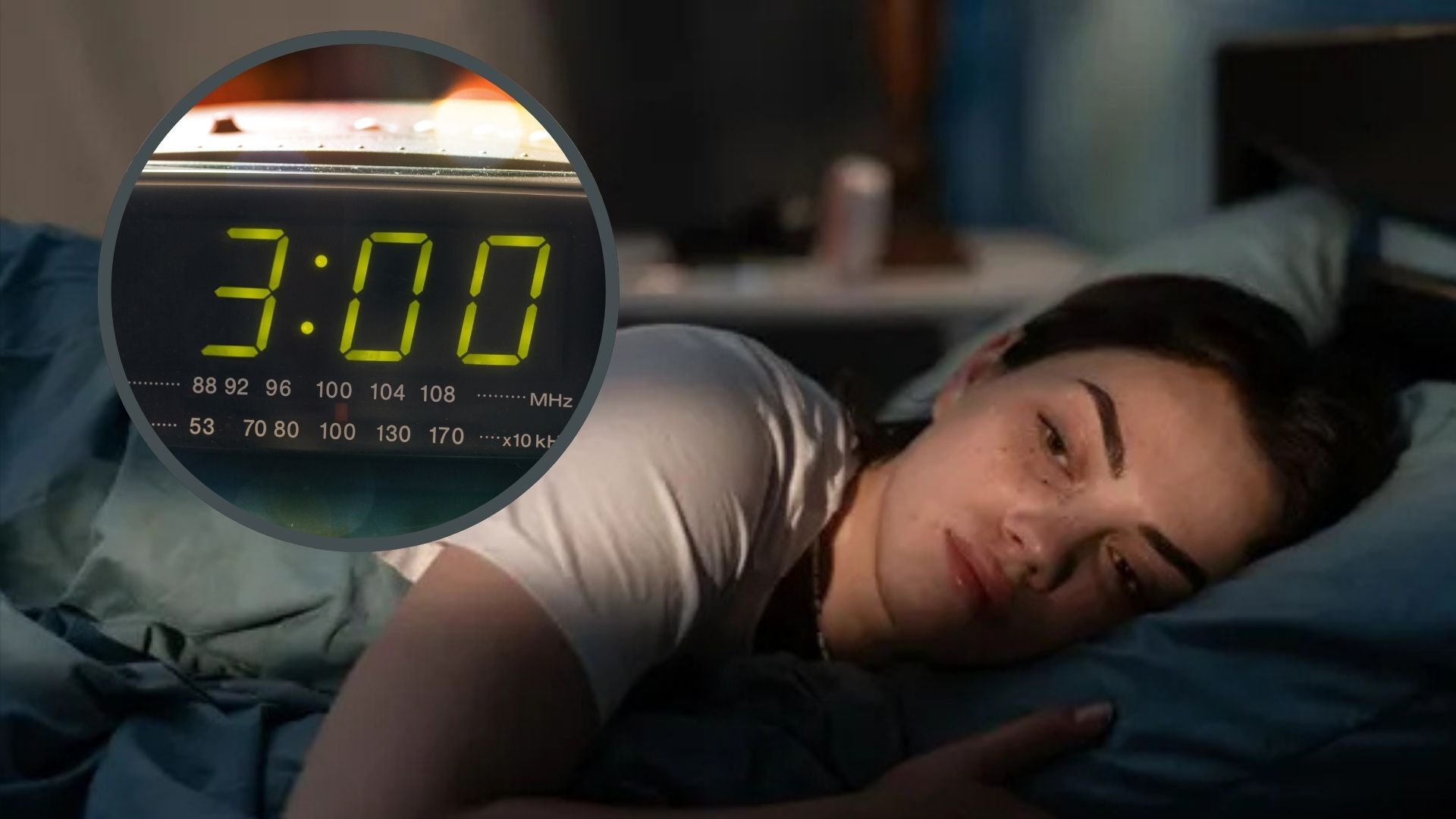
This is because our sleep-wake cycle is heavily dependent on environmental cues, says Dr. Porter, such as “natural light, physical movement, and changes in sensory input.” Spending 24 hours indoors removes the anchors that tell our brain when to be alert and when to rest.
“When those signals are weak or absent, the brain becomes confused about the time of day,” says the founder of Brain Tap Tech.
“Over time, repeated days spent indoors can flatten the natural contrast between day and night.” That makes it harder for your brain to recognize when it’s time to sleep.
3 major sleep cues impacted by staying indoors all day
From light to movement, when you don’t leave the house your body misses out on all the good things it needs to build up sleep drive throughout the day. Here’s the science and expertise behind it…
1. Lack of daylight
Daylight is arguably the most important environmental cue governing your body clock. A 2024 study of 103 American adults found those who got sunlight in the morning recorded better sleep efficiency (which basically means falling asleep fast after getting into bed), as well as fewer nighttime awakenings.
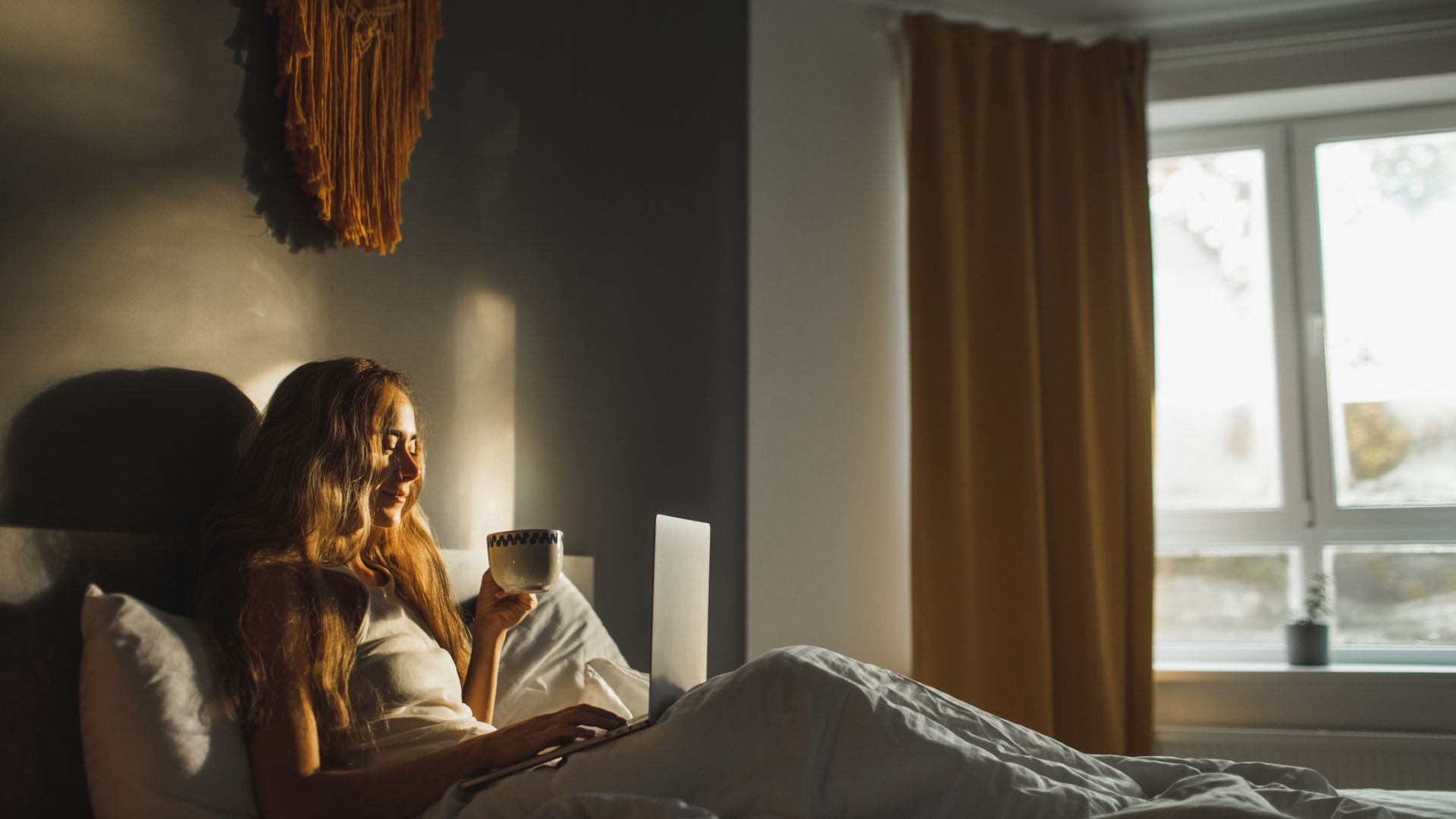
This is down to the relationship between light and sleep hormones such as melatonin. Dr. Porter explains: “Morning sunlight plays a critical role in suppressing melatonin early in the day and setting a clear starting point for the circadian clock. Without that signal, melatonin levels can remain mildly elevated into the daytime, contributing to grogginess, reduced focus, and lower daytime energy.”
“This delayed shutdown then pushes melatonin production later into the evening, which is why many people feel ‘tired but not sleepy’ at bedtime after being indoors all day,” he adds.
If you’re anything like me, your screen time rockets when you stay home all day. Spending more time engrossed by screens that emit blue light — be that a laptop, phone or TV — especially in the evening, further suppresses melatonin while overstimulating the nervous system, Dr. Porter says, leading to nighttime anxiety.
2. Reduced movement
Excusing those days you get the manic urge to declutter and clean, staying home usually results in lower physical activity, especially if you have an at-home laptop job. Without physical exertion, you have less ‘sleep pressure’ and more stress.
This is because adenosine, a chemical that builds up in the brain the longer we stay awake and active, builds up more slowly when we’re sedentary, meaning you don’t feel tired enough to fall asleep at your scheduled bedtime.
Dr. Porter adds: “Movement helps regulate cortisol, body temperature, and brainwave transitions that prepare us for deeper sleep later.”
“When we don’t move enough, cortisol can remain elevated into the evening, keeping the brain in a low-level alert or problem-solving mode. This often shows up as racing thoughts, light sleep, frequent awakenings, or waking up unrefreshed.”
3. Low mood
Some people find joy in spending a full day under a duvet. I am not one of those people. I can enjoy a slow morning but by the time the afternoon and evening rolls around, I get grouchy and irritable, and my mind spirals thinking of all the things I could be doing instead.
Guess what? My sleep then suffers.
That’s not because I’m a particularly outgoing person. It’s actually down to biology and, you guessed it, hormone cycles.
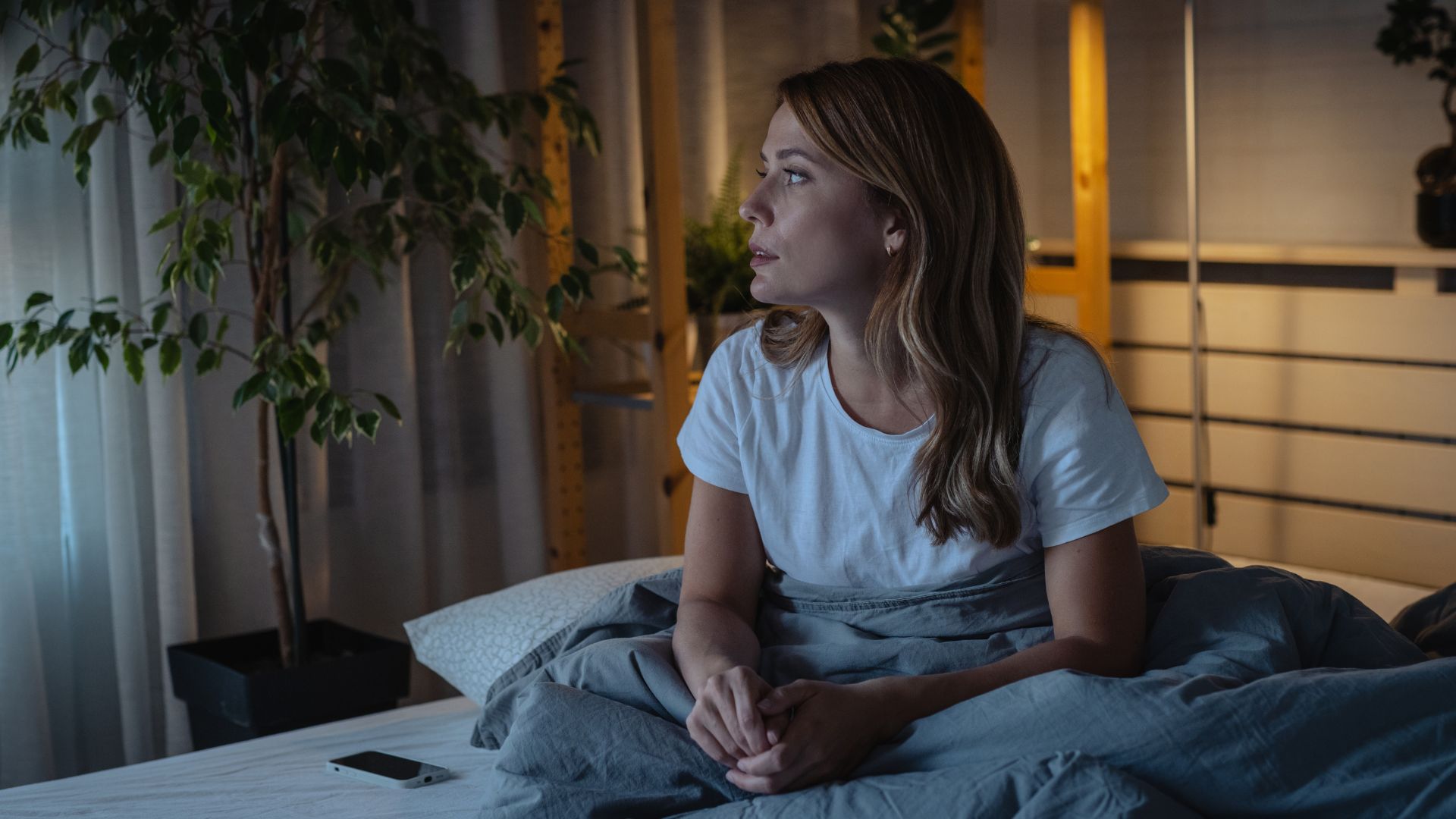
Dr. Porter explains: “Neurochemically, staying indoors can reduce serotonin production due to limited light exposure and physical activity — two critical factors for mood and motivation.”
That means you’re more likely to toss and turning after spending all day at home, battling anxious thoughts rather than sleeping soundly.
How to improve sleep when staying home is your only option
Be it remote work, caregiving responsibilities, illness recovery, or seasonal factors keeping you at home all day, there are times when you simply can’t get out the house. In those cases, here are Dr. Porter’s tips for giving yourself the best chance of sleeping well.
Don’t stay in darkness
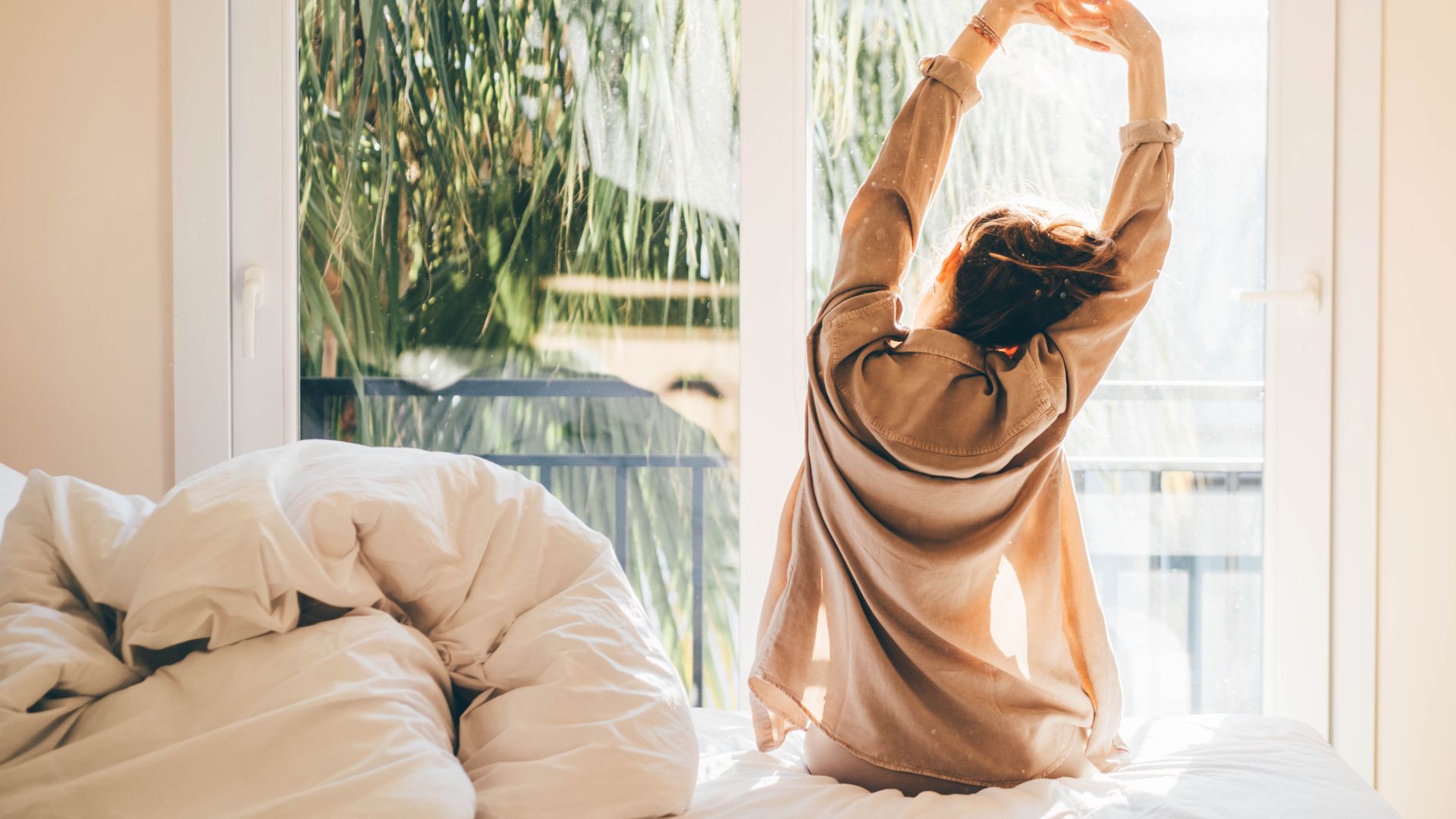
Getting some exposure to daylight, be it through a window or in the garden, can have immense benefits on your sleep quality. This is because, as Dr. Porter puts it, “your brain uses light as a primary timing signal.” So when you expose yourself to daylight, it helps regulate that internal clock. (Plus vitamin D boosts sleep.)
Dr. Porter, who has studied the brain for 32 years, says: “Getting natural sunlight within the first 30 to 60 minutes of waking helps set your circadian clock, increases daytime alertness, and supports melatonin release later that night.”
And if going outside isn’t possible, he recommends a light therapy box (or a top-rated sunrise alarm clock) as the next best thing. Used in the morning, a sunrise alarm clock can simulate this signal and help prevent circadian drift.
Move if you can
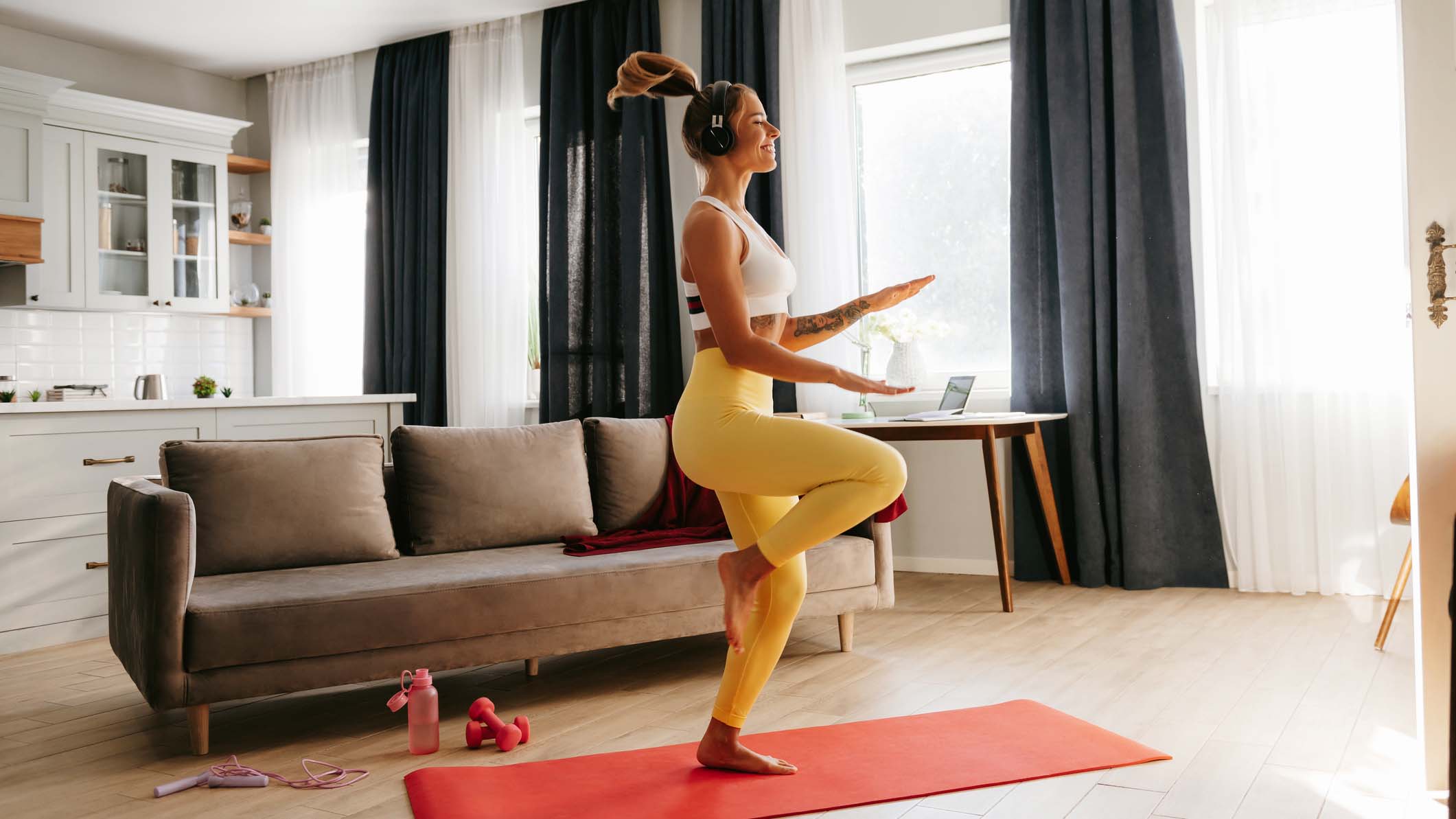

Equally important is scheduled movement, says Dr. Porter. “When you stay indoors, the nervous system lacks the rhythmic input that signals when to be alert and when to recover.”
From a living room workout, laps of the kitchen, or light stretching before bed, short movement breaks every so often help regulate cortisol, improve glucose metabolism, and prevent the brain from remaining in a low-grade stress state all day, leading to more restful sleep at night.
Limit screens
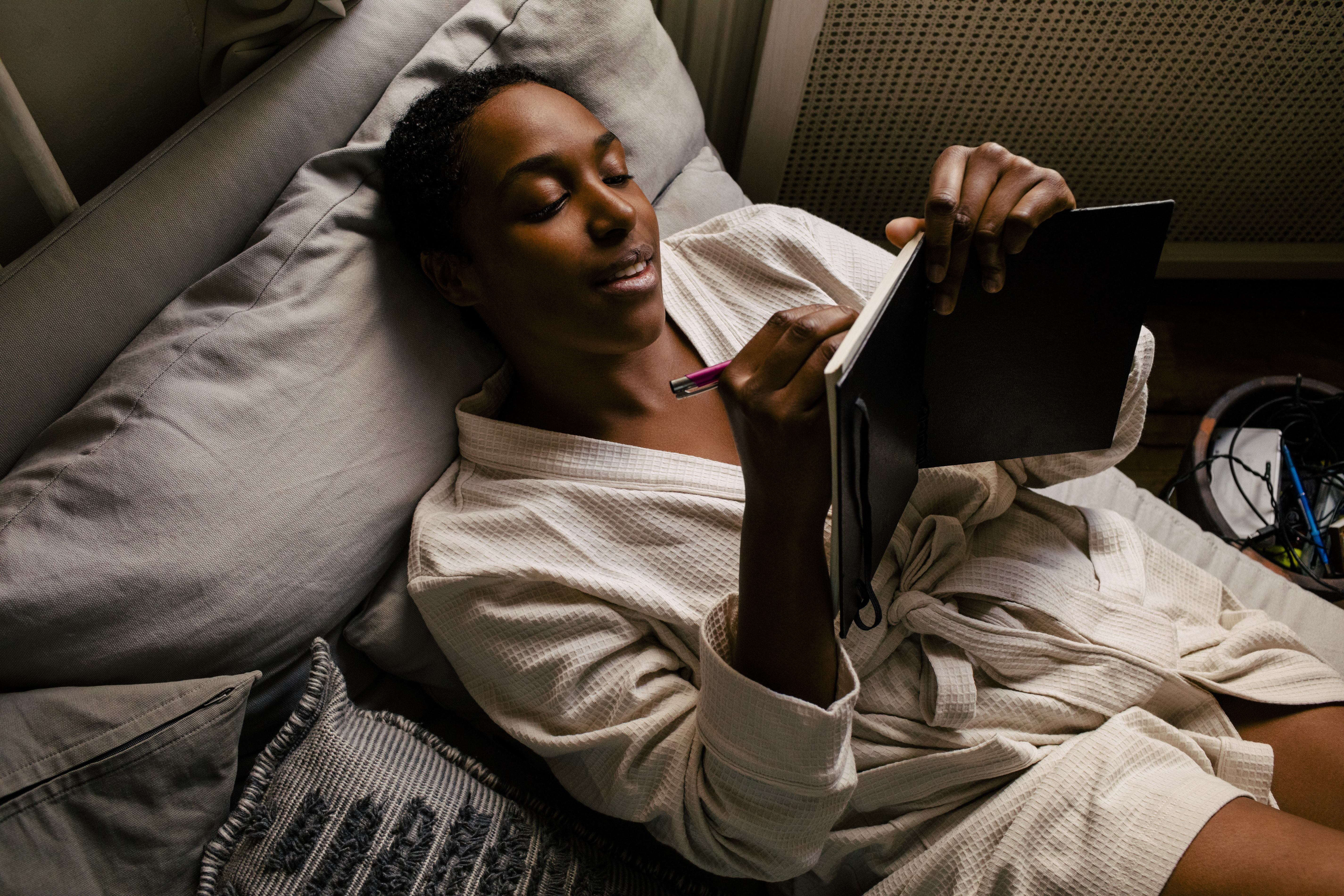

As mentioned above, too much screen time, especially in the evening, can make it hard to fall asleep and disrupt you once you do drift off. Therefore, Dr. Porter recommends limited screen time one hour before bed.
He explains that this; “reduces blue-light suppression of melatonin and quiets the brain’s threat and stimulation circuits.”
“Replacing scrolling with calming routines — breathing, gentle mobility, or journaling — helps shift the nervous system into parasympathetic dominance.”
This way, your body and mind will feel calmer and more ready to drift off into a peaceful sleep once your head hits the pillow, even after a day at home.
Source link
-

-
-

-

-