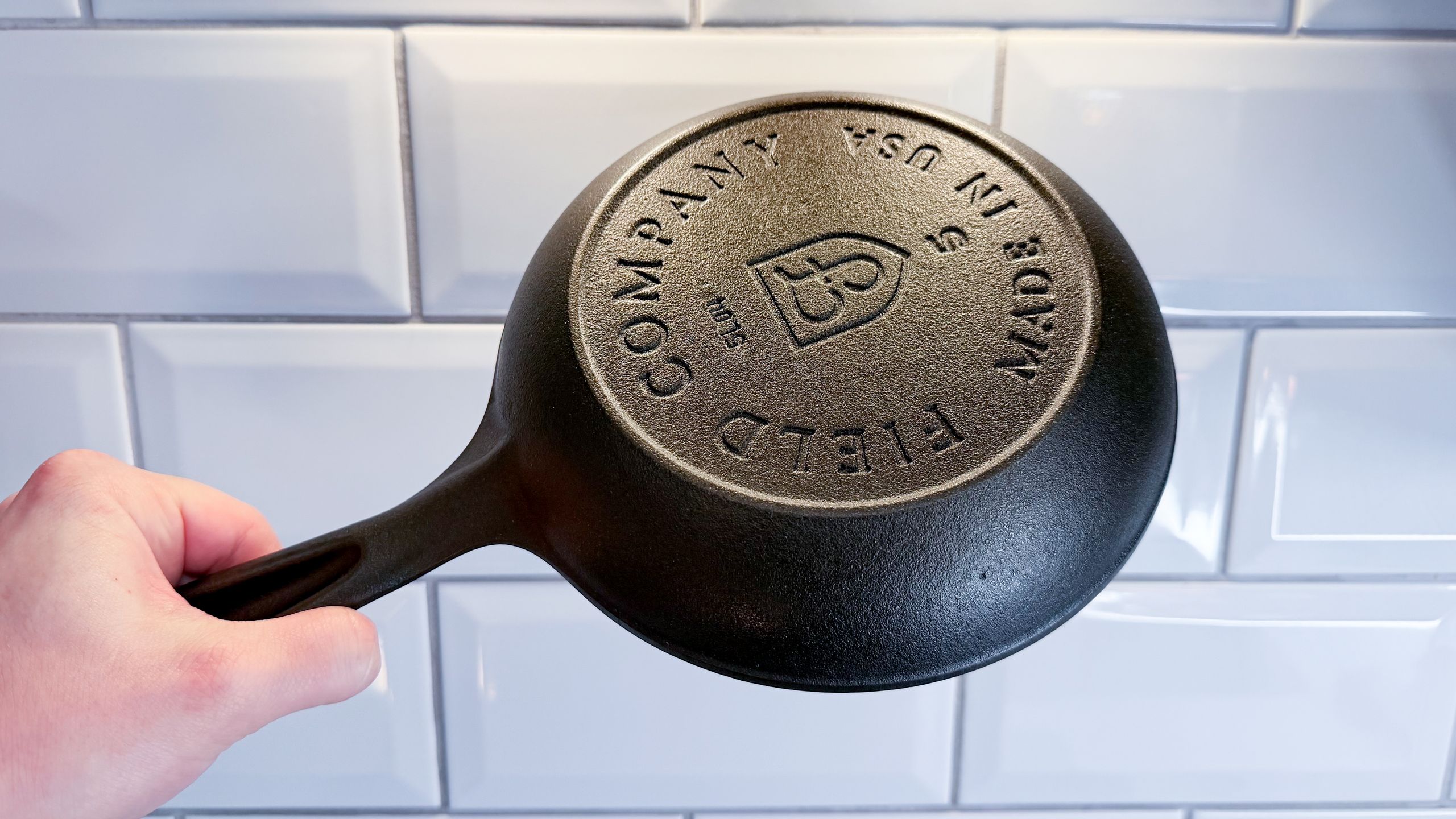
I love cast iron. As an ex-chef, I fully appreciate the benefits of cooking directly on metal, instead of teflon. You can treat your pans rougher, yet they’ll last longer. You’re not cooking on microplastics. Plus, you get better heat distribution and retention, resulting in more even cooks and fantastic sears.
There’s one thing that’s always put me off cast iron skillets, though, and that’s their weight. I own a cast iron — it’s a big, beautiful beast. But I also have a thick-based stainless skillet that does a similar job, yet doesn’t require so much hefting about the kitchen. As such, I rarely find myself reaching for my cast iron.
That all changed when Field Company sent me its No.5 cast iron skillet for testing. I’ve spent a few weeks with this pan now, and it’s safe to say it’s solved my beef with cast iron. I mean, as a skillet, it’s literally solved my beef in general, too (sorry). Here’s what I love about the Field Company Skillet, and why it won’t be leaving my kitchen anytime soon (or ever).
Article continues below
Cast iron can be lightweight
The Field skillet has solved my primary day-to-day issue with using cast iron. Given how beautifully the pan is finished, and that it was made in the USA, I was expecting a super high-quality but super heavy skillet. Now, while it is indeed super high-quality, the first thing that struck me when picking up my No. 5 is just how light this thing is.
While it is indeed super high-quality, the first thing that struck me when picking up my No. 5 is just how light this thing is.
At just 2.2lbs (that’s just under 1kg), it’s super easy to pick up, move about and reposition. Sure, I have quite a small No.5 (7.5-inch) version of the pan, and the Field Company No.8 (10.25 inch) model is heavier at 4.3lbs. But that’s still way lighter than my previous 10-inch cast iron, which weighs 6.7lbs (and which my wife refuses to cook with on account of its weight).
This isn’t by accident. Field Company designs its pans deliberately this way. According to Field, fundamental to its brand origin story is the desire to make cast irons lighter than other pans on the market, more like cookware of old. That means much thinner side walls than my other cast iron or steel cookware. In fact, the No.5 is not much thicker than the cheap IKEA non-stick pans my wife prefers to cook on.
S’all in the chemistry
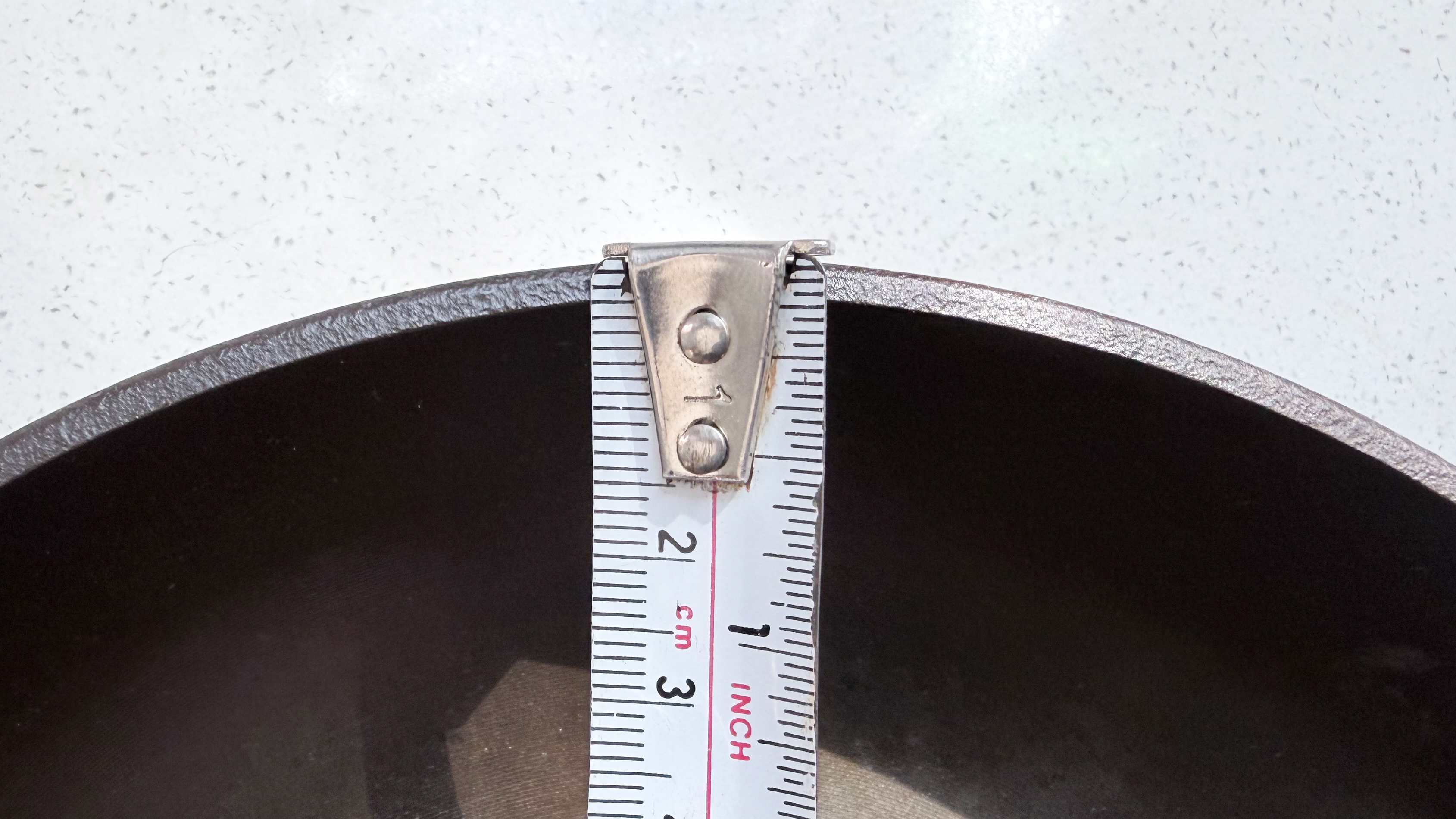

Now, that thin design is actually a bigger deal than it might sound. Sure, thin walls and bases make pans like the Field lighter and easy to handle. However, thicker metal gives cookware better thermal qualities, namely more even heat distribution, to reduce cold/hotspots for uniform cooking; and better heat retention, which lets the pan get and stay very hot, giving a more intense sear. At face value, those thin walls should make Field Company skillets comparatively poor cast irons. Not so.
Field Company says a large part of its R&D was figuring out the right chemical composition of its iron — so it could thin its pans out as much as possible while maintaining the desirable qualities of typical cast iron skillets. It settled on a specific graphite/iron mix, about which I am far too under-qualified in chemistry (my science education tops out at high school) to evaluate or explain.
What I can say, though, is that whatever chemical formula the brand settled on seems to work. Despite its low weight and thin walls, the Field Company still holds a lot of heat, meaning it can get super hot, then disperses said heat evenly. Those are the main benefits of a good cast iron, and the Field Company does them.
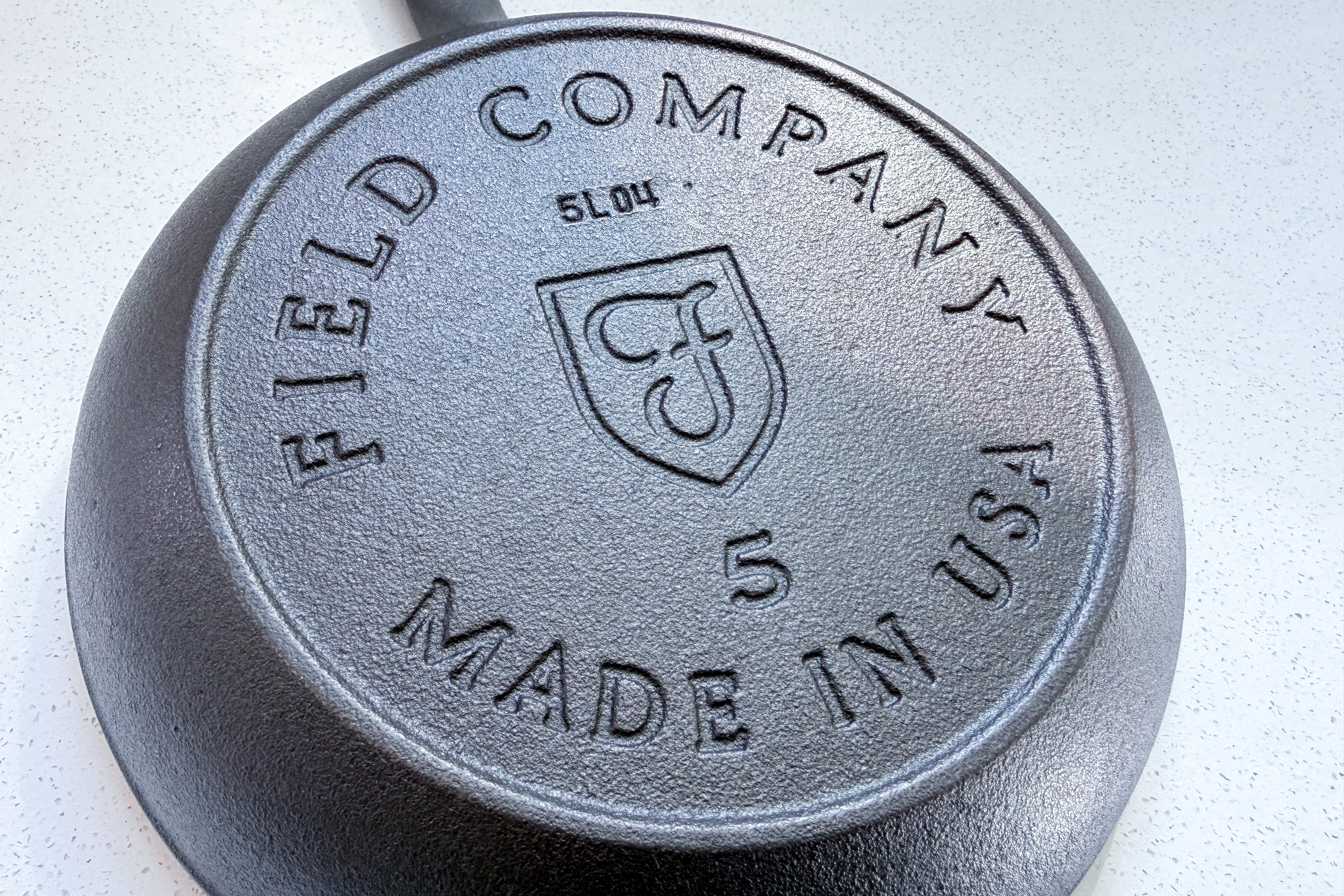

The compromise is that, by thinning out the metal walls, you don’t get quite the same level of heat retention as a super thick cast iron. I don’t really think that’s a problem, though. It means faster heat ups, and I don’t really need a pan to stay hot after I’ve finished cooking on it.
Don’t get me wrong, the No.5 still has a relatively thick base — enough to retain much more heat than a typical thin non-stick skillet. It’s just thinner than many fatter cast irons due to that graphite mix I mentioned above.
Field recommends heating the pan for 5-10 minutes before cooking, which figures. I usually heat my thick cast iron for around 8-10 minutes, and my heavy-based stainless pan for around 4-5. The No.5 only took around 5 minutes to heat up to smoke at full power on my induction stove, which was faster than I was expecting, although the small pan size may have contributed to this. Again, that makes it more usable than my chunkier skillets.
Time to cook
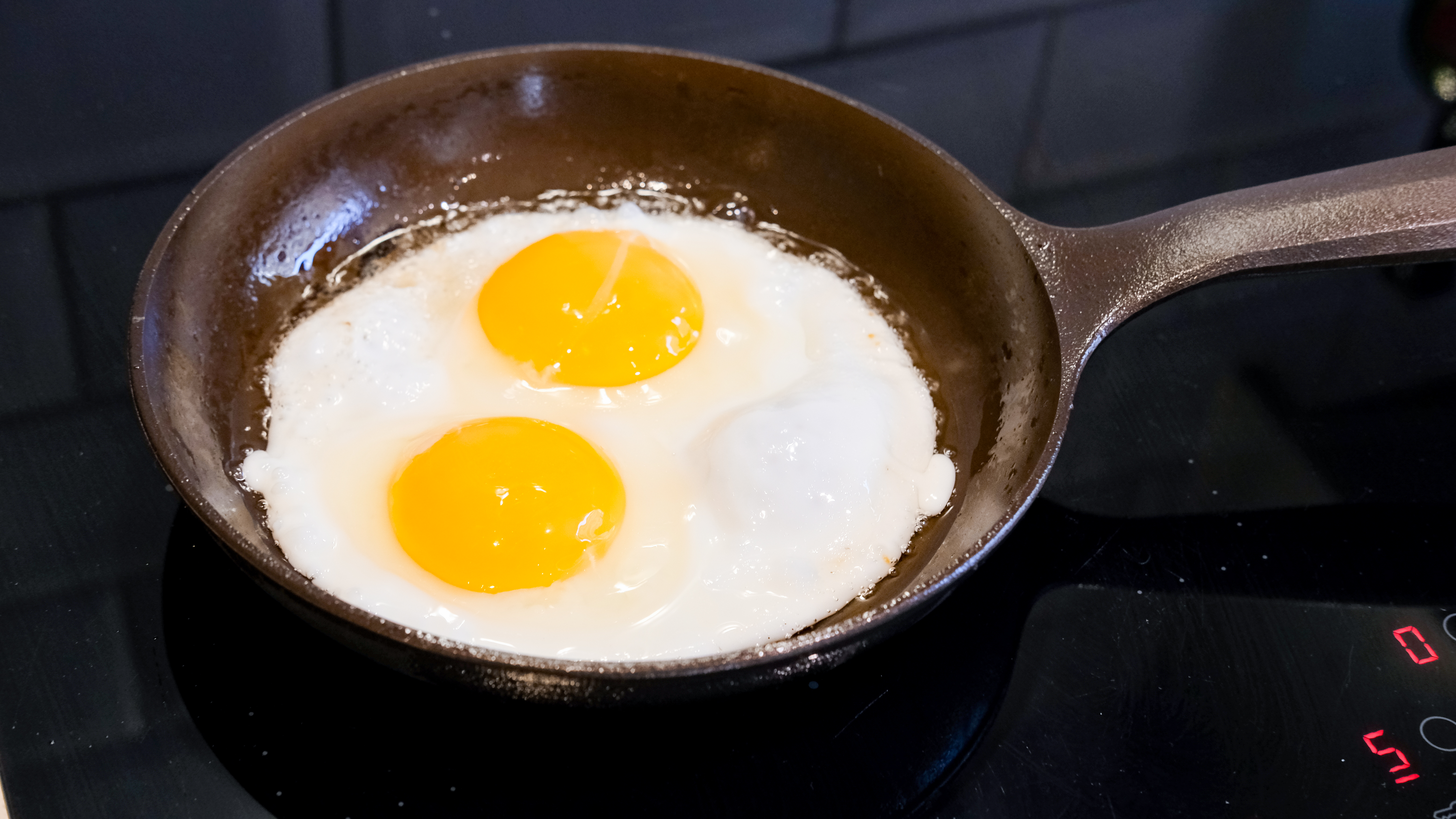

Obviously, the Field Company No. 5 I tesed isn’t particularly designed for meat. It’s quite dinky, so intended for smaller-scale cooking, like eggs. My recommendation would be the larger No.6 (8.3inch) or No.8 (10.25-inch) models, as these offer the best balance of size usability. I found the No.5 (7.5-inch) model a little too small, because for me the main benefits of cast iron are to be had when cooking sizable cuts of meat.
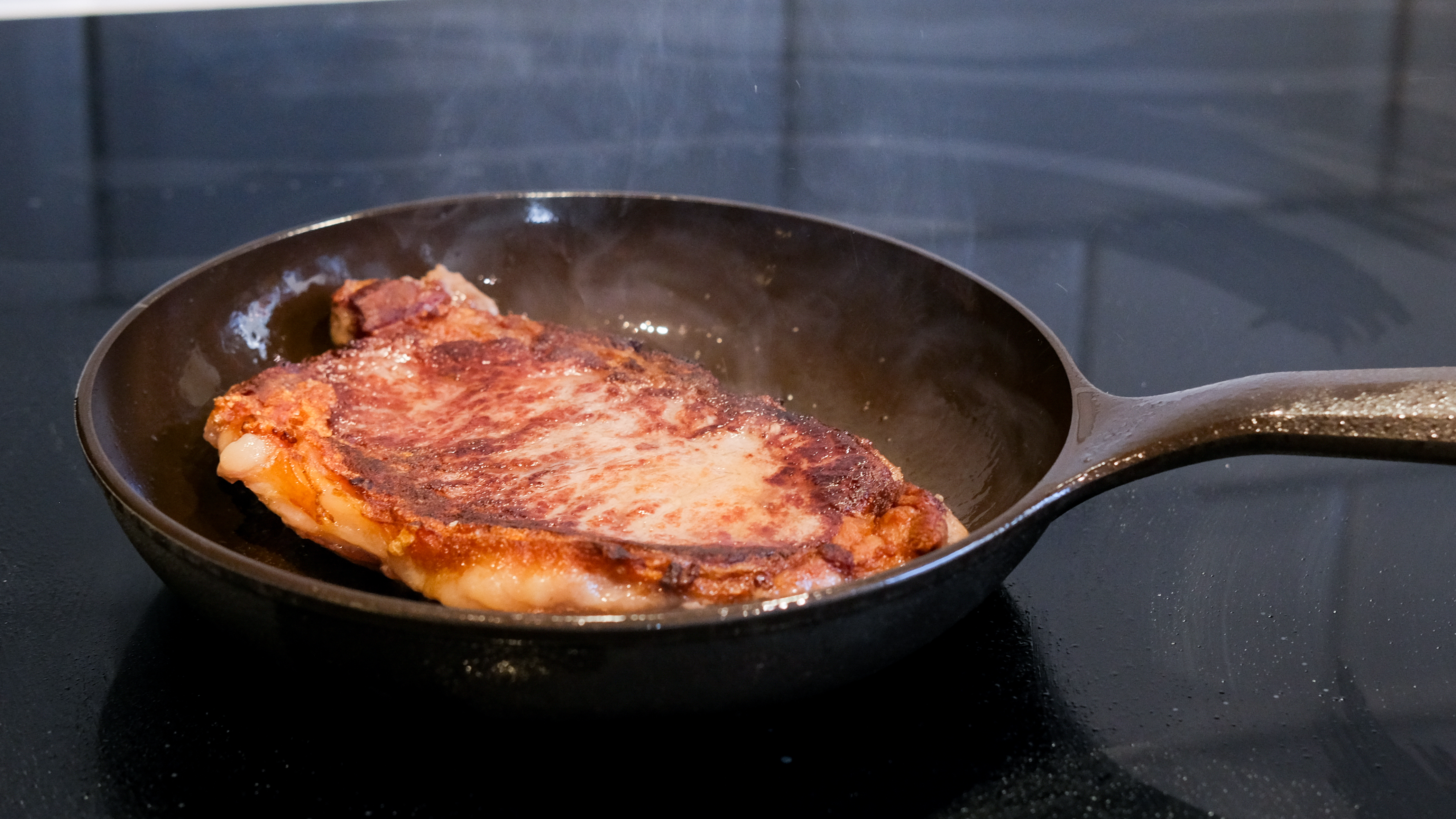
The No.5 was spacious enough for small steaks, though. I was able to fit a small strip steak in there. I heated the hell out of the pan, enough so to put an intense and uniform sear on the steak after a minute or so of cooking.

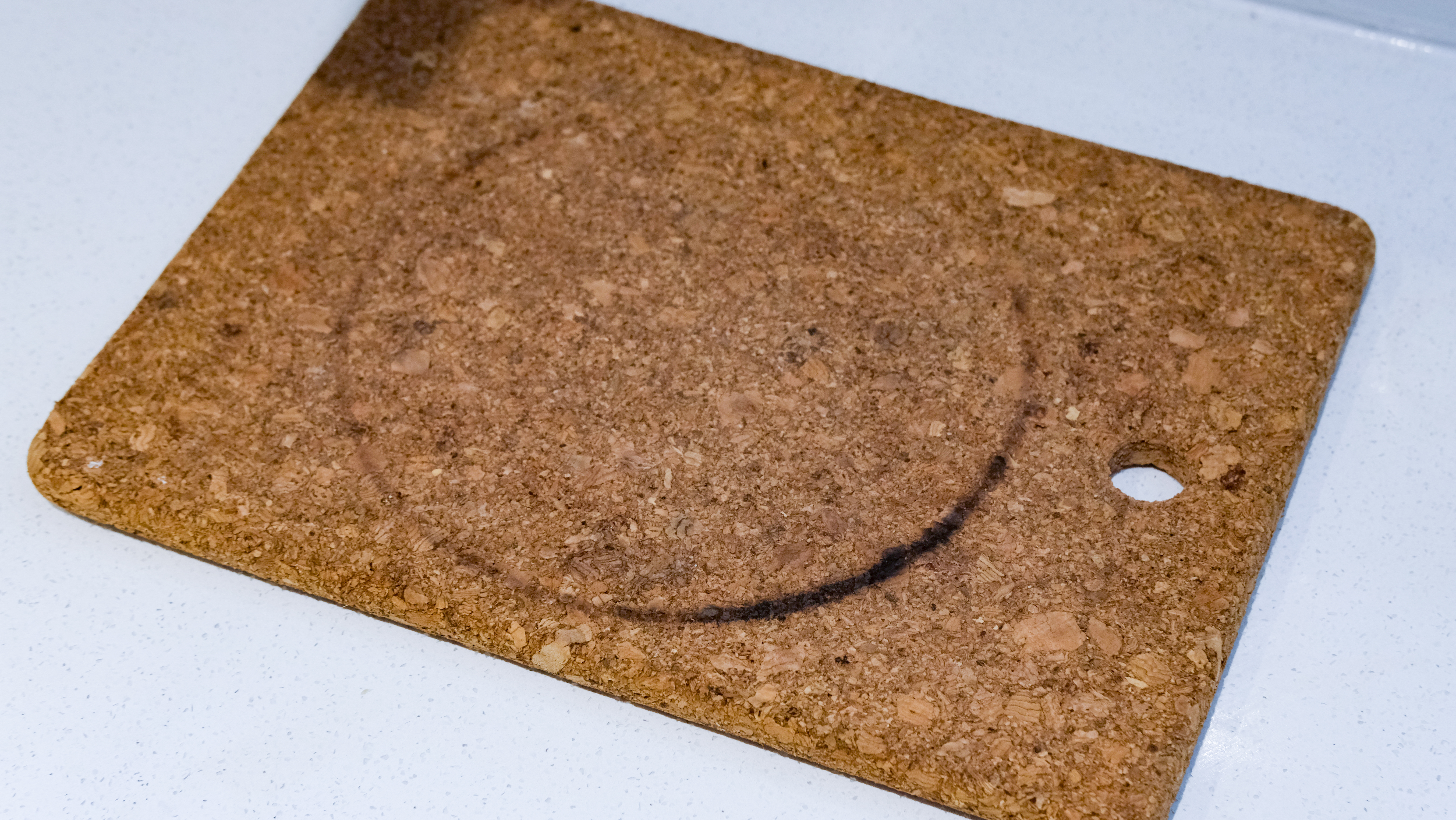
After cooking the steak, I removed the pan from the heat and put it on a cork heat mat. It burnt a black ring into the cork, showing how hot the metal was able to get. None of my stainless or non-stick pans have ever got hot enough to do that — the latter in particular will smoke out way before then.
It then took around 3 minutes to cool down enough for me to cook a couple of eggs — enough time to mostly rest the meat.

The quick heat up and cool down is behavior more akin to thin pans, and that makes sense: Field Company skillets are thinner than typical chunky cast irons. This gives you the best of both worlds. When it comes to cooking, the best qualities of cast iron are still present — high heat, even dispersion. And that’s what matters.
Newcomer-friendly
Image 1 of 2

I would definitely recommend Field Company skillets to cast-iron newcomers. There’s everything I’ve mentioned above, of course. The comparatively low weight and thermal behavior that’ll already feel familiar.
I know cast-irons can be daunting for other reasons, though. They have a reputation for necessitating a steep maintenance learning curve. And that’s partly true. Seasoning a cast iron (or any pan, for that matter) takes a bit of practice.
Happily, Field Company’s skillets come pre-seasoned with a few layers of oil, enough to get you started for your first few cooks. This takes away the onus of doing the initial season. With that done for you, all you need to do is the regular maintenance, and your skillet will come with simple instructions on how to do that — basically, after cleaning, just to rub on a thin layer of oil and wipe away excess until the pan looks matte.
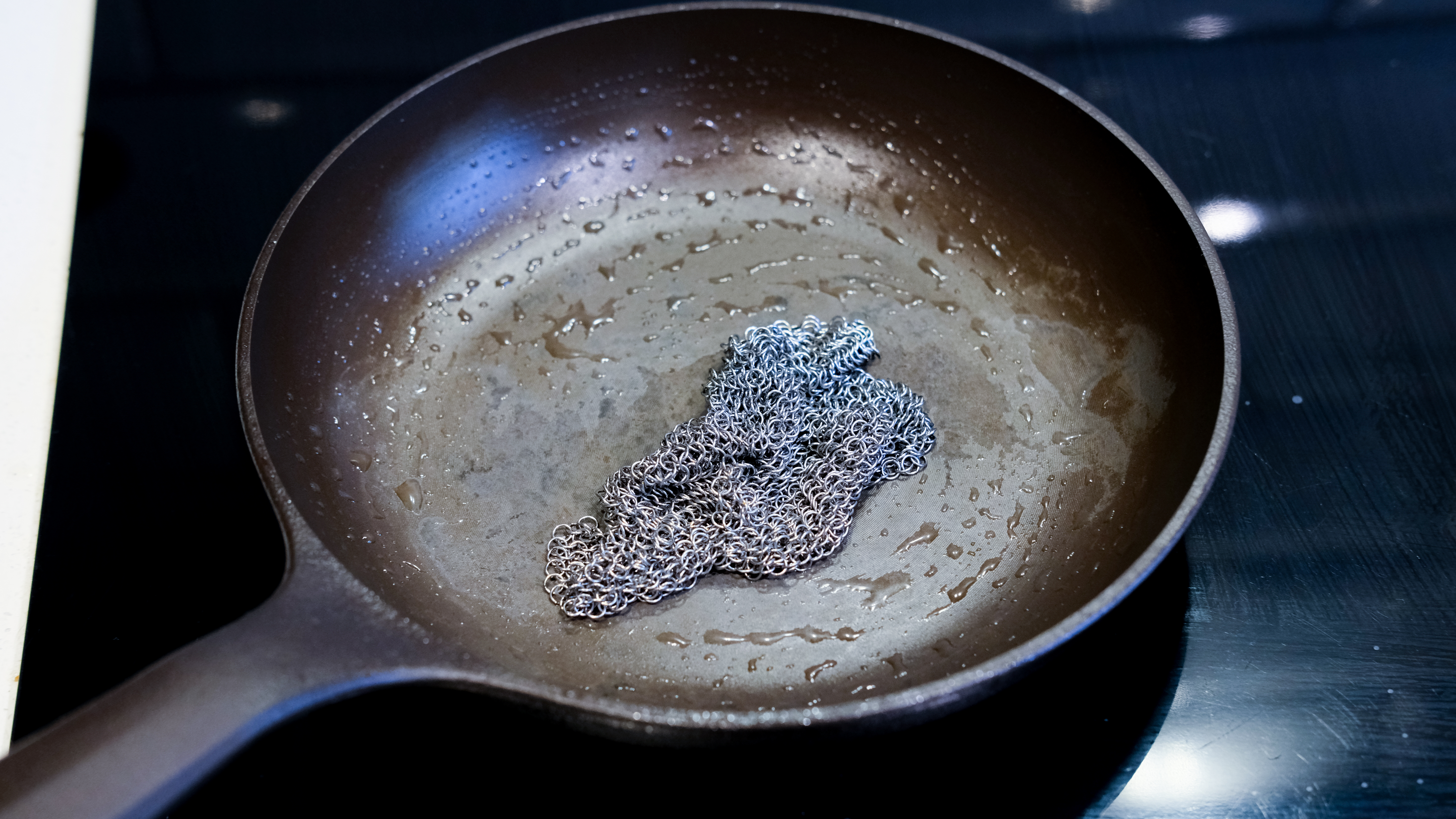

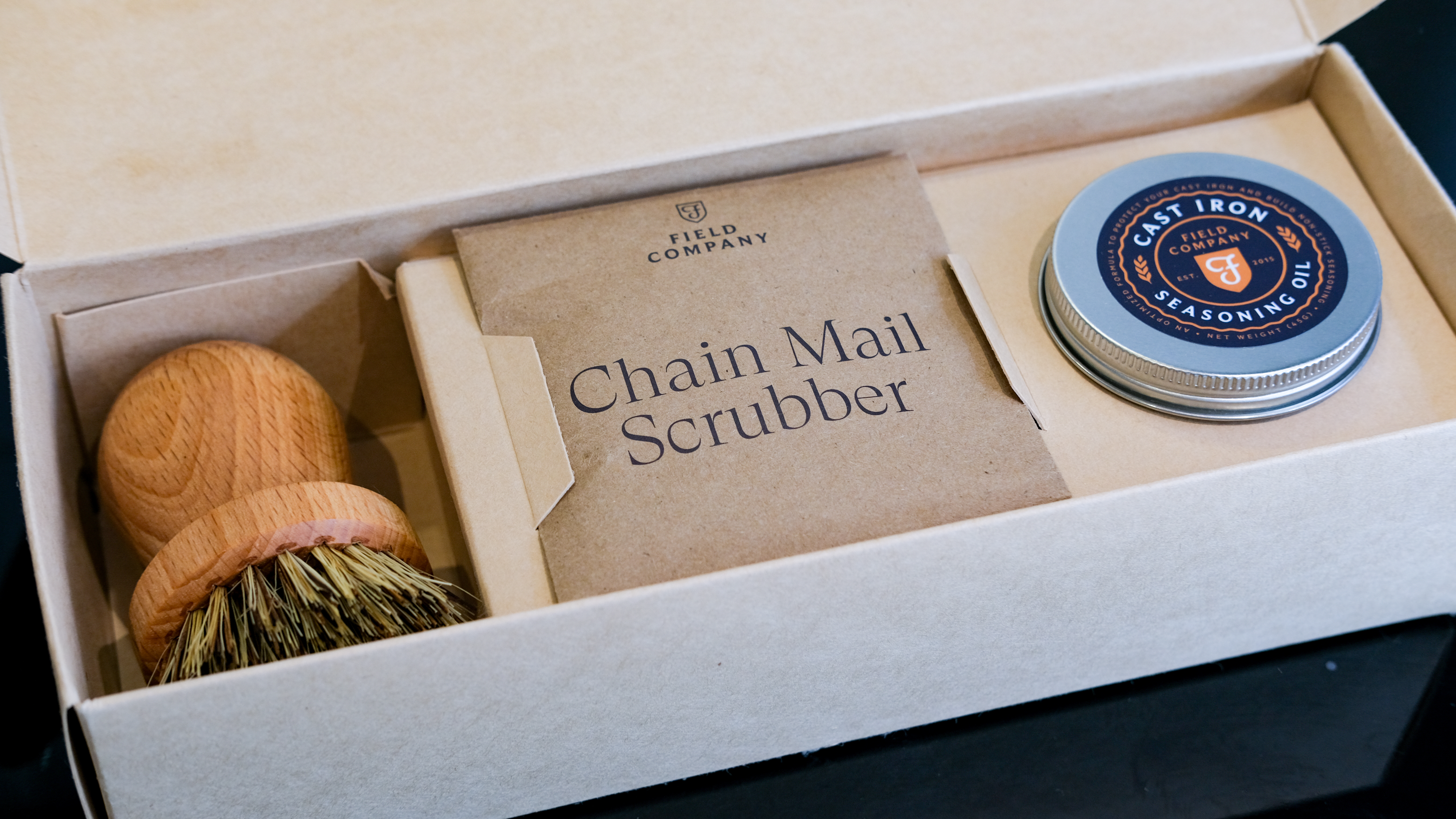
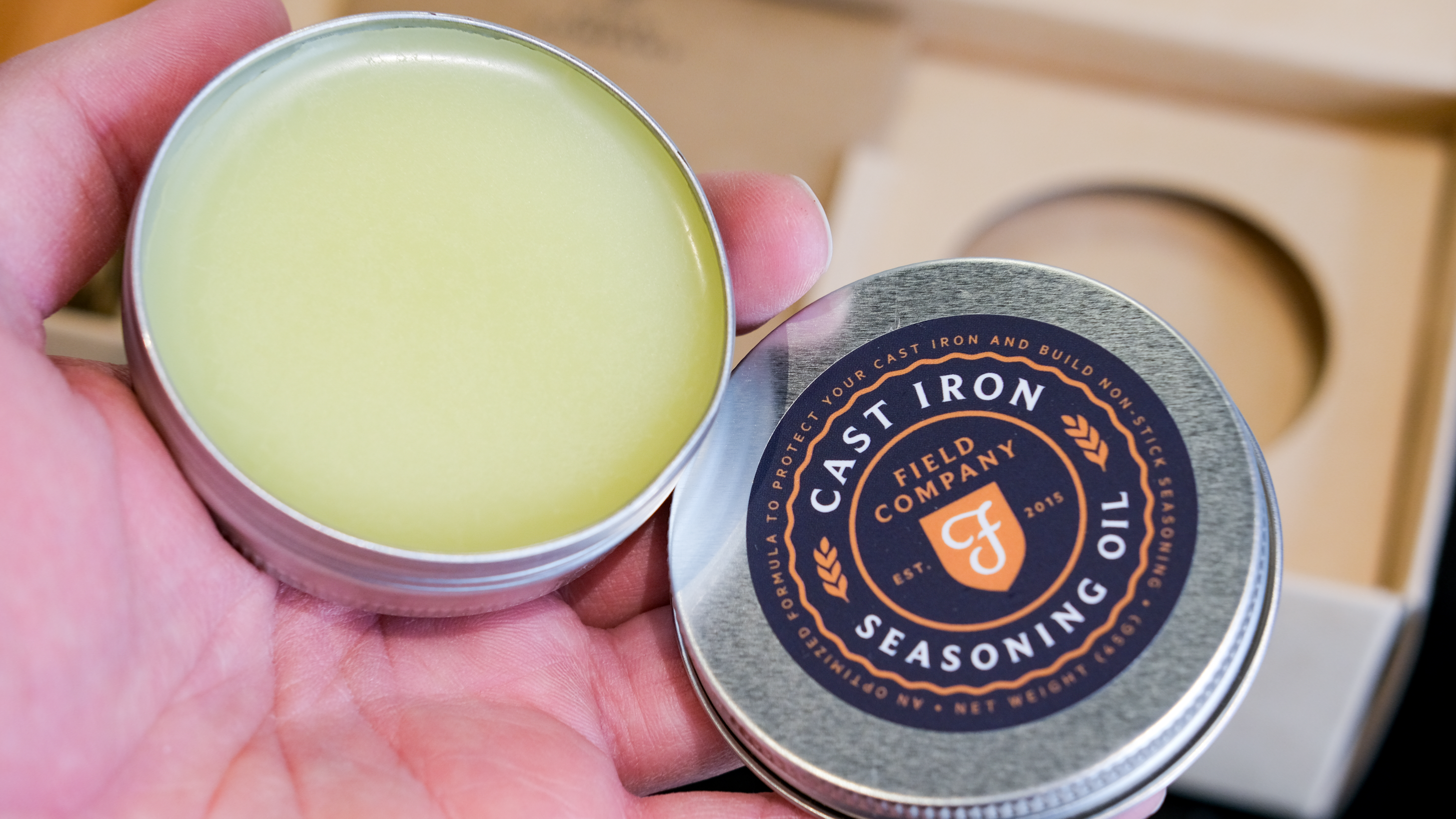
I would recommend buying Field Company’s care kit, which costs about $50 at Amazon. It includes a stiff-bristled brush to clean off light debris, a chainmail scourer to get the burnt-on stuff, and a pot of seasoning oil (grapeseed oil, sunflower oil and beeswax). The brush and scourer are extremely premium feeling, just like the skillet — they feel built to last, easily justifying the slightly premium price. What’s $50 for years of use?
But at what cost?


I’m usually highly skeptical about cookware, which is often extremely overpriced. Having worked in kitchens, I know full well that a ~$40 industrial 8- or 10-inch stainless skillet will last years of daily abuse — these get used for virtually everything on a working line. That’s why most of my cookware is ugly heavy duty commercial stainless.
Those pans don’t last a lifetime though. That’s why you pay for a cast iron. Field Company skillets are pricier than your average skillet, sure, but they’ll last. I’ve no doubt about it. The thing is, while +$100 is a lot of money for many people, these skillets aren’t actually that pricey, at least comparatively speaking. You can pay hundreds for cookware that doesn’t feel anywhere near as well built as Field’s products.
All things considered, given their premium build and the versatility they offer — providing the benefits of cast irons but without some of the drawbacks — I actually think they’re priced pretty competitively.
I guess all that’s left to say is: if you’re thinking about dabbling in cast iron, but have been put off by the price, weight and maintenance… check out Field Company. I think its skillets could be your answer.
You can buy Field Company’s cast-iron skillets from the brand’s website or from Amazon, and they cost the same at both vendors. The skillets start at $100 for the smallest No.4 (6.75-inch) model, with the No.6 (8.3-inch) variant costing $125 and the No.8 (10.25-inch) version costing $165. The single-handled model, the No.12 (13.37-inch) costs $265, while the No.16 (16.75-inch) double-handled model costs $330.


Follow Digitpatrox on Google News and add us as a preferred source to get our up-to-date news, analysis, and reviews in your feeds.
More from Digitpatrox
Source link
-

-

-
-

-