
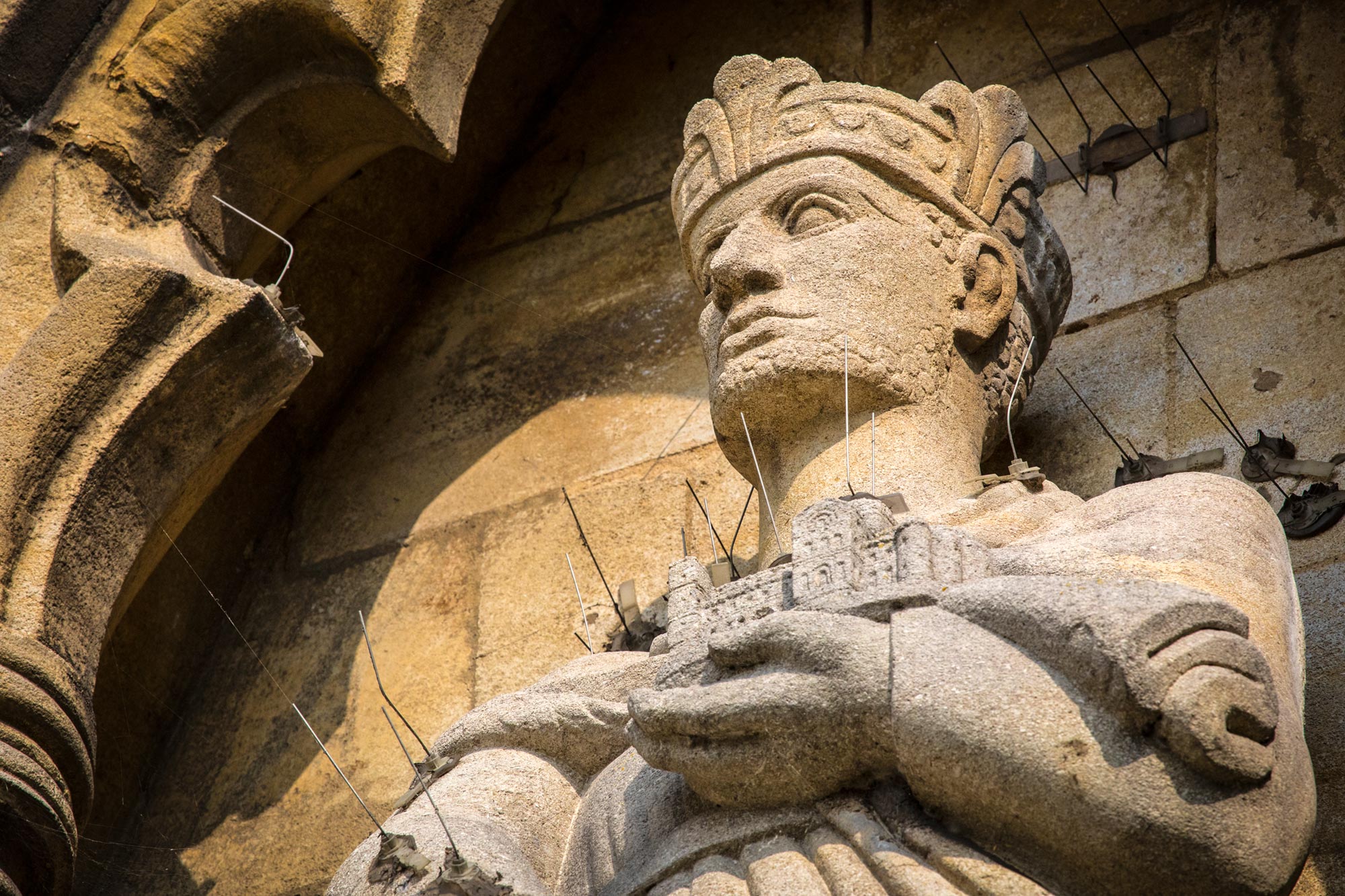
New research challenges the long-standing image of King Harold racing across England before the Battle of Hastings.
New research from the University of East Anglia (UEA) suggests that King Harold’s famous 200-mile (322-kilometer) march to the Battle of Hastings in 1066 likely never took place.
Instead, much of the journey appears to have been completed by sea.
This reinterpretation challenges one of the most familiar stories in English history, changing how the Norman Conquest is presented in education, museums, and public memory. The findings arrive as the Bayeux Tapestry is set to travel from France to the UK for display at the British Museum later this year.
A Misinterpreted Chronicle
For over 200 years, historians have relied on a flawed reading of the Anglo-Saxon Chronicle, one of the most important early records of English history. The text has been understood to mean that Harold dismissed his fleet in early September 1066, forcing him to march his army south from Stamford Bridge in Yorkshire.
The Chronicle states that the ships “came home,” a phrase Victorian historians interpreted as meaning the navy was disbanded. This assumption became widely accepted and shaped later accounts of the Norman Conquest.
Prof Tom Licence, Professor of Medieval History and Literature at UEA, argues that this interpretation is incorrect. His research indicates that the ships actually returned to London, their base, and remained in service.
He said: “I noticed multiple contemporary writers referring to Harold’s fleet, while modern historians were dismissing those references or trying to explain them away.
“I checked the evidence for him having sent the fleet home and found that it was just a misunderstanding. I went looking in the sources for evidence of a forced march and found there wasn’t any.”


A Coordinated Land-Sea Strategy
Prof Licence presents Harold’s actions as part of a coordinated military plan rather than a rushed response to invasion.
He said: “Harold’s campaign was not a desperate dash across England, it was a sophisticated land-sea operation. The idea of a heroic march is a Victorian invention that has shaped our understanding, or misunderstanding, of 1066 for far too long.”
Historical sources describe Harold sending hundreds of ships to confront Duke William after the Norman landing. These accounts previously puzzled historians who believed Harold no longer had a fleet.
Prof Licence said: “Harold’s ‘missing’ fleet was used to defend the south coast, then to support his campaign against Harald Hardrada, and finally to rush back south after the Battle of Stamford Bridge ready to face Duke William of Normandy.”
Prof Michael Lewis, Head of the Portable Antiquities Scheme at the British Museum and curator of the Bayeux Tapestry exhibition, emphasized the significance of the findings.
He said: “With the Bayeux Tapestry coming to the British Museum later this year, Prof Tom Licence’s research shows there is much still to be learned about the events of 1066.
“It is clearly a fascinating discovery that following the Battle of Stamford Bridge, Harold took an easier, more logical, trip south by ship to meet Duke William in battle, rather than a long trek overland, as has long been supposed.
“Hopefully, this new research inspires people to also come and see the Tapestry whilst it is in London.”

Why the new research matters
The study challenges a long-standing narrative and offers a new perspective on Harold’s leadership and military strategy.
Prof Licence said: “Harold was not a reactive, exhausted commander, he was a strategist using England’s naval assets to wage a coordinated defence.
“This reframes the events of 1066 and highlights a previously overlooked aspect of Anglo-Saxon maritime capability.”
He reexamined the Anglo-Saxon Chronicle, which survives in nine manuscript versions, along with other 11th century sources. In doing so, he corrected an interpretation popularized in the 19th century by historian Edward Augustus Freeman.
By restoring the fleet’s importance, the research outlines Harold’s strategic decisions, from his campaign against Harald Hardrada in the north to his planned naval response to William before Hastings.
Roy Porter, English Heritage Senior Curator of Properties, who oversees Battle Abbey and the Hastings battlefield, said: “Professor Licence’s research shows the immense value of testing received wisdoms, and his conclusions are certain to sustain debate about the circumstances of England’s most famous battle.
“What we know about Harold’s previous military campaigns fits with the idea that he used naval forces to transport soldiers, and threaten William, and there are references in accounts of the Norman invasion which also lend weight to that possibility.
“It’s exciting to consider that Harold’s response may have been far more sophisticated than previously understood, and William’s awareness of this may have informed when he chose to fight.”
Harold never disbanded his fleet
According to the research, Harold did not dismiss his fleet in early September 1066. The Anglo-Saxon Chronicle records that he returned to London “off ship,” meaning from the south coast, after learning of Harald Hardrada’s arrival.
This supports the idea that naval forces remained active.
The famous 200‑mile march is a Victorian invention
No contemporary account describes a forced march. The concept originated with Victorian historians and became widely accepted over time.
Traveling by sea from the Humber to London would have been faster, safer, and more consistent with the Chronicle.
Comparisons with later military campaigns highlight the difficulty of such a march. Even well-equipped American Civil War troops covered only about 100 miles in five days under exceptional conditions.
Prof Licence said: “Harold’s weary, unmounted men covering nearly 200 miles in ten days and then continuing straight to the Hastings peninsula is implausible given medieval roads and the aftermath of battle.
“Only a mad general would have sent all his men on foot in this way if ship transports were available.”
As a result, earlier criticism of Harold acting with “reckless and impulsive haste” appears misplaced. His forces likely had time to recover.
Harold used the fleet against Harald Hardrada
The Chronicle uses the Old English word lið, usually translated as “fleet,” to describe the forces Harold assembled at Tadcaster before marching to Stamford Bridge.
This suggests he used both naval and land forces against Harald Hardrada, a detail that previously caused confusion.
Harold attempted a naval pincer movement against Duke William
Accounts also describe Harold sending hundreds of ships south after William’s landing, pointing to a coordinated land-sea pincer strategy aimed at trapping Norman forces near Hastings.
However, the fleet may have arrived too late, leaving Harold without key troops such as archers and elite units.
Evidence suggests a naval battle in early October 1066
The study also revisits evidence of a possible naval clash in early October 1066.
References in the Domesday Book and the Annales Altahenses suggest an English sea engagement during the campaign. These mentions were previously difficult to interpret but now appear more credible.
Although the fleet may not have changed the outcome, it could have encountered William’s ships near Hastings, adding a new dimension to the events leading up to the battle.
Prof Tom Licence presented his findings at the University of Oxford at The Maritime and Political World of 1066 conference.
Prof Licence’s research was funded by a Major Research Fellowship grant from the Leverhulme Trust.
Never miss a breakthrough: Join the SciTechDaily newsletter.
Follow us on Google and Google News.
Source link
-

-

-

-

-


