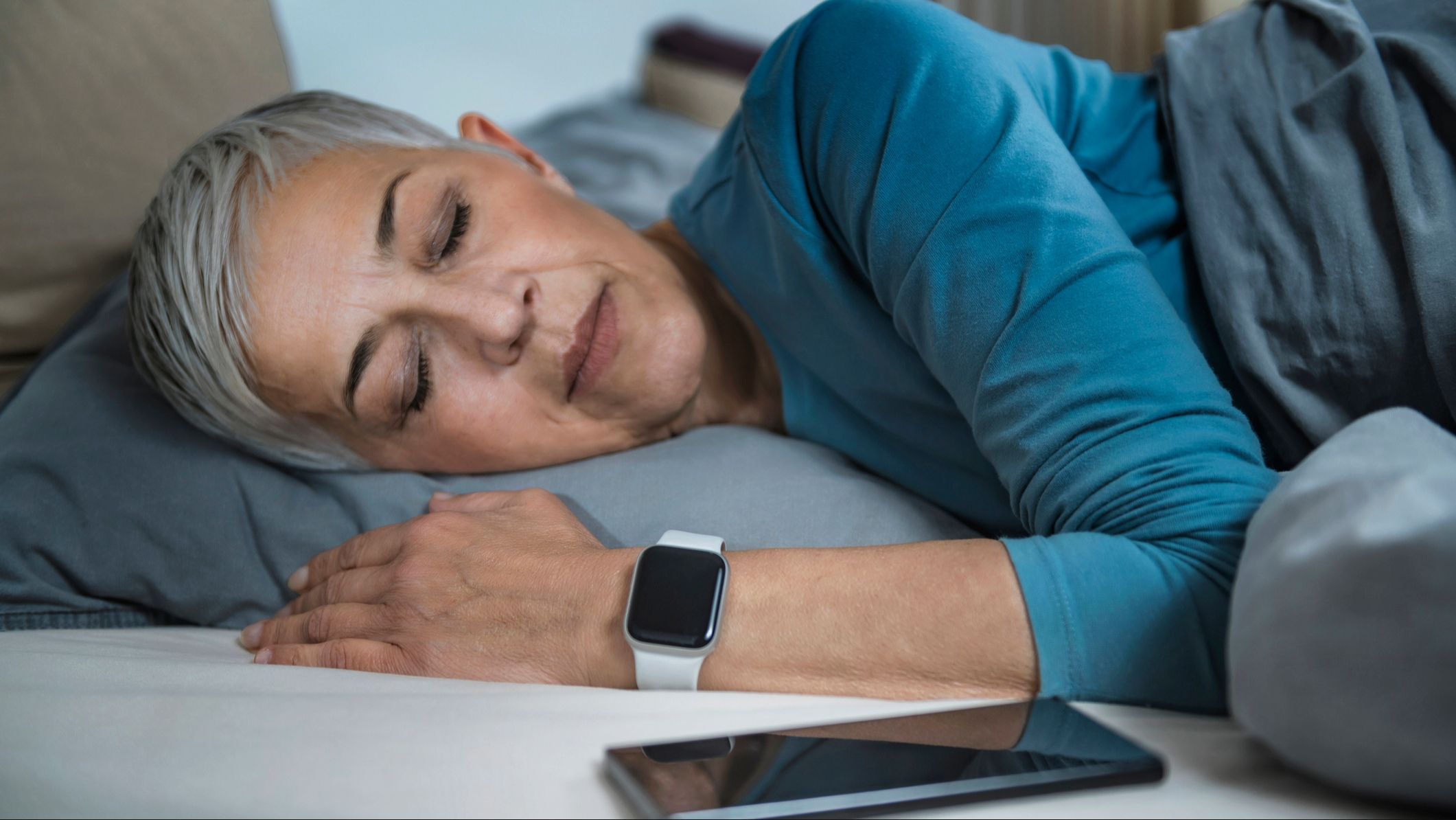
As a senior with a smart watch you might notice that your sleep score just isn’t hitting the high numbers these days, and it’s likely down to one metric: sleep fragmentation.
From circadian shifts to aches and pains, there are many reasons why it’s perfectly normal for your sleep to be more fragmented as you age.
What is sleep fragmentation?
In technical terms, sleep fragmentation refers to repeated short interruptions of sleep. On your Apple Watch sleep tracker, this is represented by small gaps in your sleep stages chart and reduced sleep efficiency (the amount of time you were asleep versus lying in bed.)
We don’t all sleep in a single block overnight, and sometimes experience awakenings between sleep cycles, explains Dr. Garley of the Better Sleep Clinic.
“Sleep changes over a lifetime, and when people anticipate that change, it tends to cause less of a problem”
Dr. David Garley, BM, MRCP, MRCGP, DTM&H
“This can be normal for some people,” he adds. “But if you’re struggling to get back to sleep, or find that you’re feeling sleep deprived during then day, then this is unlikely to be normal and you should consider speaking to a doctor or sleep clinic.”
Fragmented sleep is a common problem among older sleepers. Research shows that as we age, sleep typically becomes lighter and more fragmented.
“Sleep changes over a lifetime,” explains the sleep specialist, “and when people understand and anticipate that change, it tends to cause less of a problem.”
How to find your Apple Watch sleep fragmentation score
Nighttime interruptions is one of three key barometers that go into your Apple Watch sleep score; it accounts for 20% of the overall score.
When you visit the sleep tab of the Apple Health app each morning, you will see exactly how many times your sleep was interrupted / fragmented through the night and how long in total you spent awake due to these interruptions.
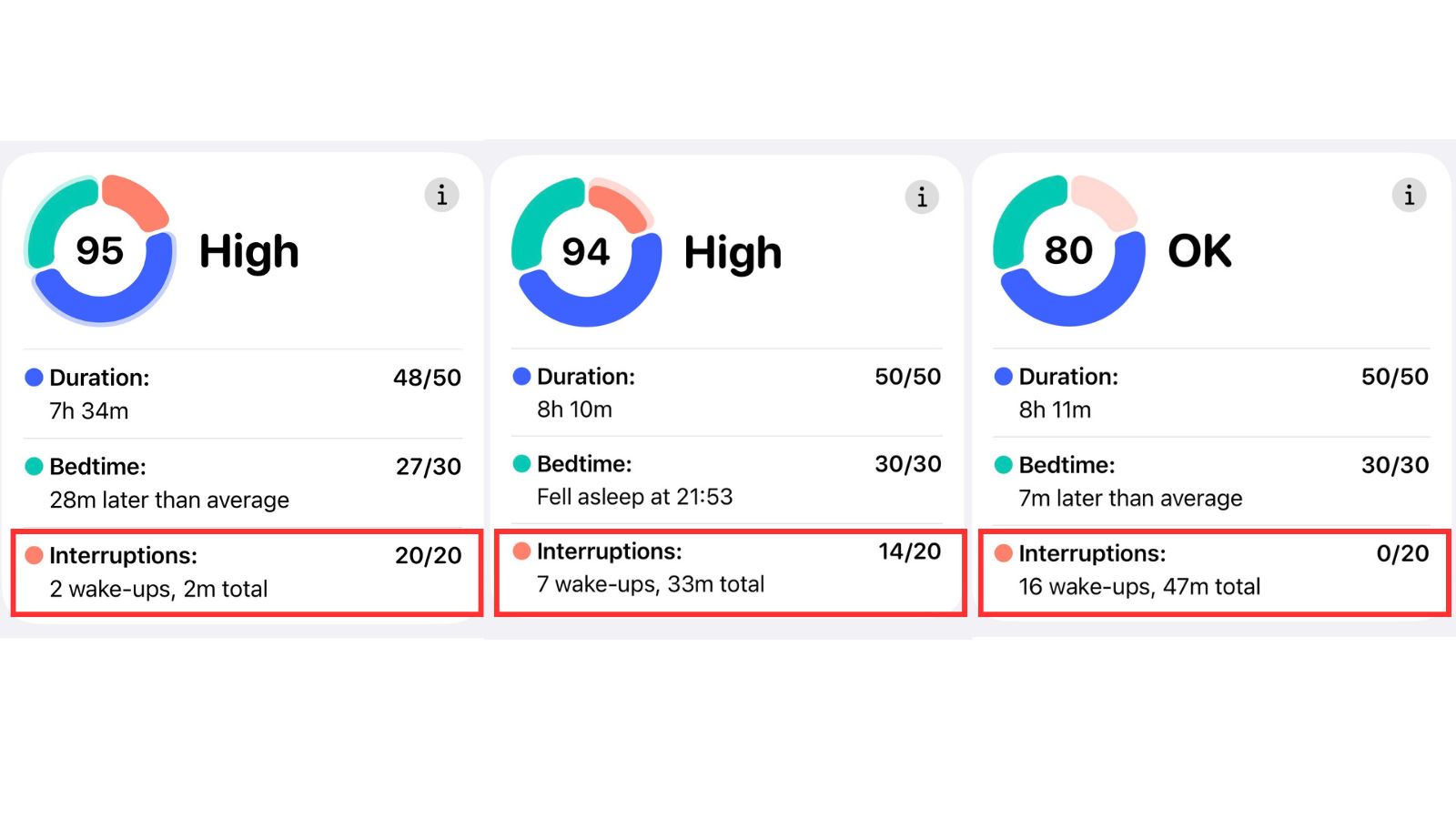

Apple’s algorithm gives you a ‘interruptions’ score out of 20 based on your usual, individual sleep patterns and baseline.
3 reasons for fragmented sleep at age 65+
From hormone shifts to pressure points, there are many reasons why sleep becomes fragmented in later life.
Yes, it’s frustrating, but it’s usually normal and nothing to fret over. Let’s look at the three most common reasons now…
1. Reduced sleep pressure
Due to circadian and hormone shifts, older adults often get less sleep than younger adults, leading to longer periods of light, fragmented sleep.
“Sleep becomes more fragmented as you age as your circadian rhythm drifts slightly,” explains Dr. Garley.
Typically, your circadian clock shifts earlier meaning you feel tired (due to earlier melatonin release) and sleep earlier in the evening and can find yourself laying awake in the pre-dawn hours of the morning as that melatonin wears off.

“After 55 you have a more noticeable decrease in melatonin,” adds the doctor, “and melatonin is a hormone that coordinates the sleep phase of your circadian rhythm, so you can get a degree more fragmentation of sleep as you get older.”
2. Nocturia


Nocturia, waking up multiple times at night to use the bathroom, becomes more common with age, according to science.
Causes in older people include reduced bladder capacity and increased nocturnal urine production, alongside decrease in levels of antidiuretic hormone at night (the body just doesn’t produce hormones like it used to.)
Those bathroom breaks can disrupt sleep cycles, sometimes preventing seniors from entering the all-important later stages of sleep like deep and REM sleep.
3. Aches and pains

Aches and pains can come with aging, and unfortunately that doesn’t bode well for sleep.
Pain points tend to be more sensitive when you’re laying in one position for an extended period of time through the night.
“When you’re lying still for between seven and nine hours, if you have a bad back or shoulder, that can cause pain, which can cause you to wake up,” says Dr. Garley.
How to interpret your score
While tracking your sleep can be a useful tool in helping you understand your sleep patterns and identify underlying issues, doctors warn you shouldn’t get too caught up in the metrics.
Dr. Garley says there is a problem when people try to pursue perfect sleep (known as orthosomnia) which, in his words, “doesn’t exist.”
“The pursuit of perfect sleep will always generate worry and anxiety, and that in itself can disrupt sleep.
“If you take a too meticulous an approach to sleep, that can pose a problem.”
There are two ways to look at sleep without a tracker, he adds.
1. Look at the night, questioning: How long did I sleep for? Did I wake up? How long did it take me to fall asleep? 2. Observe your energy and functioning through the day.
Taking note of how you feel when you wake up and during the day is sometimes more useful than having a watch tell you how energized you are.
“Sleep is about supporting daytime function, so that’s absolutely the best barometer to how your sleeping,” says the doctor. Here’s how to navigate your data and daytime feelings…
|
If the watch says… |
But you feel… |
You should… |
|---|---|---|
|
High Fragmentation |
Alert and energetic |
Ignore the score. Trackers aren’t 100% accurate 100% of the time. As long as you’re feeling alert and energised there isn’t a need to worry about interruptions in your sleep during the night — they are normal. |
|
Low Sleep Duration |
No daytime sleepiness |
Be aware, but don’t panic. Quality sleep is more important than sleep duration. Unless you’re feeling exhausted, you probably got good quality sleep during the night. |
|
High Fragmentation |
Exhausted or ‘foggy’ |
Consult a doctor. Feeling mentally and physically drained after fragmented sleep could be a sign of sleep apnea. |
How to reduce sleep fragmentation
Although sleep fragmentation is just something that naturally happens as we age, there are thankfully things you can do by day to set yourself with the best chance of clocking quality sleep by night. Here they are…
1. Move through the day
Moving more, or as much as you can, throughout the day builds greater sleep pressure, helping you drift off at night.


Alternatively, my 75-year-old grandfather finds swimming is a massive help to his sleep — I’ve checked out the science behind it, and it gets the green light from the sleep doctor.
2. Sleep at regular times
One of the simplest ways to get better sleep is to get the timing right, and by that I mean sleeping and waking up at consistent times from one night to another.
This regulates your internal body clock and hormone cycles. Your brain and body will know when it’s time to wind down to sleep and wake up and be alert, so both will happen more easily, and on time.

A large scale study by Vitality and The London School of Economics and Political Science (LSE) published this year revealed that consistent sleep times and getting 7+ hours of sleep can boost your longevity, potentially adding up to four years to your life expectancy.
3. Optimize your sleep environment
Whether you’re struggling to sleep or not, making your bedroom a sleep sanctuary can do wonders for your sleep quality and ability to fall asleep.
Firstly, finding the best mattress to support your body type, sleep style, and sleep needs (hot sleepers will love our cooling mattress top-picks) can help you rest peacefully.
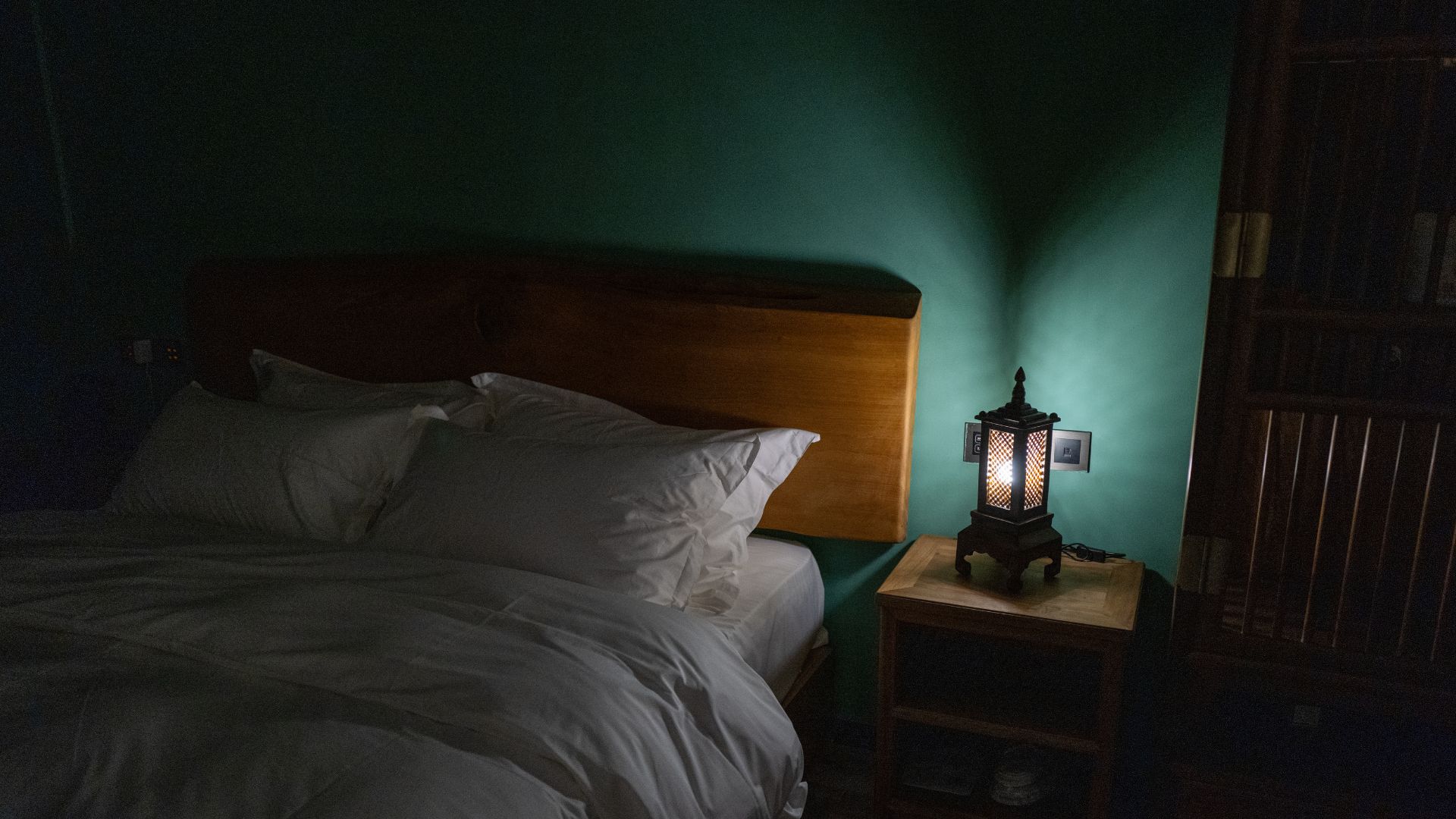
Sleeping on a mattress with the right firmness level to support your body while contouring pressure points could even help alleviate some of those sleep-disrupting aches and pains that can come with age.
Then, controlling environmental factors like light, sound, and temperature can help you optimise your bedroom for rest. It’s best kept dark, quiet, and cool to induce the temperature drop and calm you need to feel sleepy.
Red flags you shouldn’t ignore
While you shouldn’t stress over a sub-70 sleep score, fragmentation can sometimes signal underlying issues like sleep apnea.
“Sleep is so subjective. If the person thinks their sleep is fine it’s probably fine. But if they think there’s an issue, there’s more ground to look in detail,” advises Dr. Garley, who is director of The Better Sleep Clinic.
He suggests looking for these red flags: excessive daytime sleepiness (falling asleep while reading or driving), loud, chronic snoring followed by gasping, or a sudden, drastic change in your baseline fragmentation over a week.
If you notice these, it’s best to consult a GP or sleep clinic. It can be helpful to take your sleep tracking reports with you. Although consumer wearables don’t provide medical-grade monitoring, they can provide a useful baseline for identifying issues.


Follow Digitpatrox on Google News and add us as a preferred source to get our up-to-date news, analysis, and reviews in your feeds. Subscribe to Digitpatrox on YouTube and follow us on TikTok.
-

-

-

-
-