

A long-suspected crack in particle physics may have closed, but the search for what lies beyond continues.
A long-standing mystery in particle physics may have just been resolved, but not in the way many scientists had hoped. For years, a key particle seemed to defy the known rules of physics, hinting that the universe might be hiding unknown forces or exotic new particles. Now, new research suggests that the apparent rule-breaking was an illusion, caused by the extreme difficulty of the calculations rather than new physics.
For more than 50 years, measurements of a key property of the muon, a heavier and short-lived relative of the electron, did not match theoretical expectations. This gap fueled speculation that undiscovered physics could be influencing the results.
In a study published in Nature, researchers report one of the most precise calculations ever achieved in the field. Their results show that the Standard Model, which describes the fundamental components of matter, remains accurate.
“There were many calculations in the last 60 years or so, and as they got more and more precise they all pointed toward a discrepancy and a new interaction that would upend known laws of physics,” said Zoltan Fodor, distinguished professor of physics at Penn State and lead author of the study. “We applied a new method to calculate this discrepancy quantity, and we showed that it’s not there. This new interaction we hoped for simply is not there. The old interactions can explain the value completely.”
Precision, Disappointment, and Confirmation
The work took more than a decade to complete and brings theoretical predictions and experimental measurements into agreement within half a standard deviation. According to Fodor, this level of precision would have been difficult to achieve even ten years ago. The findings reinforce confidence in the Standard Model to 11 decimal places and significantly reduce the range where new physics might be found.
“People ask me how it feels to make this discovery and, to be honest, I feel somewhat sad,” Fodor said. “When we started to calculate this quantity, we thought we were going to have a good and trustworthy calculation for a new fifth force. Instead, we found there is no fifth force. We did find a very precise proof of not just the Standard Model, but also of quantum field theory, which is the foundation on which the Standard Model was built.”

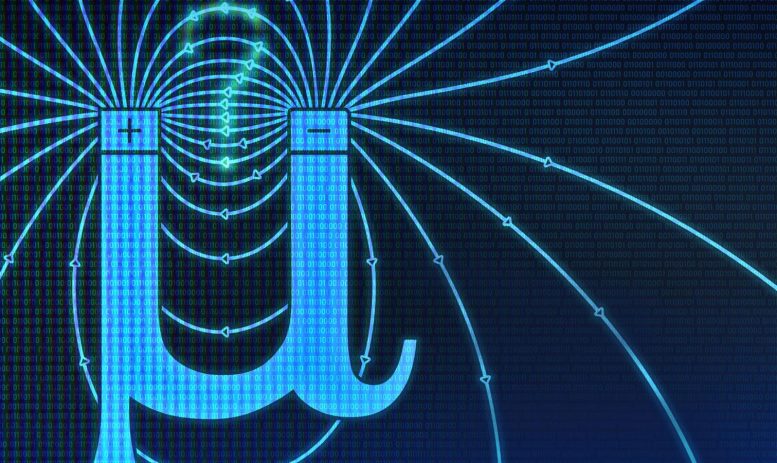
At the center of this work is the muon’s “magnetic moment,” which describes how strongly it acts like a tiny magnet. Quantum theory predicts a value of exactly two, reflecting the relationship between the particle’s motion and the magnetic field it experiences. However, experiments have long detected slight differences.
These differences arise because other particles briefly appear and disappear, subtly affecting the muon’s behavior. This small shift is known as the anomalous magnetic moment, or g−2.
Because muons are about 200 times heavier than electrons, they are especially sensitive to these effects. That sensitivity has made muon g−2 one of the most closely studied measurements in physics.
Experiments at CERN in the 1960s and 1970s, at Brookhaven National Laboratory in the early 2000s, and more recently at Fermi National Accelerator Laboratory have measured the muon’s magnetic moment with exceptional precision. These efforts were recognized with the Breakthrough Prize in Fundamental Physics. For years, their results appeared to conflict with theoretical predictions, suggesting the possibility of unknown physics.
The Challenge of the Strong Force
A major obstacle in calculating the muon’s behavior is the strong force, the most powerful of the four fundamental forces, along with gravity, electromagnetism, and the weak force. It binds quarks together to form protons, neutrons, and other particles.
The strong force behaves in a complex way. Unlike other forces, it grows stronger as particles move apart, similar to a stretched rubber band. Trying to separate it requires so much energy that new particles are created, which then influence the system further. This makes precise calculations extremely difficult.
To address this, the team used lattice quantum chromodynamics, a method that simulates the strong force on powerful computers by dividing space and time into a fine grid.
“The old methodology involved collecting thousands of experimental results and reinterpreting them to get the single number, the magnetic moment of the muon,” Fodor said. “Our approach was completely different. We divided space time into very small cells, a lattice, then we solved the equations of the Standard Model on that. There was an awful lot of theory, mathematics, programming, computational knowledge and computer architecture behind this calculation.”
Over the past decade, advances in lattice methods have improved accuracy, but reaching the precision required for muon g−2 remained challenging. The researchers addressed this by combining lattice calculations at short and intermediate distances with highly reliable experimental data at longer distances, where measurements already agree well.
This combined strategy reduced uncertainties more effectively than either method alone.
Closing the Gap Between Theory and Experiment
The team also used finer computational grids than in previous studies, which further minimized errors. The result is the most precise calculation yet of the muon’s magnetic moment. When incorporated into the full Standard Model prediction, the long-standing difference between theory and experiment essentially disappears.
“The prediction combines electromagnetic, weak and strong forces, that each require vastly different theoretical tools, into a single calculation that’s accurate to parts per billion,” Fodor said. “It shows that we really do understand how nature works at an incredibly deep level.”
While the findings do not rule out new physics, they significantly narrow one of the most promising paths for discovering it. Future experiments may provide additional insight, but current evidence strongly supports the Standard Model.
“We didn’t get the fifth force, but we did get a very nice and probably the best proof of quantum theory, which is the underlying theory of all our understanding of the most fundamental questions of nature,” Fodor said.
Reference: “Hybrid calculation of hadronic vacuum polarization in muon g − 2 to 0.48%” by A. Boccaletti, Sz. Borsanyi, A. Cotellucci, M. Davier, Z. Fodor, F. Frech, A. Gérardin, D. Giusti, A. Yu. Kotov, L. Lellouch, Th. Lippert, A. Lupo, B. Malaescu, S. Mutzel, A. Portelli, A. Risch, M. Sjö, F. Stokes, K. K. Szabo, B. C. Toth, G. Wang and Z. Zhang, 22 April 2026, Nature.
DOI: 10.1038/s41586-026-10449-z
The U.S. Department of Energy and the European Research Council supported the Penn State aspects of this work.
Never miss a breakthrough: Join the SciTechDaily newsletter.
Follow us on Google and Google News.
Source link
-

-

-

-

-


