

Wake up refreshed
Using our smartphones as an alarm makes morning scrolling hard to resist. Consider investing in one of this year’s best sunrise alarm clocks to banish your phone from your bedroom and finally kick that bad habit.
What’s the first thing you did today? You may have hit the gym, made a nutritious breakfast, or rushed out the door to work, but I bet my bottom dollar that it was preceded by a five minute scroll on your phone — am I right?
I may not be alone — research shows 44% of Americans always or often browse their phone within 10 minutes of waking up in the morning — but I know it’s not doing me any favours.
You may think of it as simply having five minutes of ‘me time’. But scrolling on your phone after waking up is bad news for both your energy levels and sleep quality, say the experts.
Key takeaways: At a glance
- Scrolling on your phone first thing in the morning can hijack your brain’s focus, induce stress, reduce productivity, and lower mood.
- Starting the day with a notification overload can cause mental exhaustion. You feel tired and unfocused before the day starts.
- Blue light cannot reset your circadian rhythm as well as natural light.
- Keeping your phone away from bed encourages you to follow a healthier nighttime and morning routine.
- For better sleep outcomes, experts recommend getting natural light or movement instead in the morning.
What happens to your body when you start scrolling seconds after waking up?
It’s normal for your Cortisol Awakening Response to peak within 30 to 45 minutes of waking, causing a distinct surge in your cortisol levels. However, studies indicate that overloading your brain with notifications, news headlines, or social media content can rise the stress hormone in excess, contributing to anxious feelings.
Licensed child and adult psychologist Amy Vigliotti, PhD, also explains that smartphone scrolling interferes with dopamine levels. She says it causes a quick spike in dopamine (you’re excited by the notifications) followed by a significant drop (leaving you feeling drained after your ‘fix’ of scrolling).
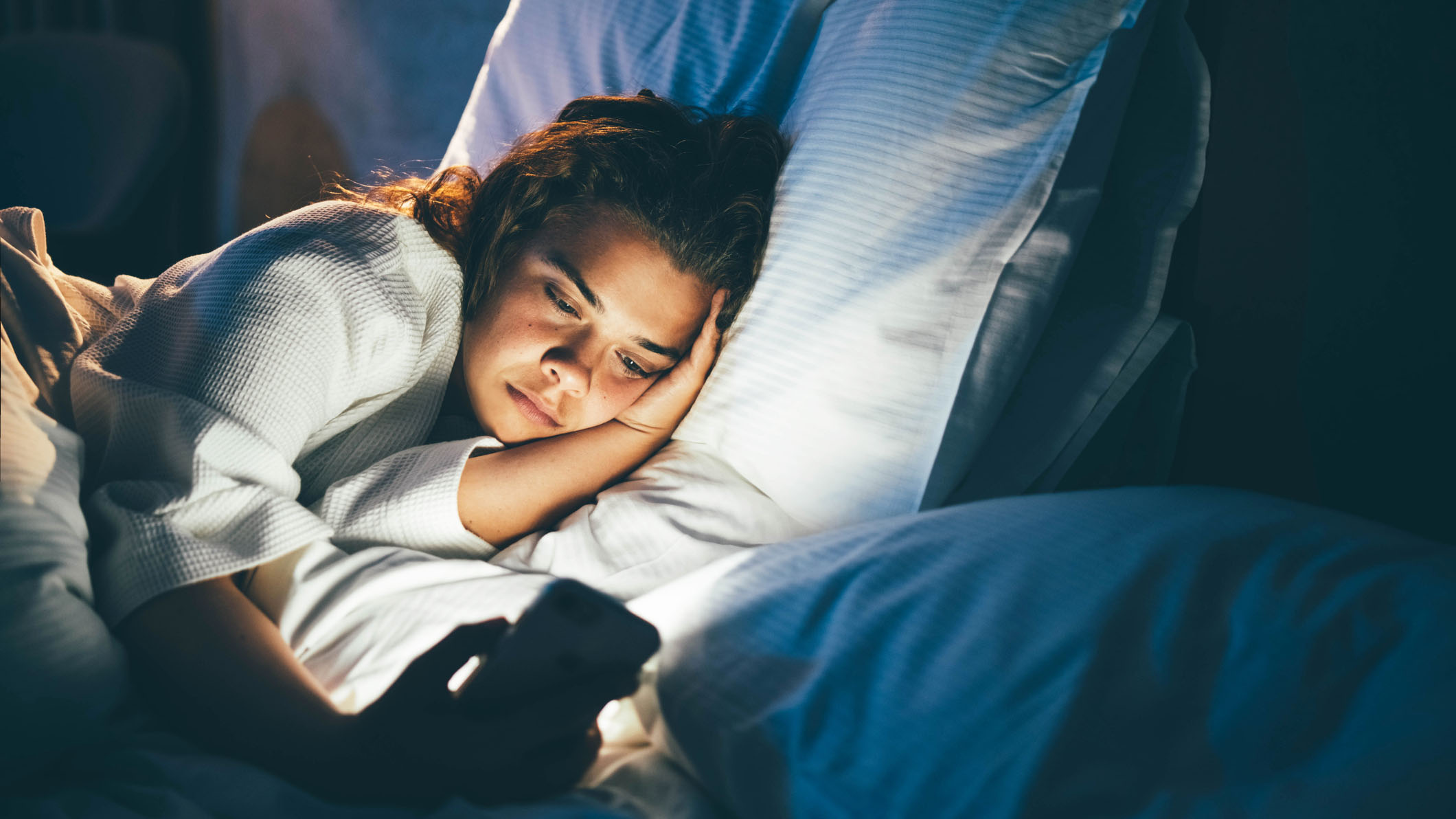

Ultimately, by bombarding your brain with information from your phone screen you’re flooding your body with cortisol and dopamine when it should be easing into the day. This could be subtly sabotaging your energy levels, daytime cognitive functioning, and sleep health.
3 reasons scrolling first thing makes you tired
Vigliotti explains: “There is real neuroscience behind why [scrolling your phone first thing in the morning] can leave you feeling more distracted, less motivated, and emotionally off-balance throughout the day,” and we’re exploring that science here…
1. It hijacks mental functioning
Consuming a torrent of information from your phone as soon as you wake up can cause mental fatigue before you’ve even gotten out of bed, making your mind feel cluttered and less focused for the rest of the day.
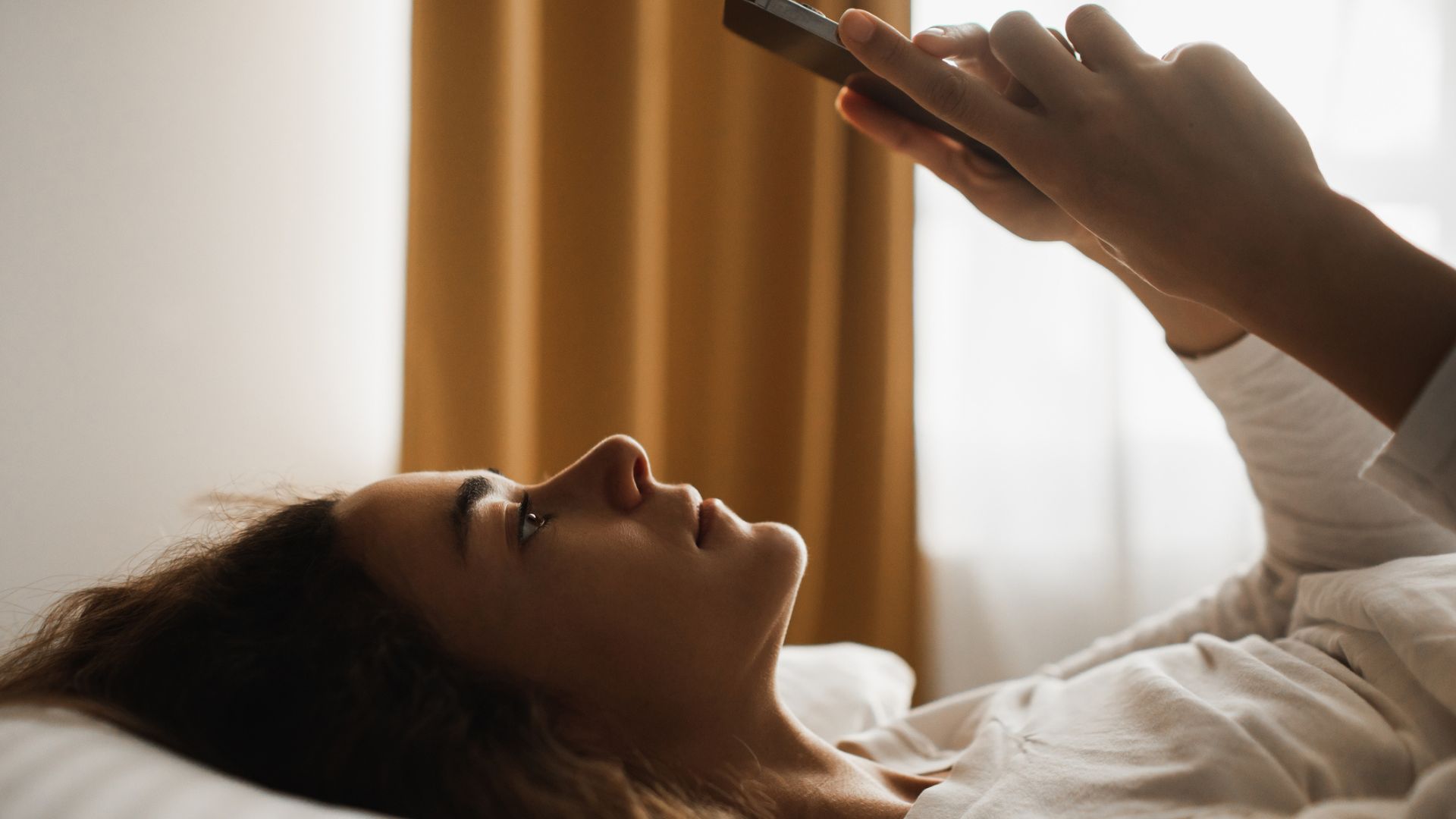
“When you wake up, your brain is in a relatively neutral, reset state,” says Vigliotti. “If you immediately begin scrolling, taking in fast, novel, high-reward content, you get a quick spike in dopamine. The issue is that this spike is often followed by a drop below baseline.”
What’s the problem with that drop? “It can make everyday tasks (like getting ready, working, or even having a conversation) feel comparatively less engaging,” explains Vigliotti, the founder of the New York–based group therapy practice SelfWorks. “So people often reach for more stimulation, creating a cycle of distraction and reduced focus.”
Once you get into the habit of picking up your phone for that quick hit of dopamine, it’s hard to stop doing it. And once you do, studies suggest those drops in the ‘reward’ hormone can add to mental fatigue.
2. It disrupts your circadian rhythm
Blue light from your phone screen can cause issues in the pre-bed hours (although there’s new evidence the impact of blue light on sleep may not be as significant as previously thought), including suppressing melatonin prematurely. And, according to research, delaying sleep onset (the time it takes you to fall asleep), and reducing sleep quality.
Early exposure to screens instead of natural light weakens circadian anchoring signals that help regulate sleep timing
Dustin Hines, Ph.D, neuroscientist and psychologist
But it can also be detrimental in the morning, too.
Natural sunlight in the morning will always be superior to light from your phone. That’s because it is significantly brighter, providing the intense light necessary to properly regulate your circadian rhythm and boost energy-releasing cortisol (that we naturally need, as opposed to excess levels from scrolling) within an hour of waking.
Whereas artificial light coming from a 6-inch screen, rather than filling your surroundings, is too dim to fully suppress melatonin, which can leave you feeling groggy (due to sleep inertia).
As neuroscientist and psychologist at the University of Nevada Dustin Hines, Ph.D, puts it: “Early exposure to screens instead of natural light weakens circadian anchoring signals that help regulate sleep timing.”
3. It lowers your mood
Really think about how you feel after early morning scrolling. Speaking from personal experience, I rarely feel anything near uplifted. I’m usually thinking of an outfit I don’t need (thanks, Instagram ads), comparing my morning to someone else’s staged routine, or dreaming of being somewhere other than my work-from-home desk.
Each morning offers a chance to renew your mood, regardless of what it was like the day before, but your phone can disrupt this, and potentially create negativity that carries through the day.
Early morning phone use “primes emotional tone based on whatever content you encounter, which can shape stress and mood for hours,” says Hines.

Ultimately, browsing social media — looking through carefully curated windows into other people’s lives where they mainly only show the highlights, or hearing of distressing world events — can set a despondent tone for the entire day ahead.
And, as Vigliotti explains, “Starting your day with high-intensity input can make it harder to access sustained attention, motivation, and emotional steadiness later on.”
There’s still a full day to get through before you hit the hay again, so while reaching for your phone in the morning doesn’t have a direct impact on your sleep the following night, the negative effects of morning phone use can get in the way of a good night’s sleep.
“Morning scrolling can indirectly degrade sleep quality by disrupting circadian alignment and increasing cognitive arousal across the day,” explains Hines.
“It’s generally beneficial to wake up gradually without a sudden start that jolts you awake,” says board-certified psychiatrist and sleep medicine specialist Dr. Alex Dimitriu.

“This matters because if you learn to go from sleep to wide awake in under a minute, your body learns to jolt itself awake with any disturbance, and this can mess up sleep at night.”
The Stanford-trained sleep physician explains that “creating a repeating habit of waking up and grabbing your phone immediately […] trains you to wake and go, which can make falling back asleep harder.”
Keep your phone outside your bedroom, say experts
My colleague and fellow sleep writer, Lauren Jeffries, has the right idea in not letting her phone near her bedroom at night. Removing the temptation to scroll first thing in the morning, and curbing bedtime procrastination, charging your phone in a different room overnight has many benefits.
Hines, whose expertise focuses on understanding brain function, advises: “Keeping your phone outside the bedroom removes a powerful source of cognitive and sensory stimulation during both sleep and waking transitions.”
“At night, it reduces light exposure and emotional activation that interfere with sleep onset and depth. In the morning, it protects the brain’s natural awakening sequence from immediate disruption by high-salience inputs. This simple environmental change helps restore control over both circadian rhythms and attentional stability,” the Las Vegas-based professor adds.
3 things sleep experts recommend you do in the morning instead of reaching for your phone
Get sunlight
I spend my 9 to 5 in the world of sleep health and, time and time again, I hear experts talk about how important morning sunlight is for your sleep. Alongside sleeping at regular times and actively reducing stress, it’s probably the most common sleep advice out there.

A 2024 study of 103 US adults found participants who got sunlight in the morning reported better sleep efficiency (which is the percentage of time spent asleep out of time spent in bed) and experiencing fewer nighttime awakenings.
Regular morning sunlight ensures your vitamin D stores are topped up (deficiency in this vitamin is associated with poor sleep). And it could even potentially improve cardiovascular health, according to research by the University of São Paulo, Brazil, published last year.
Get active
We know there is a close connection between exercise and sleep, with plenty of movement supporting sleep quality and good sleep helping with physical performance. Therefore, morning movement is undoubtedly a better choice than morning scrolling.
Moving in the morning encourages your body to produce ‘slow-release’ dopamine (explained by neuroscientist TJ Power in the post below). This kind of dopamine gives you energy and alertness without the emotional consequences of digital consumption, which promotes ‘fast-release’ dopamine.
“Adding light movement such as walking or stretching helps activate brainstem and cortical arousal systems in a controlled way,” explains Hines. Instead of the instant gratification you get from likes and messages, exercise promotes sustained focus and mood enhancement.
Even better if you get outdoors, as you can get your sunlight and movement at once.
Take a morning pause
If getting outdoors or working out aren’t possible, simply taking a moment to yourself in the morning is a great option.
Dr. Dimitriu refers to the “clean slate” that we wake up with each morning “before you’ve read any news, emails, texts, or the needs and concerns of others.”
He says it is important to take advantage of this moment of peace (providing the children aren’t awake yet if you’re a parent) to reset your nervous system and brain so you’re prepared to take on the day.

“The morning is a short precious window of being in your own head, and in your own space, to see what matters to you — give that some space before you pollute your consciousness with the needs of the world,” he advises.
Vigliotti agrees. She says: “A simple shift, like giving yourself even 20 minutes before reaching for your phone, can help preserve your baseline and support a more focused, intentional start to the day.”


Follow Digitpatrox on Google News and add us as a preferred source to get our up-to-date news, analysis, and reviews in your feeds.
Source link
-

-

-

-

-


