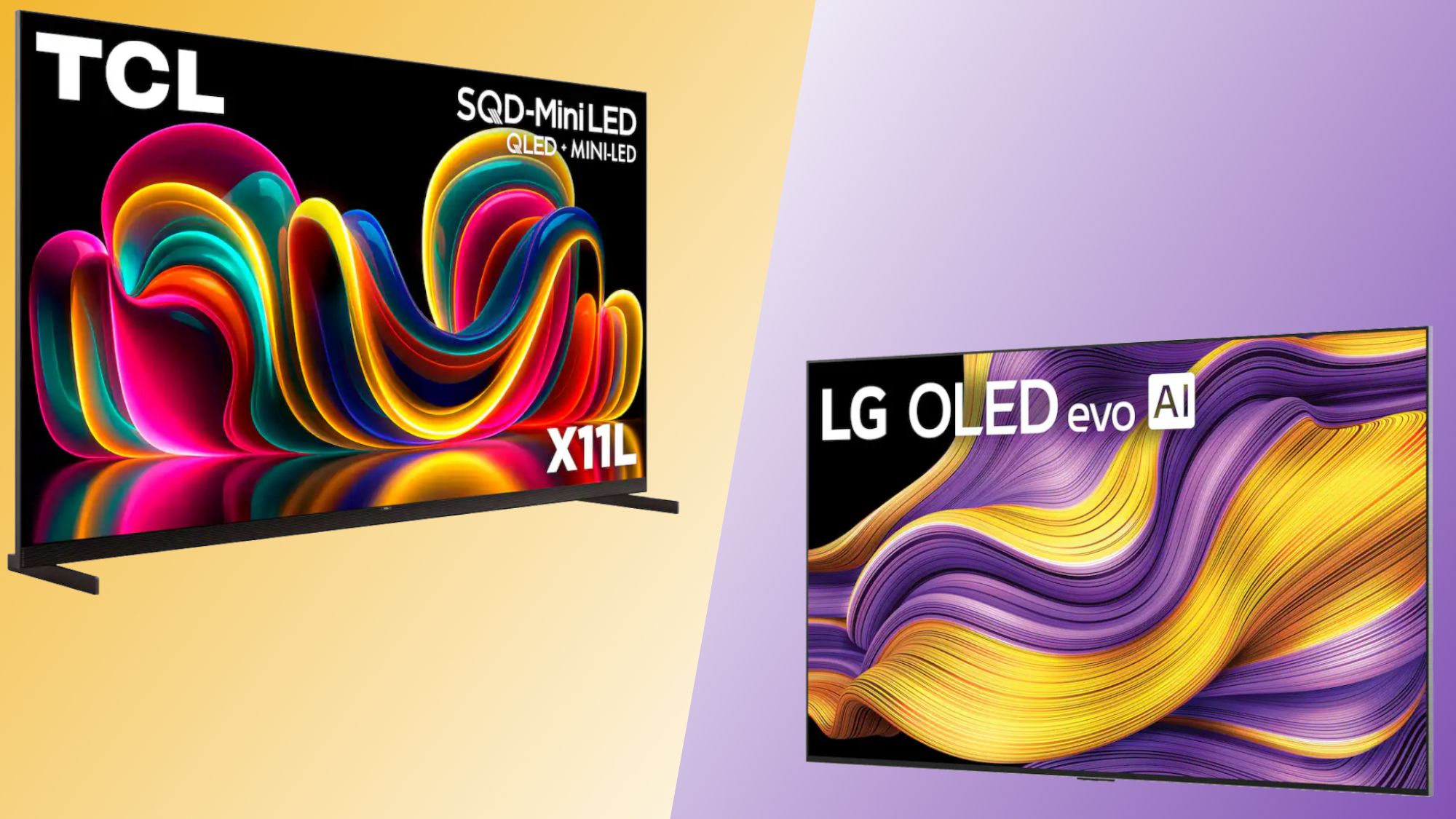

The G5 offers stunning picture quality and some of the brightest highlights you’ll find on an OLED TV. It’s also packed with features. As LG’s flagship OLED, it doesn’t come cheap, but it’s nevertheless much more affordable than the TCL X11L. For most people, it’s the all-around better buy.
Pros
- Nearly unparalleled brightness for an OLED
- Gorgeous color
- Terrific gaming features
Cons
- A little pricey for what you get
- No ATSC 3.0 tuner
In one corner is the LG G5, which is not only one of the best OLED TVs you can buy, it’s easily one of the best LG TVs ever made, period. If you’ve been considering a high-performance OLED TV, the G5 is likely near the top of your list of options.
TCL X11L vs LG G5: specs compared
| Header Cell – Column 0 |
TCL X11L |
LG G5 |
|---|---|---|
|
Sizes |
75″, 85″, 98″ |
55″, 65″, 77″, 83″, 97″ |
|
Ports |
4x HDMI 2.1 |
4x HDMI 2.1 |
|
Resolution |
3,840 x 2,160p |
3,840 x 2,160p |
|
Refresh rate |
144Hz |
165Hz |
|
HDR |
Dolby Vision, HDR10+, HDR10, HLG |
Dolby Vision, HDR10, HLG |
|
Smart TV software |
Google TV |
webOS |
|
ATSC 3.0 support? |
Yes |
No |
|
Processor |
TSR AI Processor |
a11 AI Processor 4K Gen2 |
These are similarly spec’d TVs, but let’s talk about a few noteworthy differences. The G5 supports 4K gaming at 165Hz, but the X11L is capped at 144Hz. You don’t need to worry about this unless you’re planning on using one of these TVs with a gaming PC, because current-generation consoles top out at 120Hz for 4K games.
It’s also worth calling out the X11L’s ATSC 3.0 support. This allows over-the-air broadcasts to be piped-in at native 4K resolution when available. 4K broadcasts aren’t particularly common, but this feature is nevertheless nice to have, especially given the X11L’s price tag.
The most important thing to consider when looking at this chart is screen size availability. The TCL X11L is only available in three sizes and the smallest option is 75 inches. The G5, meanwhile, has a much more accommodating slate of size options.
TCL X11L vs LG G5: design
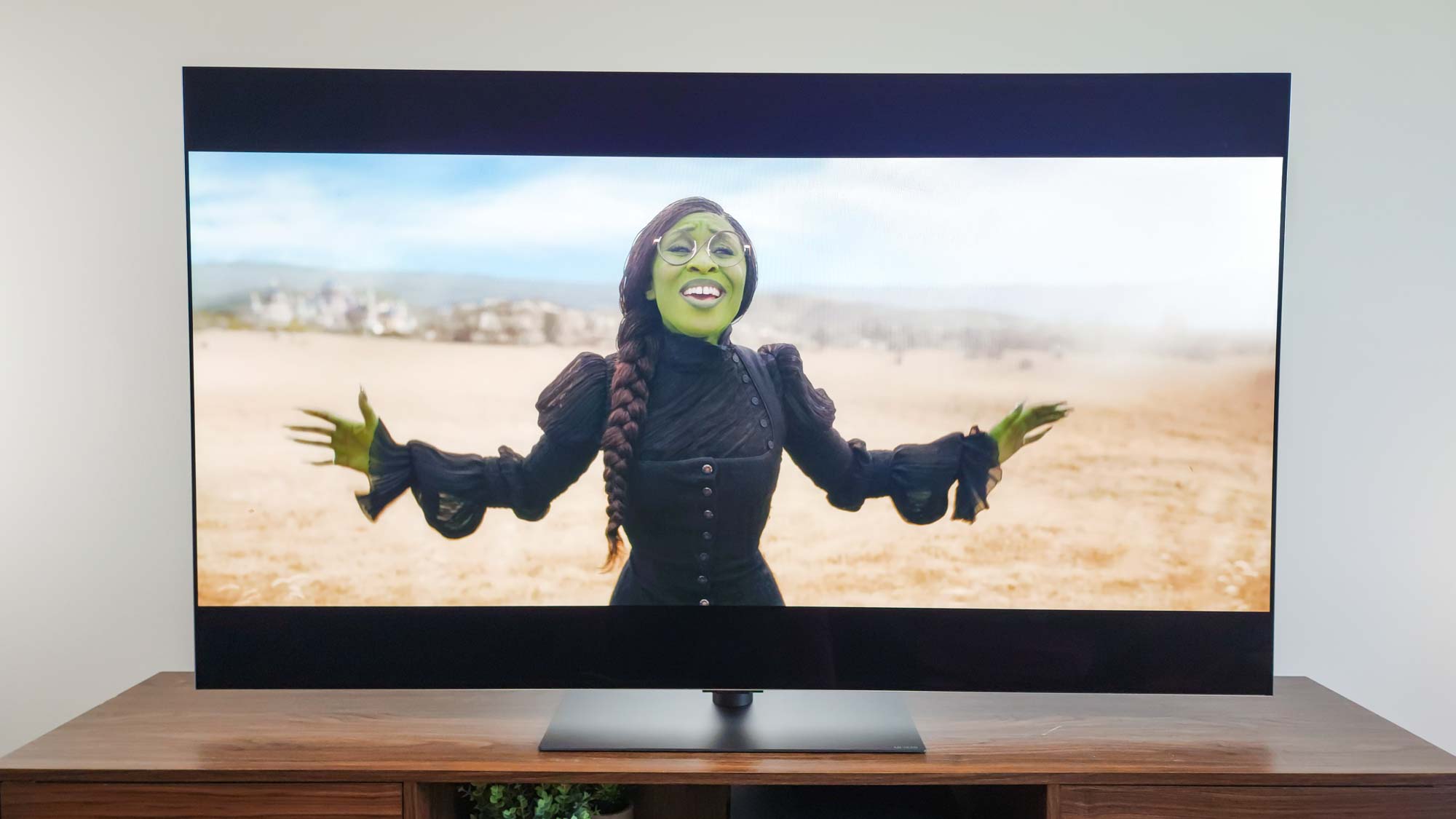
Last year, LG included a stand with 55- and 65-inch versions of its G Series OLED. The G5, on the other hand, doesn’t come with a stand at any size point. LG believes that most people shopping the G Series plan on taking advantage of the TV’s gap-free, wall-mounted design.
You can check out the G5’s separately sold stand in the photo above. It’s a relatively heavy, pedestal-style stand that screws into the back of the panel, and I’ve never had any issues with it.
When the G5 is wall-mounted, few TVs come close to topping its striking, elegant design. When it’s sitting on a credenza with its pedestal-style stand, the G5 is still a fancy-looking customer, but much of the design’s visual appeal is lost.
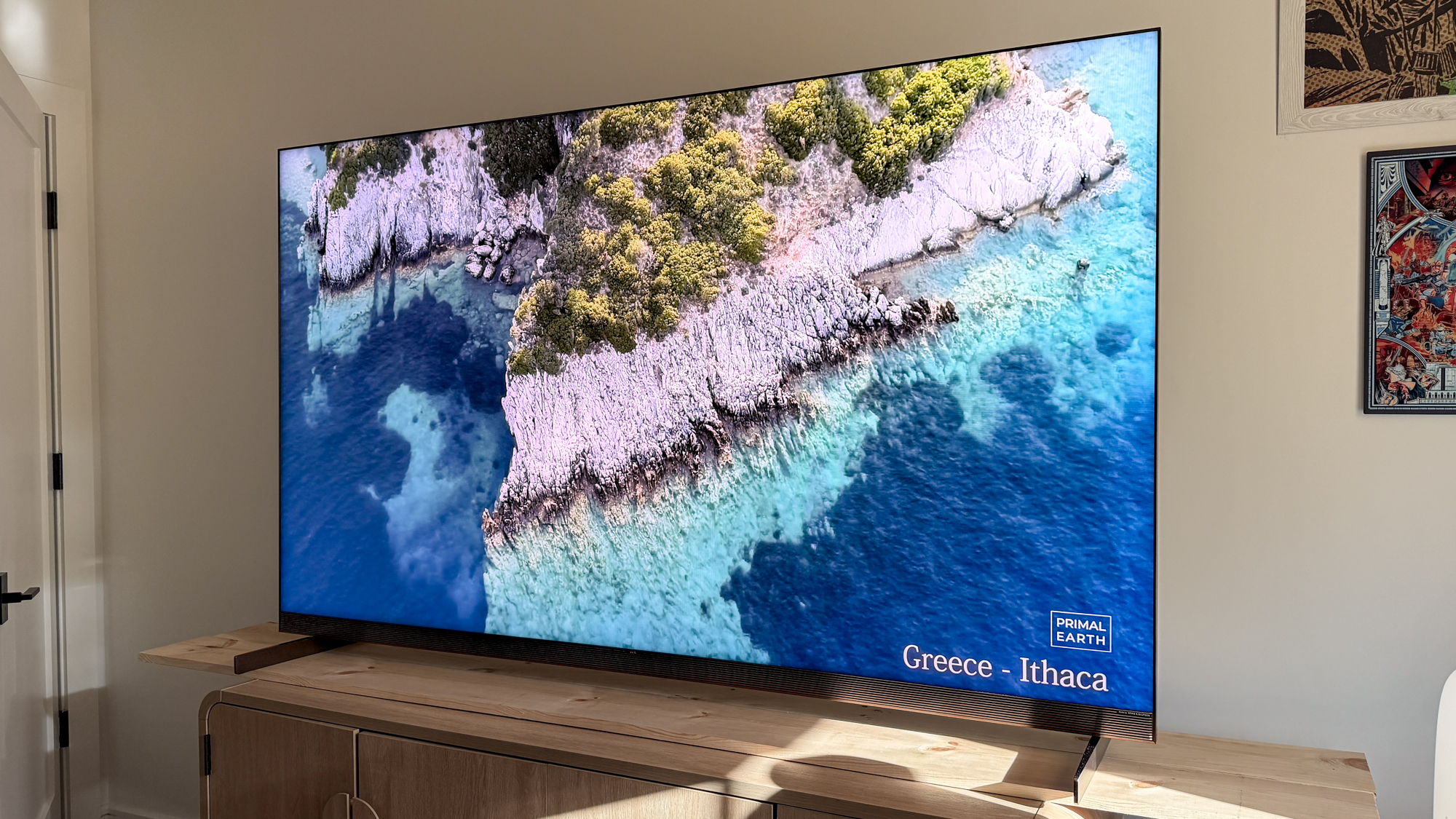
The X11L (seen above) includes a pair of svelte, minimalistic feet that straddle the screen close to the bottom edges of the panel. This makes the X11L a more accommodating, out-of-the-box choice than the G5 for folks who don’t intend on wall-mounting their next TV, but I find the G5’s design better looking than the X11L whether it’s on or off a wall.
My reasoning for this comes down to the sheer bulk of the X11L’s panel. It’s a hefty customer, and visually speaking, it carries a similar weight. I appreciate that the X11L’s chassis is mostly uniform in size, but it’s quite slab-like in its overall vibe.
Still, the fact that you have to shell out for the G5’s separately sold stand is a pretty significant ding against its design. This one is a draw.
Winner: Draw
TCL X11L vs LG G5: performance
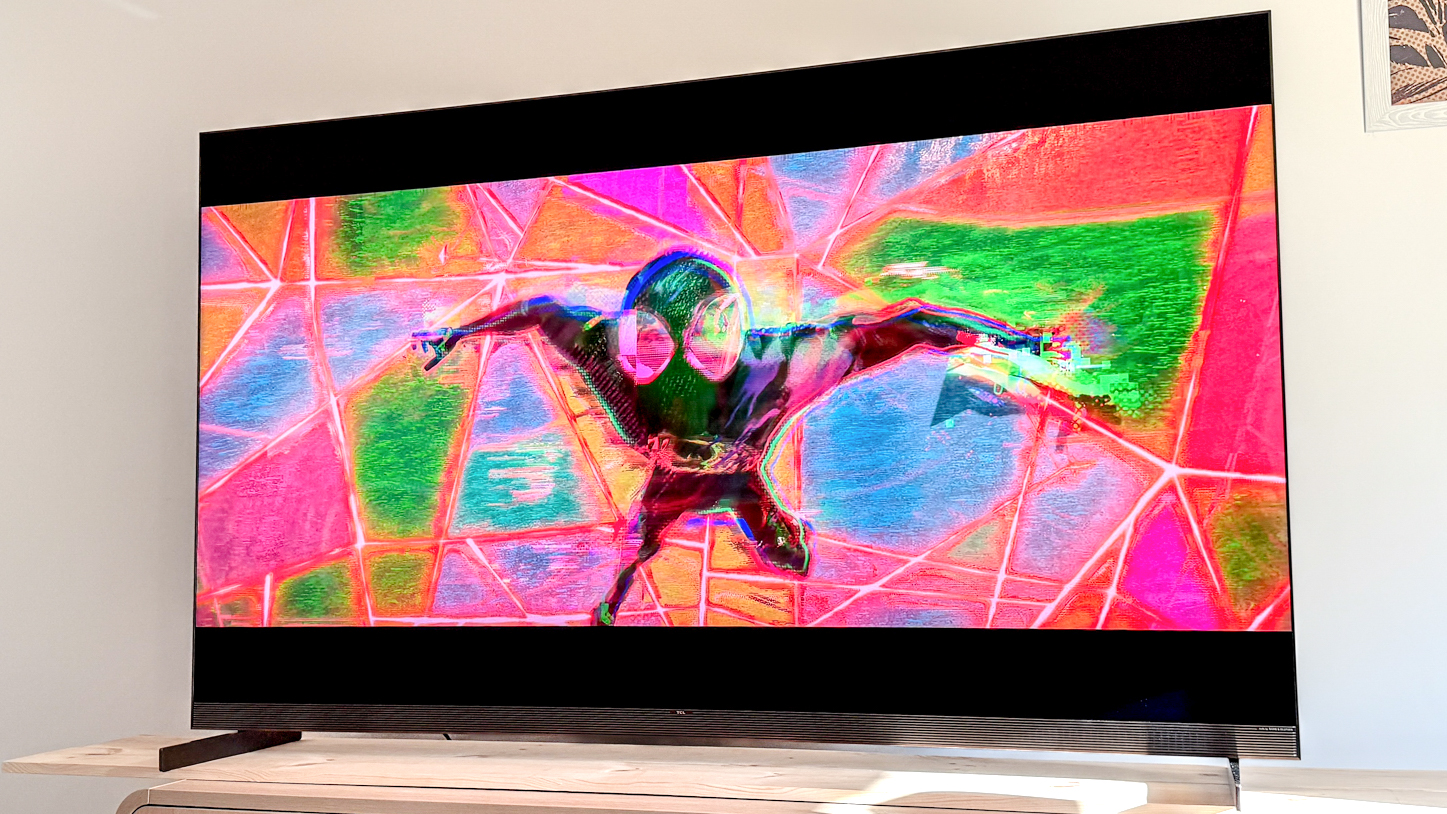

Before we dive into which of these TVs is the better performer, let’s compare their test results. (Both TVs were in their respective Filmmaker picture mode when these tests were taken.)
| Header Cell – Column 0 |
TCL X11L |
LG G5 |
|---|---|---|
|
SDR Brightness (10%, in nits) |
283 |
465 |
|
Delta-E (lower is better) |
1.9 |
1.9 |
|
HDR Brightness (10%, in nits) |
2,679 |
2,296 |
|
UHDA-P3 Gamut Coverage |
97.74% |
99.79% |
|
Rec. 2020 Gamut Coverage |
91.77% |
82.42% |
|
Input latency (milliseconds) |
11.7 |
9.2 |
First, let’s talk about brightness. Along with its showstopping color, brightness is the X11L’s bread and butter. We measured a sizzling 2,679 nits of HDR highlight brightness on the X11L, but it’s worth noting that this set is capable of getting much, much brighter with its backlight completely cranked up.
This is especially true when measuring even smaller highlights on the X11L than the 10% window reported above. Indeed, the X11L is capable of brightness levels well above 6,000 nits.
So, how does that stack up to the G5? Thanks to the 4th-generation OLED panel from LG Display, the G5 is one of the brightest OLEDs we’ve ever tested, rivaling quantum dot-enhanced OLEDs from Sony and Samsung.
And, although the G5’s HDR highlight brightness in Filmmaker mode is comparable to what you’ll see on the X11L while the latter’s backlight is kept at or around its default setting, its ceiling is nowhere near as high as the X11L’s.
The X11L’s added brightness is especially noticeable if you measure the luminance of the entire picture during everyday content. For people with brightly lit homes, the X11L is a much safer bet.
That said, like all OLED TVs, the G5 is capable of perfect black levels and pixel-level dimming. When you factor-in this ability, the G5’s contrast-related advantages really come into focus. The X11L does a remarkably good job at minimizing haloing and light bloom (especially given its brightness), but it can’t quite replicate the depth and clarity of a searingly bright OLED panel. For this reason, I find the G5’s contrast to be far more appealing.
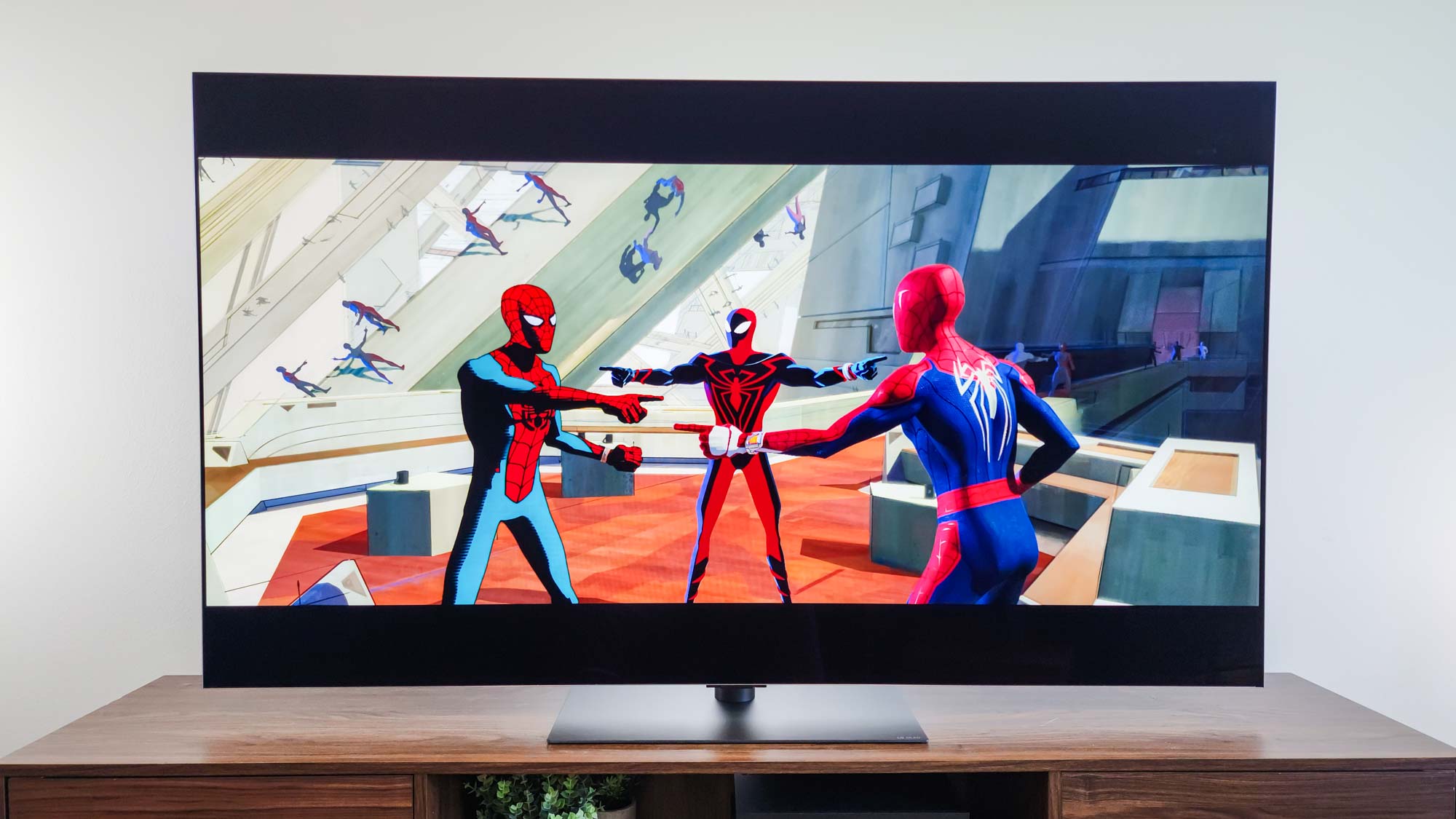
I find the G5’s contrast to be far more appealing.
Contrast isn’t the whole story. The X11L and its unique, souped-up quantum-dot panel are engineered to squeeze as much color out of a Mini-LED-backed picture than ever before.
TCL’s top-of-the-line TV for 2026 covers more of the Rec. 2020 color gamut than any Mini-LED TV we’ve measured to date. It even surpasses some QD-OLED TVs in this category, too.
Were you to place these TVs side by side, you would almost certainly notice brighter, bolder colors on the X11L. However, without a reference, viewers’ jaws will still be on the floor for the G5’s bright, well-calibrated color palette, too.
Both of these TVs deliver an incredible picture worthy of a flagship-level price tag. If you’re looking for the brightest possible presentation — bright enough that colors are downright psychedelic — the X11L has a considerable edge.
For my money, though, there’s no better mix than the pure, true black levels of an OLED display capable of cracking 2,000 nits. For as remarkable as TCL’s SQD panel truly is, the G5 has all of the built-in benefits of an OLED panel, and that seals the deal.
Winner: LG G5
TCL X11L vs LG G5: smart platform and features
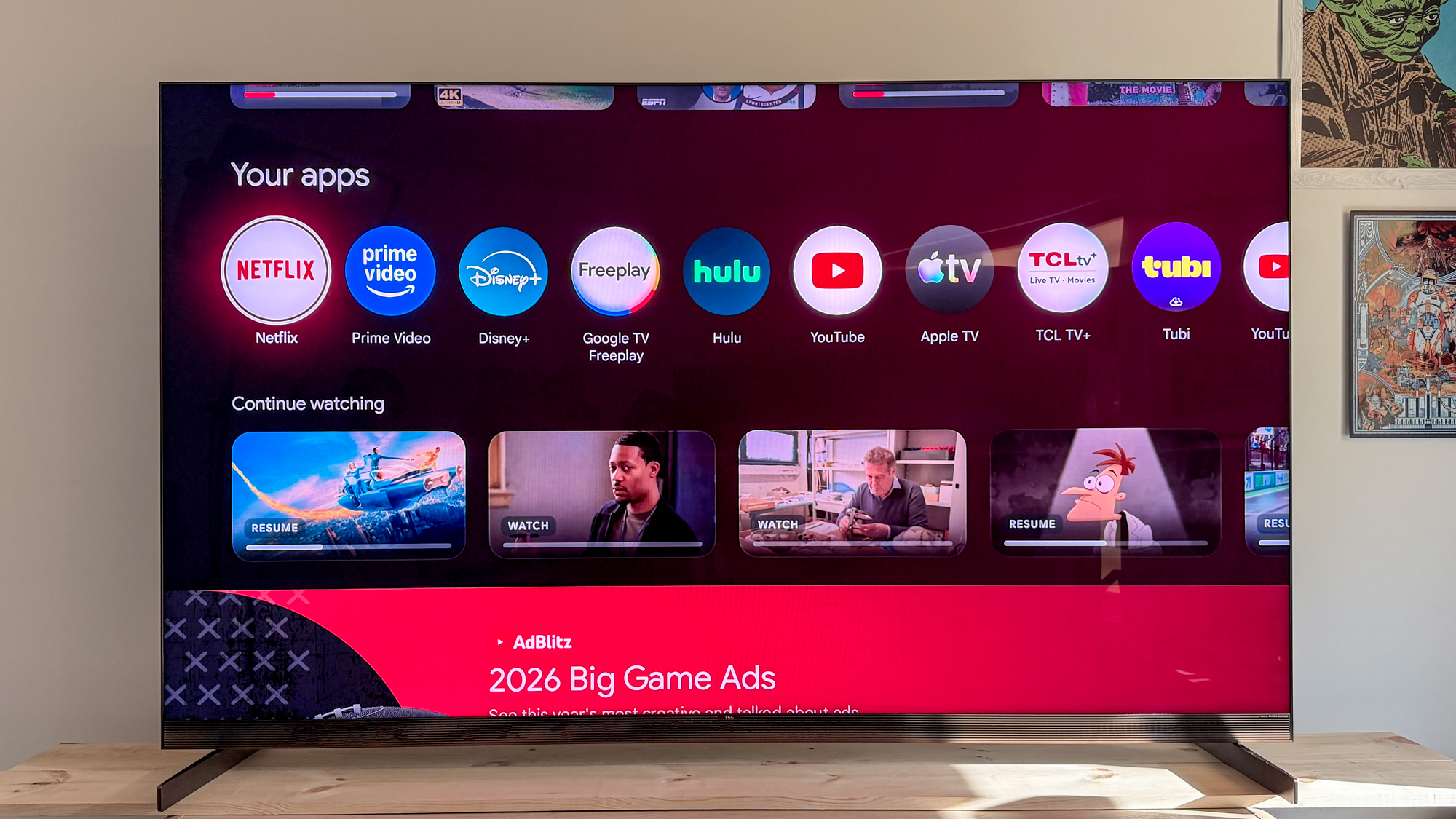
The X11L is built around the Google TV software suite, and it’s a great smart platform to hang your hat on if you intend to do most of your streaming on your TV rather than an external streaming device.
I love how zippy Google TV is, and the user interface is relatively straightforward, which I suspect most people will appreciate if they don’t want to fumble their way through various tabs and submenus.
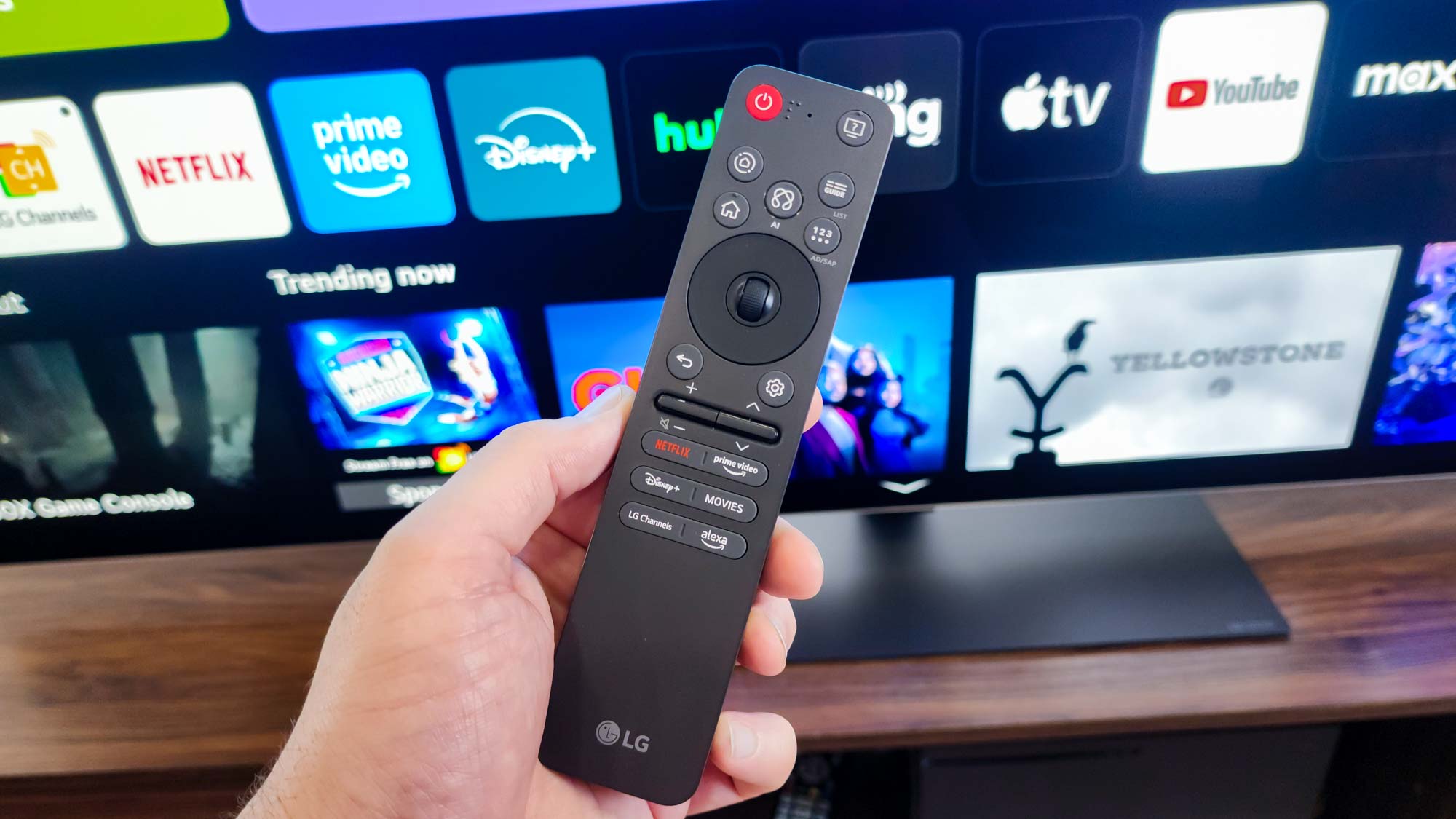
The G5, on the other hand, is built around webOS 25, the newest version of LG’s proprietary smart platform. It’s fussier than Google TV and offers a less-streamlined experience, but you can get away with using it as a daily driver.
As far as gaming features go, these are similar sets. Each offers HDMI 2.1-compatibility across all four inputs, which frees you up from thinking about which port any given device should use. Both TVs also arrive with Variable Refresh Rate (VRR), Auto Low Latency Mode (ALLM) and some variation of AMD FreeSync Premium for smooth, artifact-free gameplay.
Sure, the G5 supports 4K gaming at 165Hz and the X11L tops out at 144Hz. I just can’t bring myself to invest too much in this difference, though, as it won’t matter to the vast majority of shoppers — even the folks shopping in this price range.
For the vast majority of viewers, these sets are basically the same when it comes to features. They both offer a top-shelf gaming experience and come with a thorough slate of A/V-related enhancements. The X11L’s Google TV experience is my preferred choice between the two (and TCL includes HDR10+ support), but that’s not enough for it to take this category.
Winner: Draw
TCL X11L vs LG G5: outlook
| Header Cell – Column 0 |
TCL X11L |
LG G5 |
|---|---|---|
|
Specs (25) |
24 |
24 |
|
Design (25) |
21 |
21 |
|
Performance (25) |
23 |
25 |
|
Features (25) |
25 |
25 |
|
Total Score (100) |
93 |
95 |
Upon tallying up their report card points, it’s plainly obvious that these are close competitors that perform at the highest possible level. For most people, the rubber meets the road when peeking at their respective price tags.
The TCL X11L is a brand-new TV just making its way to shelves. This is merely one reason why it’s priced higher than the LG G5, which was released last year.
The primary reason why the TCL X11L is priced higher than the G5 is — to put it simply — because it’s just really, really expensive. Right now, you can order the 75-inch TCL X11L for $6,999 at Amazon. Meanwhile, the 85-inch X11L is $7,999 at Best Buy.
For comparison’s sake, the 77-inch G5 was $4,399 at launch. As a year-old model, it’s even cheaper today. You can grab the 77-inch LG G5 for $3,499 at Best Buy right now — half the price of the 75-inch X11L.
The G5 is also available in 55- and 65-inch models, which is something you can’t say for the X11L. For people in the market for a smaller-sized, high-performance TV, the 55-inch G5 being available for $1,449 at Amazon will make this decision an open-shut case.
Still, there’s no denying that the TCL X11L is one of the year’s best TVs. It’s also proof that there are still ways to eke more performance gains out of Mini-LED display tech. Given its high price, I suspect it will be a tough sell for most people until it goes on sale.
More from Digitpatrox
Source link
-

-

-

-

-