
The market will panic when the Strait of Hormuz closes. When it reopens, policymakers will all feel relieved. At present, we are all witnessing this in real time, but reality is definitely the opposite. The latest data coming out in April 2026 should put an end to that illusion. Even after repeated announcements by Iran and the USA that Hormuz was “open,” real-time, actual maritime traffic only shows evidence of a near collapse. Markets are still struggling to get to grips with the fact that, during the opening of Hormuz, vessel traffic levels are still extremely low, sometimes as low as three vessels per day, compared to well over 120–140 in normal conditions. The lesson to be taken into account is no longer theoretical. The reopening of a chokepoint, such as Hormuz or Bab El Mandab, does not restore a system. It merely exposes how deeply it has already been broken.
Markets and policymakers should look at the precedent already set in the Bab El-Mandeb and the Suez Canal. Despite intermittent stabilization efforts, traffic through the Red Sea corridor remains structurally depressed, even after years of reopening, with Suez throughput still far below pre-crisis levels. It has become clear that incentives such as transit fee discounts are widely failing to bring vessels back. The Houthis did not need to close the corridor permanently; they needed to make it all unreliable. That alone was enough to rewire global shipping behavior.
Hormuz is now following the same trajectory, but this time at a far greater scale.
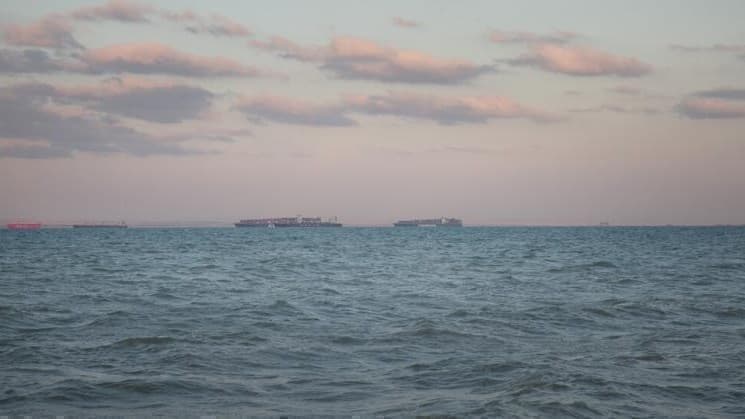
The hard data is unequivocal. Maritime traffic through Hormuz has at times fallen by 90% or more, with entire fleets idling outside the Strait rather than risk transit. At the same time, most attention is focused on hydrocarbon exports, as oil exports from core Gulf producers have dropped by over 60%, while millions of barrels have been pushed into floating storage. Traffic has effectively fallen to zero, especially during peak disruption periods. Hundreds of vessels are still waiting in the Gulf of Oman and beyond. No reversal of this dynamic has been witnessed even during brief reopenings. Tankers turn back. Shipping lines refuse bookings. Insurance markets remain restrictive.
Related: JPMorgan Says Oil Prices Still Have Further to Rise
The core issue is trust, not just a closure. Recognizing this helps policymakers and industry leaders feel the gravity and urgency of restoring confidence.
There needs to be an understanding that shipping is not governed by physical access alone, but by risk perception. Once that perception shifts, as is now the case in Hormuz, the system behaves differently. The withdrawal of war-risk insurance in early March effectively shut down commercial navigation, regardless of whether the Strait was technically open. Even now, when some parties have stated that the strait has been partially reopened at certain times, major operators still refuse to transit. In some cases, none of the world’s top shipping companies are willing to take cargo through the Strait.
That behavioral shift is the real story. And this confirms and substantiates what we have already seen in the Red Sea.
The consequences are structural, as evidenced by global trade rerouting on a scale. The Cape of Good Hope has become the default alternative for Asia–Europe flows, adding 10–14 days and thousands of nautical miles to voyages. All parties should realize that this is no longer a temporary detour but is already embedded in network design. Shipping lines are recalibrating schedules, redeploying fleets, and locking in new routing strategies that assume chokepoint instability as a baseline.
The implications for energy markets are and will increasingly become profound. The Strait of Hormuz normally carries roughly 20% of global oil and LNG flows. Its disruption has already triggered what the International Energy Agency describes as the largest supply shock in modern oil market history. Hydrocarbon prices have surged, while total exports have collapsed. Supply chains have seized up. The longer-term impact will not only be scarcity, but fragmentation.
Even if Hormuz fully reopens tomorrow, flows will not simply revert.
The history and outcome of the Red Sea crisis prove this. Despite periods of reduced attacks, shipping companies have not fully resumed operations through the Suez Canal. There is a quite simple reason for this: reliability has been broken. Once operators have redesigned their networks to use alternative routes, they do not revert overnight. Contracts are rewritten. Insurance frameworks are reset. Risk models are updated. The global system has adapted and is locked into that adaptation.
Hormuz’s larger scale and deeper consequences underscore the urgent need for policymakers and analysts to understand the profound systemic shifts underway.
First, insurance markets will not normalize quickly. War-risk premiums have surged, fundamentally altering voyage economics. Even in de-escalation scenarios, insurers will price in disruption risks, resulting in a lasting cost uplift for Gulf exports. Shipping behavior will remain cautious or risk-averse, as vessel owners demand higher returns or avoid the region altogether, affecting long-term strategic planning.
Third, energy buyers will diversify aggressively. Europe, already reshaped by the loss of Russian pipeline gas, will accelerate sourcing from the Atlantic basin and Africa. Asia will double down on diversification strategies, including U.S. LNG and regional supply chains. For the Gulf, this doesn’t mean that its market share will disappear. Its dominance, however, is expected to be structurally diluted.
Fourth, infrastructure investment will shift toward alternative export routes, including pipelines to the Red Sea, storage hubs outside chokepoint zones, and new transshipment models. These investments, driven by the crisis, are long-term and irreversible, representing a fundamental reconfiguration of global energy logistics that industry stakeholders must consider in their strategic planning.
At the same time, geopolitical implications are intensifying. The events of 2026 have demonstrated that chokepoints are no longer passive geographic features. They have become, and will continue to be, used as active instruments of power. The ability to disrupt Hormuz or Bab El-Mandeb, even temporarily, confers strategic leverage far beyond traditional military capabilities. This will incentivize further militarization of maritime corridors and increase the probability of recurring disruptions. Bab El Mandab, Malacca Straits, and others will need to be reassessed without any doubt.
The private sector has already internalized this reality. Shipping lines, traders, and financiers are no longer pricing risk based on stability but on volatility. The result is a system that prioritizes resilience over efficiency. That shift has profound economic consequences.
Globalization was built on the assumption of frictionless maritime trade. Chokepoints like Hormuz and Suez were treated as stable constants. Since February 2026, this assumption has been obsolete. The new model is one of managed instability, where redundancy replaces optimization and cost structures rise accordingly.
For Egypt, one of the main targets of the fallout, the warning is already visible. The collapse in Suez Canal revenues is not just a cyclical downturn; it has become a structural shock. Traffic was rerouted, and it is not fully returning. The same risk now hangs over the Gulf. Even if Hormuz reopens and remains technically secure, its reliability premium has been permanently damaged.
For Europe, the stakes are acute. Increased reliance on seaborne energy imports exposes the continent to maritime disruption at precisely the moment when industrial resilience is already under pressure. For Asia, especially China, India, Japan, and South Korea, the exposure is even greater, as they all largely depend on Gulf hydrocarbons. Both regions will face higher costs, greater volatility, and more complex supply chains. Economic pressure, financial burdens, and instability could pose serious issues in the future.
The most dangerous mistake policymakers can make now is to treat reopening as a resolution. The data shows otherwise. Traffic does not return. Costs do not normalize. Behavior does not revert. The system evolves.
Even today, vessels are still turning back, traffic remains minimal, and operators are staying away. This is the new reality: chokepoints can reopen physically while remaining closed economically.
The long-term consequence is clear. The global maritime and energy system is entering a phase of structural fragmentation. Global trade and energy flows will be more regional, more redundant, and more expensive. Efficiency has given way to resilience. The price of security will be permanently embedded in trade.
Hormuz, like Bab El-Mandeb, is no longer just a passage. It is a fault line. Once that has shifted, it does not simply move back.
By Cyril Widdershoven for Oilprice.com
More Top Reads From Oilprice.com
-

-

-

-

-


