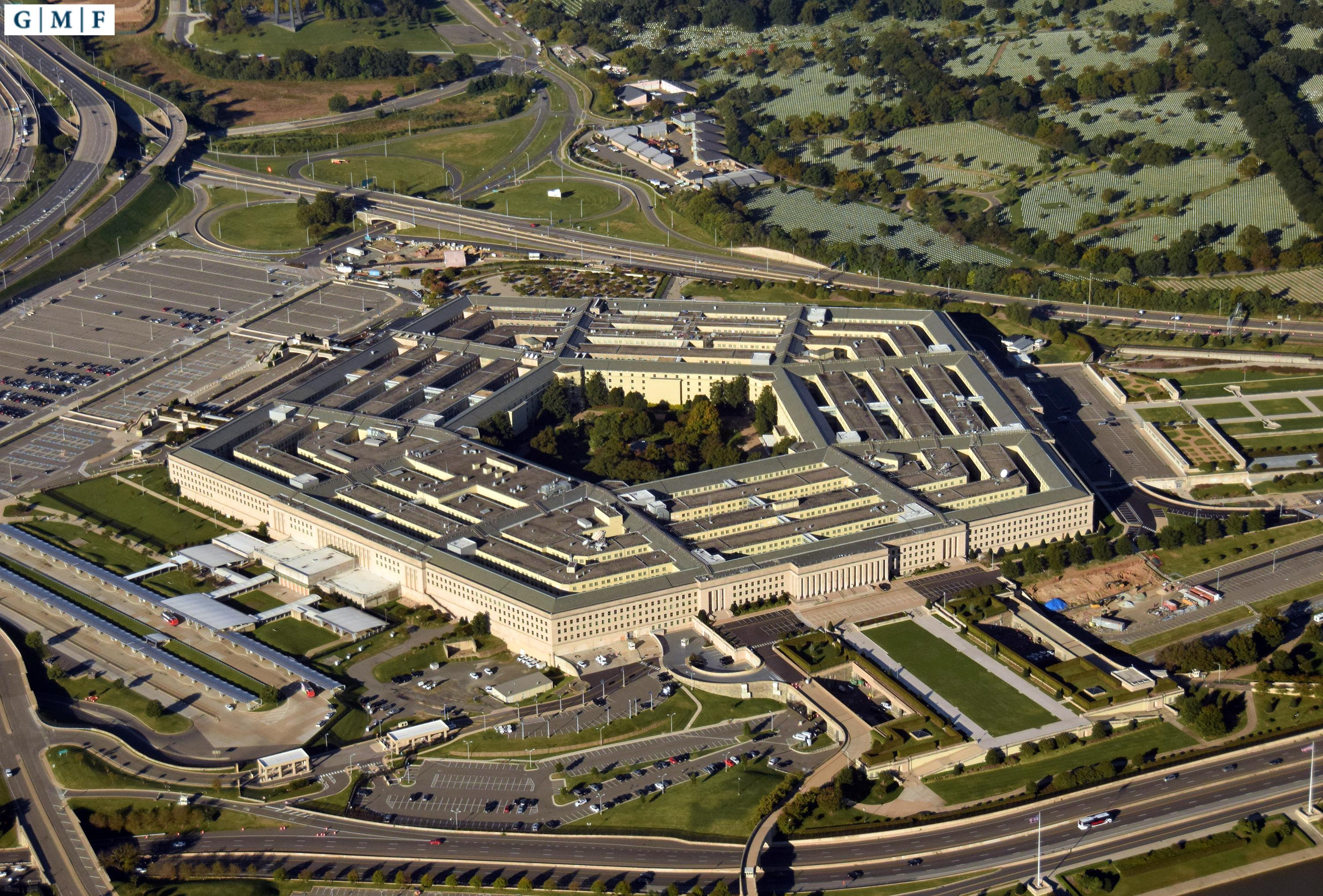
Five GMF experts offer their analyses of the document that sets out strategic guidance for protecting the US homeland.
Overview: A Shift to the Western Hemisphere Impacts Security Abroad and At Home
By Dr. Carrie Lee
The new US National Defense Strategy (NDS) signals arguably the single greatest shift in American defense priorities since the end of World War II. Rather than offer a vision meant to preserve American leadership and influence abroad, the NDS instead articulates a significantly smaller role for the United States in global affairs. It downplays the threat posed by traditional adversaries such as China and Russia while highlighting Western Hemisphere threats and repeatedly emphasizing the need for burden-sharing with allies. Overall, the NDS sets the stage for reduced American military leadership abroad, even as it escalates military involvement at home.
Perhaps the greatest change for the country’s military and its industrial base concerns the document’s prioritization of the Western Hemisphere and domestic operations through border security and immigration enforcement. Since assuming power, the Trump administration has increasingly blurred the lines between police and military actions at home and abroad. The NDS makes clear that this shift will continue and potentially accelerate. The top operational approach to the top priority focuses on sealing borders, repelling “forms of invasion”, and facilitating and conducting deportation operations domestically.
This new emphasis on domestic and border operations requires significant adjustments to training, organizational structure, and resourcing within the Department of Defense. To date, relatively few military forces have experience operating at the US Southern border, and almost no units have training in the kinds of policing procedures necessary to facilitate or conduct deportation operations. The administration’s priorities therefore require increased attention to training, doctrine, and resourcing. In a world of finite time and resources, this necessarily means that other kinds of training and operations—including potentially the kind of large-scale joint combat operations necessary to deter and win a conflict in Europe against Russia or in the Indo-Pacific against China—will be neglected. Allies should be prepared for a US military that is increasingly narrowly focused on issues unique to the Western Hemisphere. By extension, this also means a military unprepared to effectively challenge larger adversaries that pose a direct and existential threat to partners and allies.
The implications for NATO are profound. The structural and training changes that will be required to support the NDS’s priorities will be difficult to reverse once enacted, and are likely to extend well beyond the Trump administration. European partners and allies should expect declining US participation in terms of fiscal contributions and military engagement as the country’s attention shifts increasingly closer to home. Congress ensured that these changes will not take Europe by surprise with the National Defense Authorization Act, but it would be folly for European leaders to hope that the transatlantic defense relationship will fully rebound at the end of Trump’s second term. The NDS sets the stage for a permanent shift, and Europe must be prepared.
The emphasis on border security, drug trafficking, and Western Hemisphere territories will also have implications for American security at home. The Trump administration has already ordered unprecedented levels of domestic deployments in US cities. These highly politicized operations have polarized public trust in the military and, according to many reports, significantly harmed morale and welfare among deployed units. As the White House appears to double down on this strategic approach, the United States could well face a second, more severe recruiting crisis that is compounded by problems with retention. This will have second- and third-order consequences not just on American posture abroad, but on democratic accountability at home as the military becomes increasingly perceived as a partisan, politicized institution.
For those invested in the post-war liberal world order, the NDS’s reordering of priorities comes with enormous risks to US interests and allies, and will almost certainly lead to profound changes in the global balance of power, a scenario that history suggests leads to more episodes of instability and crisis.
Yet the NDS also offers opportunities for European leaders to shape collective defense in manner that aligns with their priorities and constraints. For over seven decades, American priorities and needs have defined the transatlantic defense relationship and security in Europe. With the US withdrawal from its leadership role, leaders in Berlin, Paris, and Brussels have an opportunity to define a “European way of war” that addresses their security needs without being overwhelmed by American interests. The key will be the speed with which they can make the pivot while avoiding the historical pitfalls of competition on the continent.
Securing the Homeland Requires Allies
By Sophie Arts
The 2026 National Defense Strategy reinforces many of the Trump administration’s positions articulated over the last year. It elevates the Western Hemisphere and prioritizes challenges to US security posed by adversaries—including China, Russia, Iran, and North Korea—first and foremost according to their ability to threaten the homeland. Meanwhile, it places the primary responsibility for the defense of Europe and the Indo-Pacific on US allies. Adopting a “flexible, practical realism” lens, it also advances a more transactional approach to defense relationships by prioritizing “model allies”—those “spending as they need to and visibly doing more against threats in their regions, with critical but limited U.S. support”.
This approach carries significant implications for the North American and European Arctic and its adjacent theaters. The United States relies on its allies there—including through cooperation within NORAD, NATO, and bilateral relationships—for access, capabilities, and forces to help track, deter, and defend against potential threats approaching from the north. Arctic allies also enable US defense-industrial revitalization, helping the United States to develop assets it is lacking—from icebreakers to space capabilities.
The 2022 NDS stressed the importance of “integrated deterrence”, including cooperation with Arctic partners such as Canada, to strengthen intelligence, surveillance, and reconnaissance (ISR) and maritime surveillance. The latest NDS also highlights engagement with regional neighbors, but makes clear that partners are expected to “do their part to defend … shared interests” or face consequences.
The NDS emphatically prioritizes continental defense over forward presence. It seeks to advance US security posture at home and power projection from the homeland, including to “launch decisive operations against targets anywhere”. It stresses that “more direct military threats to the American Homeland have … grown,” citing advances in nuclear, conventional strike, cyber, space, and electromagnetic capabilities. To counter these threats, the administration emphasizes technological investment and US President Donald Trump’s aspirational next-generation missile defense project, “Golden Dome for America”.
Yet technology alone is insufficient. As the NDS implicitly concedes, operationalizing Golden Dome and achieving broader security objectives (including in the Arctic) will require willing partners in North America, Europe, and the Indo-Pacific. Recent backlash against US pressure on Canada, Greenland, and European allies underscores the limitations of a purely realist, transactional approach. Such tactics may at best yield narrow, short-term outcomes, but risk eroding trust, ultimately weakening US strategic positioning and benefiting adversaries.
As US allies adjust their policy and posture, they will need to navigate a difficult balance: Faced with a very real threat from Russia and China and still significantly dependent on US security guarantees, they may at times need to adopt a path of transactionalism modelled by the United States—keeping in mind that dependence goes both ways. At the same time, they will need to strengthen national and shared capabilities and posture, and resist fragmentation to find pathways to preserve the cohesion necessary to deter Russia and China.
Hard Truths and Next Steps for Europe
By Kristine Berzina
The newly released National Defense Strategy (NDS) lays out the US administration’s hard truth to Europeans: Europe must take over the bulk of its own defense now. And the document signals the continuation of offensive rhetoric to allies. For Europeans struggling to make sense of the Trump administration’s often insulting statements toward Europe, the Pentagon’s new strategy offers an explanation and justification.
According to the strategy, there is an “urgent need” for allies to “do their part”, so the United States will “incentivize and enable” allies to mature as defense actors. This approach “requires a change in tone and style from the past”. The NDS uses a pragmatic tone to present the United States’ approach as grounded in military necessity. Unlike National Security Strategy, which criticized European democracy, energy, migration, and economic policy and forecast European “civilizational erasure”, the NDS does not seek to morally reform Europe. Instead, the United States argues that it needs Europe to step up now to address the problem of simultaneity of threats across multiple theaters.
Europe is in a tough position: It needs to maintain US support as long as possible to reduce short-term vulnerability and invest in its own long-term independence. As the recent crisis over Greenland illustrated, Europeans are ready to assert their interests against US encroachment. If Washington’s “sharp shift” in tone continues—and the NDS suggests that it will—Europeans will seek greater policy independence from the United States with increasing urgency.
In the short term, Europeans will need to keep Washington happy through defense spending and closer industrial ties to the United States. Washington is expecting a progress update at this year’s NATO summit in Ankara in July, and cooperation with the United States on defense industry will be among Europe’s deliverables. The NDS states that the United States is keen “to expand transatlantic defense industrial cooperation and reduce defense trade barriers”, and senior administration officials have made clear that industry is their priority. Thus, despite growing anti-Americanism, Europeans will likely look past grievance and cooperate with the United States on procuring materiel. Turning away from it would jeopardize the “critical but more limited support” that the NDS says the United States will still provide. And Washington will see its tough approach to Europe as a win.
In the longer term, Europe will likely seek greater independence in its security and defense capabilities and decision-making. Europe’s answer to the NDS and hard truth for the United States may be that with adequate military capacity, allies will have greater freedom to push back or push for their own lines on global policy. According to the NDS, the Pentagon wants Europe’s “efforts and resources” to focus on Europe, which seems to imply that Washington wants them to stay out of the Indo-Pacific. But a more capable Europe would be less easy to direct. The NDS may claim that the United States wants partners, not “dependent allies”, but this administration’s willingness to offend allies and spoil goodwill will reduce the alignment of the partnerships it seeks to create. This will not be a win for the United States.
A “Decent Peace” With China
By Bonnie S. Glaser
The US National Defense Strategy (NDS) makes clear that Washington is not pivoting away from the Indo-Pacific. Preventing China from dominating that region, which the NDS describes as “the world’s economic center of gravity”, is an explicitly stated objective. The US intent is to establish “fair trade and respectful relations” with Beijing while reducing tensions and avoiding confrontation. The NDS also envisages a “decent peace”, a concept that Under Secretary of Defense for Policy Bridge Colby devoted an entire chapter to in his book “Strategy of Denial”. This “decent peace” is meant to be “favorable to Americans but [one] that China can also accept and live under”.
According to the NDS, the primary means that the United States will use to achieve its strategic ends is more effective communications between the American and Chinese militaries that focus on strategic stability, deconfliction and de-escalation. However, the assumption that Beijing shares the US goal of reducing risk is misguided. The People’s Liberation Army’s behavior in recent years suggests that the Chinese see advantages to introducing greater operational risk and are therefore unlikely to negotiate seriously with the United States on crisis management. China’s military prefers crisis prevention, which it believes can best be achieved by a drastic reduction of US military operations around China, especially in its near seas: the Bohai Sea, the Yellow Sea, the East China Sea, the South China Sea, and the waters around Taiwan.
Another questionable assumption of the NDS is that Washington’s vision of a “decent peace”, accompanied by a US pledge to not “dominate”, “strangle”, or “humiliate” China, will satisfy Beijing. The American plan to “erect a strong denial defense along the First Island Chain” is likely inconsistent with China’s conception of strategic stability. Moreover, President Xi Jinping has repeatedly stated that Taiwan’s “reunification” with China is inevitable and that the political division across the Taiwan Strait should not be passed down from generation to generation. Unlike the Trump administration’s National Security Strategy, which mentions Taiwan seven times, its NDS (at least the unclassified version) is silent on Taiwan.
What the Department of Defense portrays as a “gracious offer” is unlikely to appeal to China. But deterrence will hold in the Indo-Pacific if the United States succeeds in implementing the NDS’s plan to build and sustain a strong denial defense along the First Island Chain; work closely with regional allies and partners to incentivize and enable them to do more for collective defense; and strengthen the US defense industrial base.
Of Two Minds: The US Legislative and Executive Branches
By Kate Stotesbery
The homeland-first philosophy that guides the Trump administration’s National Defense Strategy (NDS) is distinctly different in many ways from the US Congress’ approach in words and action.
Bipartisan congressional leadership has named China, Russia, Iran, and North Korea as US adversaries and, in the 2026 National Defense Authorization Act (NDAA), given the administration the resources to combat their objective of dismantling American global influence. The law prohibits significant reductions in US troops in Europe or on the Korean peninsula, or ending the requirement that an American hold the position of Supreme Allied Commander Europe, without thorough congressional assessment and certification to confirm that any such action is in US interest. The consensus on Capitol Hill, as expressed through the carefully negotiated NDAA, does not see threats as confined to the Western Hemisphere. Nor does it see individual regions at war. Instead, it refuses to cede American leadership, urging its modernization with European and Indo-Pacific allies, all while strengthening Western Hemisphere and homeland security.
In contrast, the NDS sees the belief that the United States should always be solving international problems as a danger. The document instead seeks an Indo-Pacific balance of power to yield a “decent peace” and, in Europe, NATO allies’ assuming primary responsibility for their own defense, with critical but limited US support.
Despite approaching national defense policy with different philosophies, the NDS and the NDAA identify some of the same threats and craft aligned policy solutions on many fronts. Both see a diminishing US defense industrial base and insufficient modernization as threats to American security. They call for reindustrialization.
Though the prioritization levels differ, many of the NDAA’s policies for the Western Hemisphere and US homeland security are consistent with the NDS’s vision of recognizing border security as national security and providing resources for it—and for deterrence in the Indo-Pacific.
Both documents also reject isolationism. The NDS’s proposal for allies to be security partners rather than dependents is close to congressional views, though the shifts in responsibilities and US resources are a jolt for the transatlantic alliance.
With overlapping national defense to-do lists in the legislative and executive branches, there are plenty of opportunities for collaboration. But the distinct philosophies between the branches about the factors behind US security and power, and the additive value of military alliances, remain a challenge to political unity.
The views expressed herein are those solely of the author(s). GMF as an institution does not take positions.
Source link