The first hours of Operation Epic Fury—the joint U.S.-Israeli military offensive against Iran, launched on February 28—demonstrated the extraordinary reach of modern precision warfare. U.S. and Israeli strikes killed Iran’s supreme leader, Ayatollah Ali Khamenei, along with senior commanders of the Islamic Revolutionary Guard Corps and key intelligence officials, in what Washington and Jerusalem described as a decisive blow intended to cripple Tehran’s command structure and destabilize the regime.
Yet within hours, any hope that the precise decapitation strikes would limit the scope of the war was dashed. Iran launched hundreds of ballistic missiles and drones not only at Israel but also across the Gulf. Air raid sirens sounded in Tel Aviv and Haifa. Missiles slammed into interceptors over Doha and Abu Dhabi. At Al Udeid Air Base, in Qatar—the forward headquarters of U.S. Central Command—personnel took shelter as interceptors streaked overhead. Air defenses flashed into action at U.S. bases at Al Dhafra in the United Arab Emirates and Ali Al Salem in Kuwait. Prince Sultan Air Base in Saudi Arabia reported incoming drones. Near the U.S. Fifth Fleet headquarters in Bahrain, naval forces were placed on heightened alert.
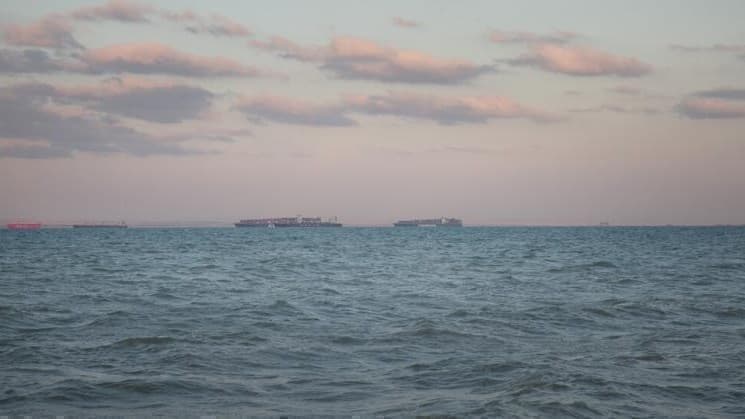
The Iranian response has had enormous ramifications for the Gulf, killing civilians, shuttering airports, threatening shipping and oil exports, and tarnishing the region’s image of stability and safety. An iconic hotel on the waterfront in Dubai caught fire after debris from an intercepted drone fell into its upper floors. Kuwaiti authorities reported damage near civilian airport facilities. According to news reports, several tankers have been struck near the Strait of Hormuz, prompting a spike in insurance premiums for shipping through the Gulf. Soon after the conflict erupted, oil futures jumped sharply as traders priced in the risk of sustained disruption to one of the world’s most critical energy chokepoints.
Iran’s strikes cannot be dismissed as acts of scattered retaliation, the flailing lashing out of a dying regime. Rather, they represent a strategy of horizontal escalation, a bid to transform the stakes of a conflict by widening its scope and extending its duration. Such a strategy allows a weaker combatant to alter the calculus of a more powerful foe. And it has worked in the past, to the detriment of the United States. In Vietnam and Serbia, U.S. adversaries responded to overwhelming displays of American airpower with horizontal escalation, eventually leading to American defeat, in the former case, and, in the latter, frustrating U.S. war aims and spurring the worst episode of ethnic cleansing in Europe since World War II. Decapitation strikes, in particular, create powerful incentives for horizontal escalation: when a regime survives the loss of its leader, it must demonstrate resilience quickly by widening the conflict. Although the United States has hugely battered Iran, it must reckon with the implications of Iran’s response. Otherwise, it will find itself losing control of the war it started.
FAR HORIZONS
Horizontal escalation occurs when a state widens the geographic and political scope of a conflict rather than intensifying it vertically in a single theater. It is especially appealing as a strategy for the weaker parties in a military contest. Instead of trying to defeat a stronger adversary head-on, the weaker side multiplies arenas of risk—drawing additional states, economic sectors, and domestic publics into the remit of the conflict. Iran cannot defeat the United States or Israel in a conventional military contest. It does not need to. Its objective is to gain greater political leverage.
The strategy of horizontal escalation follows a recognizable pattern. First, Iran has demonstrated resilience. U.S. decapitation strikes intended to paralyze the Iranian military. By launching large-scale retaliation within hours of losing the supreme leader and many senior commanders, Tehran signaled continuity of command and operational capacity.
Second, Iran has widened the conflict well beyond Iranian territory, effecting what scholars call “multiplication of exposure.” Rather than confining retaliation to just Israel, Iran struck or aimed at targets in at least nine countries, most hosting U.S. forces: Azerbaijan, Bahrain, Greece, Iraq, Jordan, Kuwait, Qatar, Saudi Arabia, and the United Arab Emirates. The message was unmistakable: those countries that host American forces would face severe consequences and the war that Israel and the United States started will spread.
Decapitation strikes create powerful incentives for horizontal escalation.
Third, Iran has politicized the conflict through its strikes. Iran’s retaliation has resulted in the closure of airports, the burning of commercial property, the killing of foreign workers, and the disruption of energy and insurance markets. Gulf leaders have been forced to reassure foreign investors and tourists. The war has migrated into boardrooms and parliamentary chambers. In the United States, the widening scope of the war has alarmed members of Congress. Numerous actors have now entered the conflict, each pursuing distinct interests, none fully coordinated, and all capable of altering the trajectory of escalation beyond Washington’s control.
The final dimension of Iran’s strategy is time. The longer multiple states feel pressure, the more that politics both within and among regional states can intensify the conflict. Without a version of NATO in the Middle East or a single American general effectively running the military operation for all the countries targeted by Iran, there is a high risk of wires getting crossed. U.S. officials have, for instance, floated the idea of stoking an ethnic rebellion in Kurdish parts of Iran to help target the Islamic Revolutionary Guard Corps. But that might provoke responses from Iraq, Syria, and Turkey, countries that would not welcome a powerful Kurdish insurgency in the region. The recent downing of three U.S. jets in a friendly-fire incident over Kuwait also illustrates the logistical and coordination problems that bedevil any attempt to fend off Iran’s escalation in the Gulf.
Iran’s foreign ministry reinforced this logic publicly, framing the missile barrages as legitimate responses against all “hostile forces” in the region. The phrasing has widened responsibility for the attack on Iran beyond Israel and the United States to encompass the broader U.S.-aligned order in the Gulf. Although Iranian President Masoud Pezeshkian has apologized to Gulf neighbors for the attacks, the installation of a new supreme leader aligned closely with the Revolutionary Guard suggests that such gestures are tactical rather than a signal that Tehran intends to abandon its strategy of horizontal escalation. Fundamentally, Iran’s horizontal escalation is a political strategy. It plays directly to the audience that Iran seeks to persuade: the Muslim populations across the region that may not be ideologically aligned with Iran but are generally poorly disposed toward Israel.
A THUNDEROUS SURPRISE
Operation Epic Fury is certainly not the first time that the United States has acted out of the belief that overwhelming airpower can compel rapid political collapse. The U.S. war in Vietnam exposed the limits of this assumption.
By 1967, the United States had dropped three times more tonnage worth of bombs on North Vietnam than it had used in World War II. Operation Rolling Thunder, launched in 1965, was designed to break Hanoi’s will and destroy its capacity to wage war. Washington possessed tremendous air superiority and apparent escalation dominance, meaning that North Vietnam could not hope to match the United States blow for blow as Washington ramped up the conflict. By the fall of 1967, U.S. airpower had devastated the crucial communication, military, and industrial centers and arteries on which North Vietnamese military power was thought to rest.
But just a few months later, in January 1968, North Vietnamese and Vietcong forces launched coordinated attacks on more than 100 cities and towns across South Vietnam. They breached the U.S. embassy compound in Saigon. They fought for weeks in Hue. They struck provincial capitals simultaneously. Although the offensive was costly for communist forces, it shattered the perception that a South Vietnamese and American victory was near.
President Lyndon Johnson soon announced that he would not seek reelection. Public confidence in the prosecution of the war eroded. The war’s political trajectory shifted, even as American firepower remained dominant.
The lesson was not that bombing failed tactically. It was that Hanoi escalated horizontally, widening the conflict beyond rural battlefields into South Vietnam’s cities and political nerve centers, transforming a military contest into nationwide political upheaval, and reshaping domestic calculations in Washington. In Vietnam, the United States never lost a battle—but it still lost a war.
WHEN PRECISION MISSES THE MARK
Three decades later, NATO relied on a different theory of airpower in the Kosovo conflict. Operation Allied Force, in 1999—originally planned as a three-day air campaign to hit 51 targets in and around the Serbian capital, Belgrade—emphasized precision strikes against Serbian military assets and leadership targets. Western leaders expected a swift, successful campaign. The regime would weaken, if not collapse. Bombs even fell on the residence of Serbian President Slobodan Milosevic.
Instead, Belgrade ordered 30,000 Serbian troops to sweep into Kosovo, forcing upward of a million Kosovar Albanian civilians, half the province’s population, from the territory. That exodus strained European governments and tested the cohesion of the NATO alliance. The United States and NATO lacked the large tactical airpower, much less the ground forces, to put a stop to the devastating ethnic cleansing. For weeks, as Serbian forces drove civilians from Kosovo, NATO debated escalation options. It ultimately mobilized nearly 40,000 ground troops for a major offensive to take Kosovo. Only at this point—and only after 78 days of sustained crisis, diplomatic pressure from Russia (a long-standing Serbian ally), and the threat of NATO invasion—did Milosevic concede.
Kosovo ended successfully for NATO—but not quickly, and not just through the use of precision strikes. Political endurance and alliance management proved decisive. Across both cases—the mass bombardment of Vietnam and the precision strikes upon Serbia—airpower shocked and disrupted, but it did not automatically determine political outcomes. Adversaries widened the conflict’s scope or prolonged it by adopting horizontal escalation. Iran now appears to be applying that lesson to the Gulf.
TEHRAN’S MEANS AND ENDS
Iran’s retaliation has clear political objectives. First, Tehran wants to puncture perceptions of the Gulf’s invulnerability. Cities such as Dubai and Doha market themselves to the world as secure hubs of finance, tourism, and logistics. When missile alerts interrupt operations at Dubai International Airport—one of the busiest in the world—the reputational cost is far greater than whatever physical damage Iran inflicts. The reported deaths of foreign workers in the United Arab Emirates underscore that civilians are no longer safe in Gulf states. The spectacle of interceptors exploding in the skies above these entrepots may make investors skittish.
Second, Iran has raised the political cost for Gulf countries of hosting U.S. forces. By striking near American bases at Al Udeid, Al Dhafra, and Prince Sultan, Tehran signaled that alignment with Washington entails exposure to attack. Gulf leaders must balance alliance commitments against domestic and economic stability.
Third, Tehran is shaping a narrative about the regional order. By portraying its actions as resistance to a U.S.-Israeli campaign aimed at regional dominance, Iran seeks to drive a wedge between the Gulf country leaders and their publics—a wedge that could grow depending on how long the conflict persists.
Fourth, Iran is leveraging economic chokepoints. Roughly a fifth of global oil shipments transit the Strait of Hormuz. Early shipping data suggests traffic through the strait has fallen by about 75 percent since the war began. Even a partial form of lasting disruption—through missile strikes, naval incidents, or rising insurance costs—produces immediate global ripple effects, fueling concerns about inflation and domestic political pressure in the United States and Europe. None of these objectives require battlefield victories. They just require Iran’s endurance.
THE TOLL OF TIME
Horizontal escalation is not simply about hitting a wider array of targets. Its deeper effect is to change how a foe perceives risks. In a short war, risk is measured in sorties and intercept rates. In a prolonged conflict, risks extend to the political sphere. A protracted conflict forces difficult choices.
If this war drags on, Gulf governments that have quietly expanded security cooperation with Israel may have to make that alignment more visible. That clarity is dangerous. Arab publics remain deeply opposed to Israel’s aggressive military posture in the region. The longer the conflict continues, the harder it becomes for rulers to sustain that partnership with Israel without sacrificing legitimacy at home. Horizontal escalation presses on the soft seams between governments and their societies.
A protracted war would also reshape American politics. A sudden decapitation strike can galvanize support behind the U.S. president, at least temporarily—although polling suggests that most Americans are already opposed to the war even just one week in. A grinding regional war marked by energy price spikes, U.S. casualties, and uncertain objectives will cause disquiet at home. Sizable elements of President Donald Trump’s political coalition have been wary of Middle Eastern entanglements and have accused U.S. leaders of simply following Israel’s lead. The longer U.S. military operations continue, the more fractures could widen within Trump’s own base.
Transatlantic strains may follow. European governments are acutely exposed to energy volatility and migration pressures. If Washington escalates while European capitals want to rein in the conflict, the two sides could diverge as Europeans try to keep themselves at arm’s length from the war. As Kosovo demonstrated, alliance unity requires constant political management. The United States would find the challenges of sustained bombing immense if European states decided to constrain use of their territory for logistics and tanker refueling flights. The United Kingdom is already uncomfortable about the long-standing policy of American military aircraft conducting operations from the British possession of Diego Garcia. In exchange for European support in its campaign against Iran, Washington may have to commit more to for European military objectives in Ukraine—at the risk of further irking the president’s MAGA base.
Finally, prolonging the war multiplies asymmetric threats. An extended conflict in the Gulf would likely see the involvement of nonstate actors, especially if U.S. ground forces got involved in even a limited fashion. New and existing militant groups seeking to exploit regional anger may target leaders visibly aligned with U.S. operations. What began as interstate missile exchanges could evolve into a wider tableau of violence and upheaval.
THE STRATEGIC FORK
If Iran’s strategy is to widen and politicize the conflict, the United States faces a choice. One path is doubling down: the United States could ramp up its airpower campaign by bringing additional air assets into the fight to suppress Iranian launch capabilities and create the conditions for extending aerial control over the skies and surveillance on the ground. As with the imposition of no-fly zones against Iraq in the 1990s, doubling down to reestablish escalation dominance and control can be tantamount to a strategy of permanent aggressive military containment and control over Iranian airspace, one that could last for years. The adoption of precisely this extended aerial control and surveillance approach with Iraq in the 1990s only set the stage for the 2003 U.S. ground invasion. Permanent aerial occupation does not lead to political control, and without greater political control, Iran will still continue to pose a plausible threat to U.S. interests—especially since its nuclear program persists in some form or the other. In this way, an ostensibly restrained policy could actually precipitate greater commitment.
The alternative is ending the military commitment: Washington could declare that objectives have been “met” and stand down its tremendous air and naval forces assembled near Iran. In the short term, the Trump administration would face the intense political criticism that it may have left the job unfinished. This policy, however, would allow the administration to move on to other issues, such as addressing economic needs at home, and limit the political blowback of its decision to attack Iran.
Trump is thus on the horns of a dilemma, having to judge whether Washington should deal with short but limited political costs now or more protracted and more uncertain political costs later. There is no golden off-ramp, one that increases the political benefits for Washington. Every option now carries political costs and risks; the initial strike may have solved a tactical problem, but it created a strategic one. Given these realities, the wisest choice may well be for the United States to accept a limited loss now rather than risk compounding losses later.
The strikes that have killed Iran’s leadership demonstrated tactical mastery. Tactical mastery, however, is not strategy. Iran’s retaliation—geographically broad, economically disruptive, and politically calibrated—aims to reshape the conflict’s structure. By widening the theater and prolonging the war, Tehran is shifting the contest from a battle of military capabilities to one of political endurance.
As in Vietnam, the United States may win most engagements. As in Serbia, it may ultimately prevail after sustained pressure. But in both cases, the decisive arena was not the initial shock of airpower. It was the politics of an expanding war.
The decisive phase of this war began not with the first strike but with the regional crisis that followed—air defenses activated across multiple capitals, airports suspended, markets jolted, and alliance politics strained. Whether this conflict is merely a contained episode or it becomes a prolonged strategic setback for the United States will depend not on the next volley of missiles but on whether Washington recognizes the enemy’s unfolding strategy—and responds with one of equal clarity.
Loading…
Please enable JavaScript for this site to function properly.
Source link
-

-
-

-

-