

Science fiction movies are always exciting, although many are equally easy to misunderstand. From groundbreaking technological inventions to dystopian worldbuilding, the possibilities are endless when it comes to sci-fi. Originality thrives in the genre, with filmmakers able to reach new heights that don’t fit even the largest of creative boxes.
Sci-fi movies can be equally confusing, however. With new concepts and innovative techniques quick to utilize, nonlinear storylines and unexplained endings are popular in the genre. These iconic sci-fi movies continue to trip almost everyone up the first time they’re watched, and for good reason.
2001: A Space Odyssey Has an Iconic Ending
Stanley Kubrick’s epic sci-fi film is visually stunning and a prime example of masterful directing, even though it requires several rewatches to fully comprehend. From the movie’s opening “Dawn of Man” sequence to the last minutes of Dr. David Bowman’s (Keir Dullea) magnificent (yet terrifying) adventure, Kubrick’s work of art is always moving at a slow but steady pace, never explaining anything outright to the viewer.
The intentional lack of dialogue only adds to the intrigue. The most confusing part of the movie is arguably its ending scene, in which David encounters a monolith, turns into older versions of himself, and then finally floats off in space as a fetus.
2001: A Space Odyssey is easier to understand by applying psychological and metaphorical concepts to the viewing experience. The ending scene, for example, represents yet another nod to evolution. The technological advancement of HAL 9000 also ties into the sci-fi film’s themes of free will, scientific discovery, and the intrigue of artificial intelligence.
Tenet Requires Deep Critical Thought


Christopher Nolan is the king of complex storytelling, an arguable fact that is highly evident in Tenet. The action sci-fi movie revolves around the concept of time travel, though in a highly confusing way: a CIA agent (John David Washington) is recruited to track objects back through time to try to prevent an attack in the future.
Nolan’s five-year-old epic adventure hardly makes any sense on first watch: the plot is nonlinear, the concept of time inversion is hard to grasp, the dialogue is intentionally difficult to hear due to the audio mixing, and everything moves at an incredible pace.
Tenet is full of action, though viewed through a character-driven lens, the story comes together more cohesively. By taking scenes slowly and paying extreme attention to how the film progresses, it becomes easier to establish the linear timeline. To understand dialogue, it also helps to turn on subtitles.
Blade Runner Is a Science Fiction Staple

Considering that Blade Runner has seven different versions floating around, it should come as no surprise that Ridley Scott’s 43-year-old masterpiece made this list. The confusion surrounding this sci-fi movie stems more from its complex storytelling and creative decisions, such as an intentional lack of dialogue, as in 2001: A Space Odyssey.
Scott’s avant-garde, dystopian atmosphere blends with classic film noir, making for an interesting, though somewhat confusing, mash-up. The movie’s constant editing, pre- and post-release, also doesn’t help with clarity.
With so many versions released over time, viewers can choose the Blade Runner experience that best suits their understanding. For those who like to have the narrative and character motivations explicitly told, watch Ridley’s movie with the voiceover inclusions. Without the voice-overs, the plot becomes more character-driven.
Inception Ends on an Ambiguous Note

Inception is another Christopher Nolan movie that takes several rewatches to understand, though it’s slightly easier to analyze than Tenet. The premise is hard to follow on its own in a single viewing. The dream-within-a-dream movie revolves around Dom Cobb (Leonardo DiCaprio), a professional thief who can implant false subconscious memories. Like Nolan’s other works, the storytelling is nonlinear, time dilates in a consistent but extremely complicated manner, and the ending is highly ambiguous.
Inception is intentionally confusing, though multiple rewatches can help combat this. To understand the narrative, it’s important to pay less attention to what the characters do and more to what they say. Focusing on the dream-within-a-dream sequences and how the tokens are carefully used also helps determine where the story takes place at any given time.
Annihilation Focuses on Exploration

Alex Garland’s Annihilation is another sci-fi movie that shares the same characteristics of a necessary rewatch. The Lovecraftian film — a subgenre that generally highlights the unknown more than anything else — revolves around a group of scientists who venture into the Shimmer, an unexplained alien area that affects DNA.
Like the other entries on this list, the ending is highly ambiguous, and the story is nonlinear. Furthermore, the movie never actually explains the Shimmer, including its origins and how it exactly operates.
Since Annihilation is all about discovery and the unknown, the answers are not readily available to viewers. To gain a better understanding of the movie, it’s important to fill in the blanks with personal assumptions based on the story provided. Taking the movie at face value without attempting to overanalyze what is occurring is also helpful.
Primer Is an Underrated Independent Movie

Primer is an independent sci-fi film created exclusively by Shane Carruth and starring David Sullivan. It grossed approximately $840,000 on a minuscule $7,000 budget, a magnificent accomplishment. The adventurous sci-fi presents a simple plot on the surface: two friends accidentally discover time travel. While one person vows to disregard the experiment, the other attempts to use it to their advantage.
The movie is extremely confusing and absolutely requires multiple rewatches. Carruth’s rules of time travel are nearly impossible to follow, as multiple timelines overlap, and many supposedly important moments actually occur off-screen.
One can argue that Primer stands as a movie ahead of its time in the early 2000s, even if its story is hard to follow. The rules and disastrous implications of time travel take some time to wrap the mind around, but in the end, the movie ultimately focuses more on human psychology and the consequences of choice.
The characters begin to falter and tangle over personal gain and a desire to control. In the words of Uncle Ben: “With great power comes great responsibility.”
Predestination Thrives Off Ambiguity

Predestination, the now 11-year-old movie by the Spierig Brothers, is a movie that is intentionally confusing and disorienting by design. The sci-fi film revolves around an unnamed Agent (Ethan Hawke) who is sent back in time to apprehend the mysterious and elusive Fizzle Bomber.
The time travel in itself is relatively simple at first, but as the narrative unfolds and characters’ true fates are revealed, an ultra-complicated paradox emerges. By the end of the movie, it becomes challenging to articulate what actually happens and how it could be possible.
Predestination is a fantastic, thought-provoking movie, even if it’s relatively vague. It becomes easier to understand the Agent’s journey and undeniable fate with additional watches, as subtle clues emerge. As the sci-fi movie’s title suggests, the entire point hinges on the idea that no matter what actions someone takes in the present, their future will never change.
The Matrix Remains Revolutionary
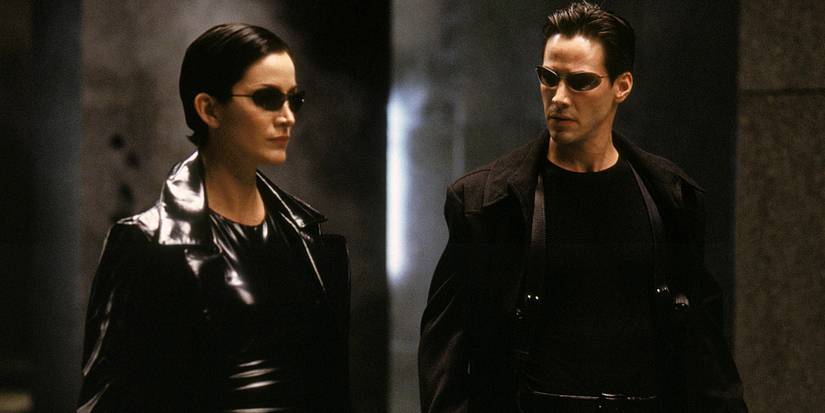
The Matrix is one of those movies that everyone seems familiar with because of its level of fame, but if one were to watch the movie without any context or previous information, it would easily confuse them. As Neo (Keanu Reeves) learns more about the Matrix and is drawn into massive conflict, the line between reality and simulation becomes disorientingly blurry.
While the entire franchise is difficult to get through, the first movie is particularly easy to misunderstand because of its complex worldbuilding, technological advances, and philosophical concepts.
The Matrix makes more sense after watching all four Matrix installments, since they tell the full story over time. As a standalone movie, however, the key to understanding the Wachowskis’ work of genius is to focus less on the intense action and camera work, and more on the psychological and mental implications behind the Matrix and Neo’s involvement.
Free will, the consequence of choice, and the fragility of reality are central themes that take precedence over everything else for a deeper understanding.
Brazil Encompasses Several Genres

Brazil is intriguing and highly entertaining, but hardly makes any sense on first watch, with or without context. Starring Jonathan Pryce and Robert De Niro, the movie combines sci-fi, black comedy, and dystopian themes into one chaotic story. As Sam Lowry (Pryce) attempts to locate a woman in his dreams while surviving in his low-level government position, his daydreams begin to intersect with reality in a confusing way that eventually makes the transitions indistinguishable.
Brazil becomes much easier to understand when viewed through a satirical lens. The key is not to take everything too seriously at face value, since the sci-fi movie is a direct critique of capitalism, bureaucracy, and government regulation. The movie is difficult to follow because the story is told from Lowry’s point of view; his vivid daydreams are how he copes with reality, which gives way to an exaggerated plot.
12 Monkeys Is Gripping Throughout

12 Monkeys is hard to follow even after multiple rewatches. Due to the sci-fi movie’s nonlinear storyline, a clear time-travel paradox, and James Cole’s (Bruce Willis) fragile mental state, it becomes difficult to discern what is real. The film’s supposed antagonist also shifts as the story untangles, which stands as a creative example of good writing, but only adds another layer of confusion.
12 Monkeys gets easier to understand with additional viewings, though the time paradox that ends the movie doesn’t make any more sense. Cole’s memories and involuntary visit to a mental institution after traveling back to the wrong year are a way to emphasize how someone’s perception can influence their reality, whether internally or externally.
Cole’s fate and the nonlinear events that lead to it highlight the idea that, while the future is presented as malleable, it’s already set in stone.
Source link
-

-

-

-
-


