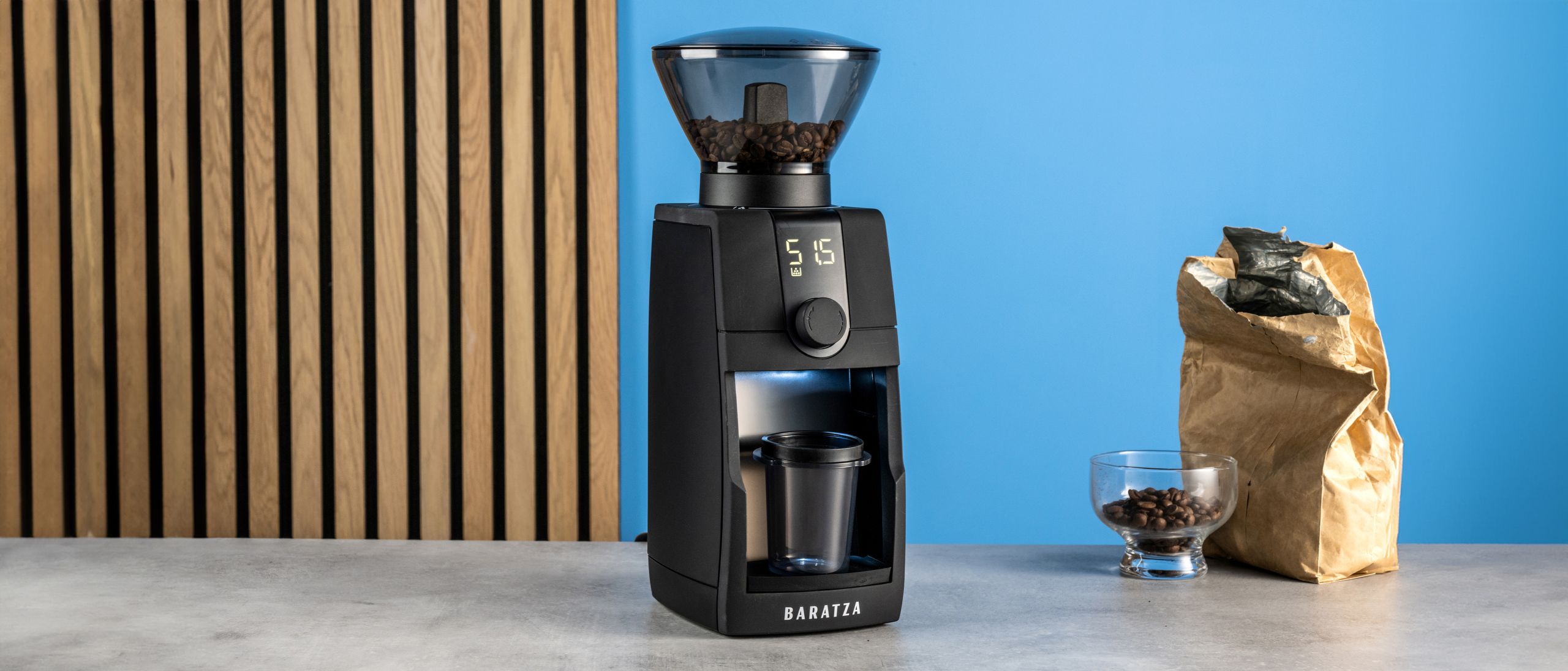
The Baratza Encore ESP Pro was one of my most-anticipated coffee grinders. I loved the previous model — Baratza Encore ESP — due to its seamless combination of premium performance with beginner-friendly usability and pricing.
But is the Encore ESP Pro enough to be one of the best coffee grinders? Well, it depends what you’re after. If you want to spend as little as possible, you might be better off with the previous model. Baratza gave us both a redesigned user interface and a redesigned price tag — with an increase of 50% from model to model.
Baratza Encore ESP Pro review: Cheat sheet
- Who is it for? Beginner users and espresso drinkers
- What does it do well? It’s super easy to use and looks gorgeous
- What does it cost? $299 / £249
- What are its weaknesses? It’s not the most uniform grinder in the world, and it has relatively high retention
Baratza Encore ESP Pro: Specs
Baratza Encore ESP Pro review: Price & availability
The Baratza Encore ESP Pro is available for $299 from Amazon U.S. and £249 from Coffee Friend in the U.K. This is a price increase of 50% over the original ESP in the U.S., and 67% in the U.K. — $100/£100 in real terms.
I don’t really see where the justification for this price increase lies: the Encore ESP Pro and the original Encore ESP use the same 40mm stainless steel burrs, so it’s not like Baratza has upgraded to ceramic burrs. Sure, there’s a fancy little light now that illuminates the grounds, and the Encore ESP Pro is now a stepless rather than stepped grinder, but I’m not sure that’s worth the steep hike.
Anyway, this is still a relatively affordable grinder, all things considered. The Varia VS3 is $299, too, and had a more uniform grind. I’ve also tested the $159 Breville Dose Control Pro, which is ideal for beginners.
Good, affordable coffee grinders are few and far between. I’d honestly recommend checking out the previous model over the Encore ESP Pro, as the Encore ESP won’t cost you as much money, but you’ll get similar results.
Baratza Encore ESP Pro review: Design
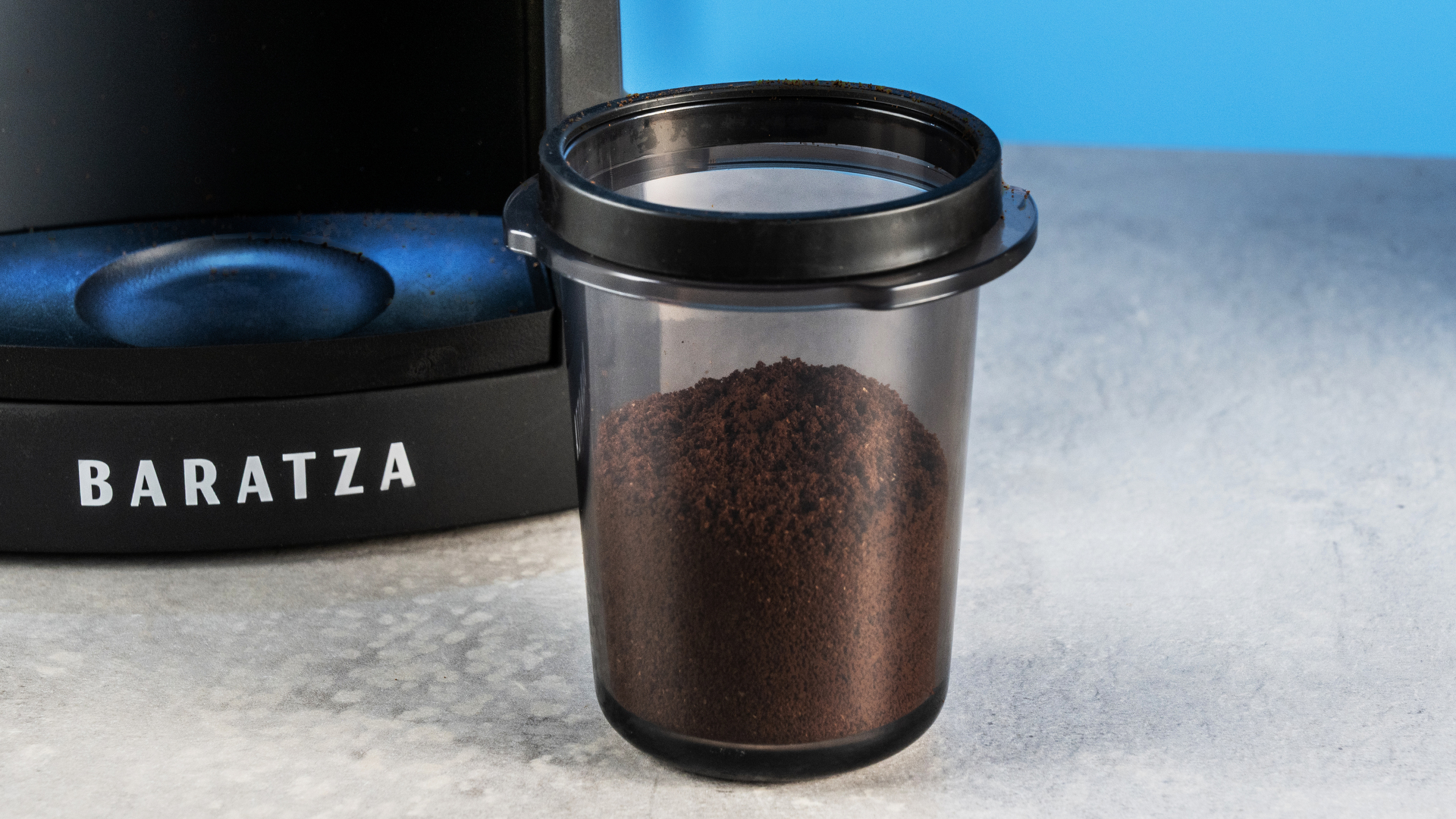

So there have been some changes regarding the Encore ESP Pro’s design. While the Encore ESP was constructed mostly of plastic, the Encore ESP Pro has some anodized aluminum embellishments (while still being constructed mostly of plastic).
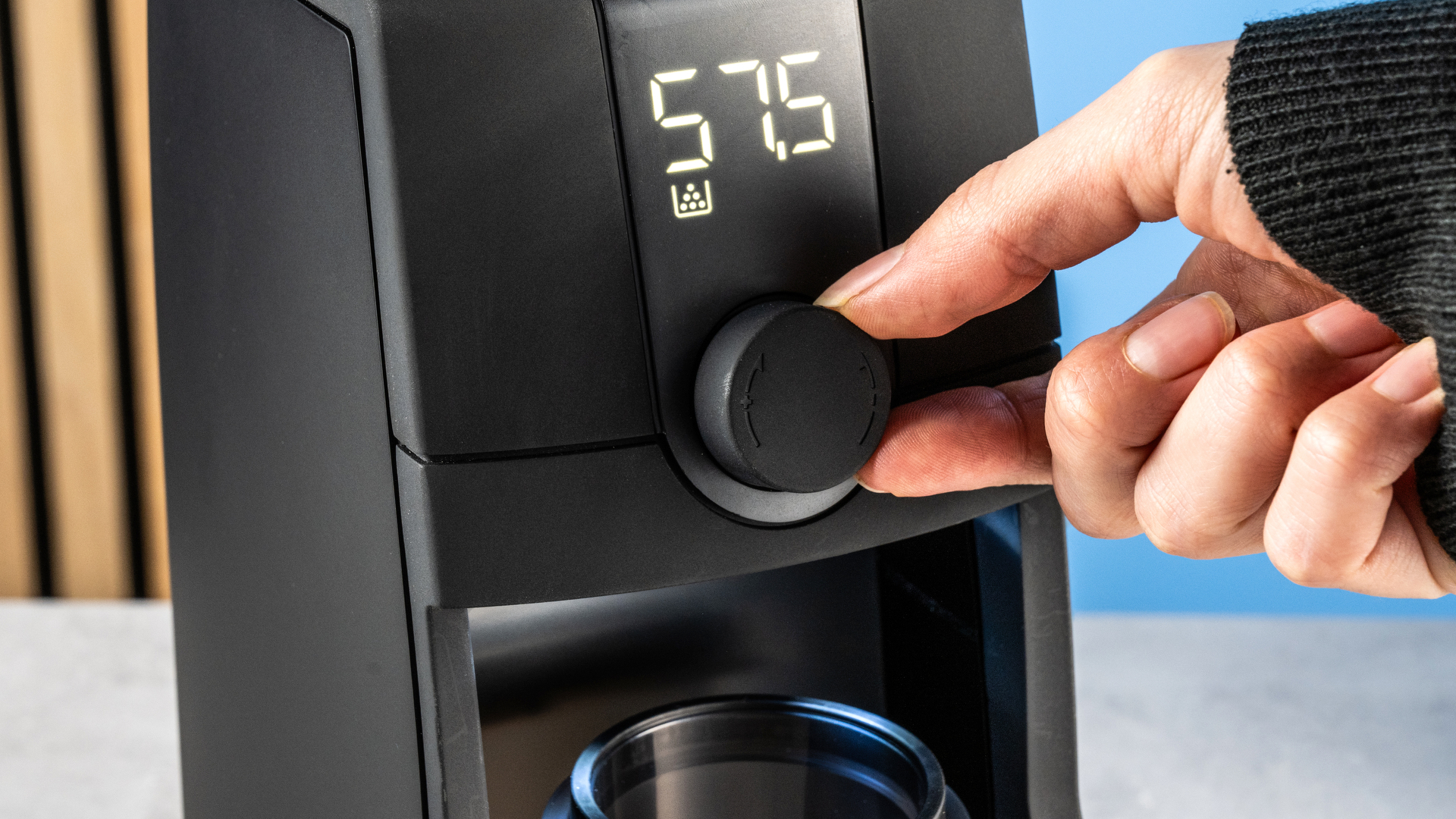
There’s also a bright display that tells you the faux-“step” you’re grinding at, and a lovely white light that illuminates the coffee as it’s being ground. I’m not entirely sure the purpose of these flourishes, but hey, I’m not mad. This adds an air of sophistication to the grinder, despite the mostly plastic exterior.
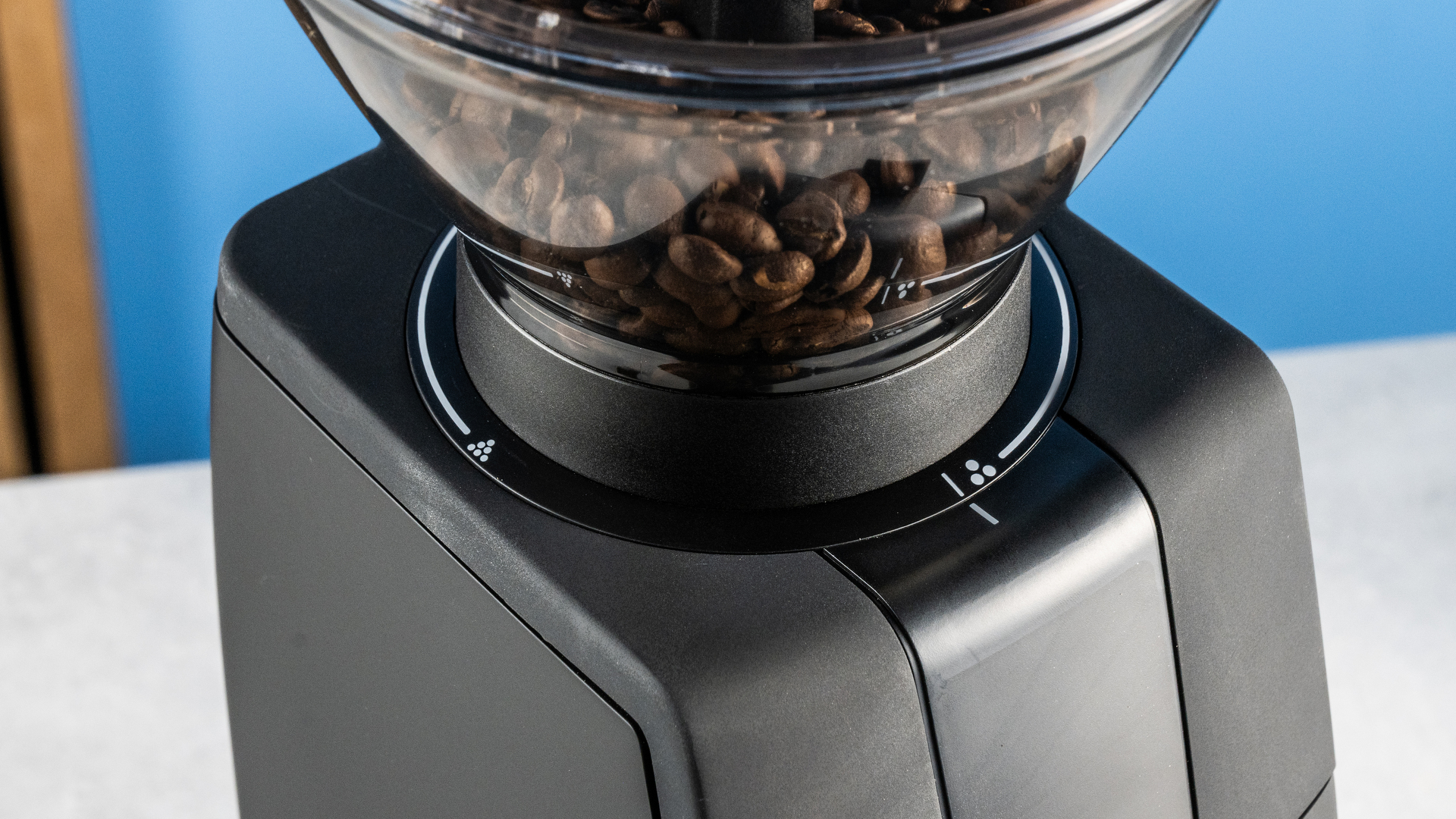
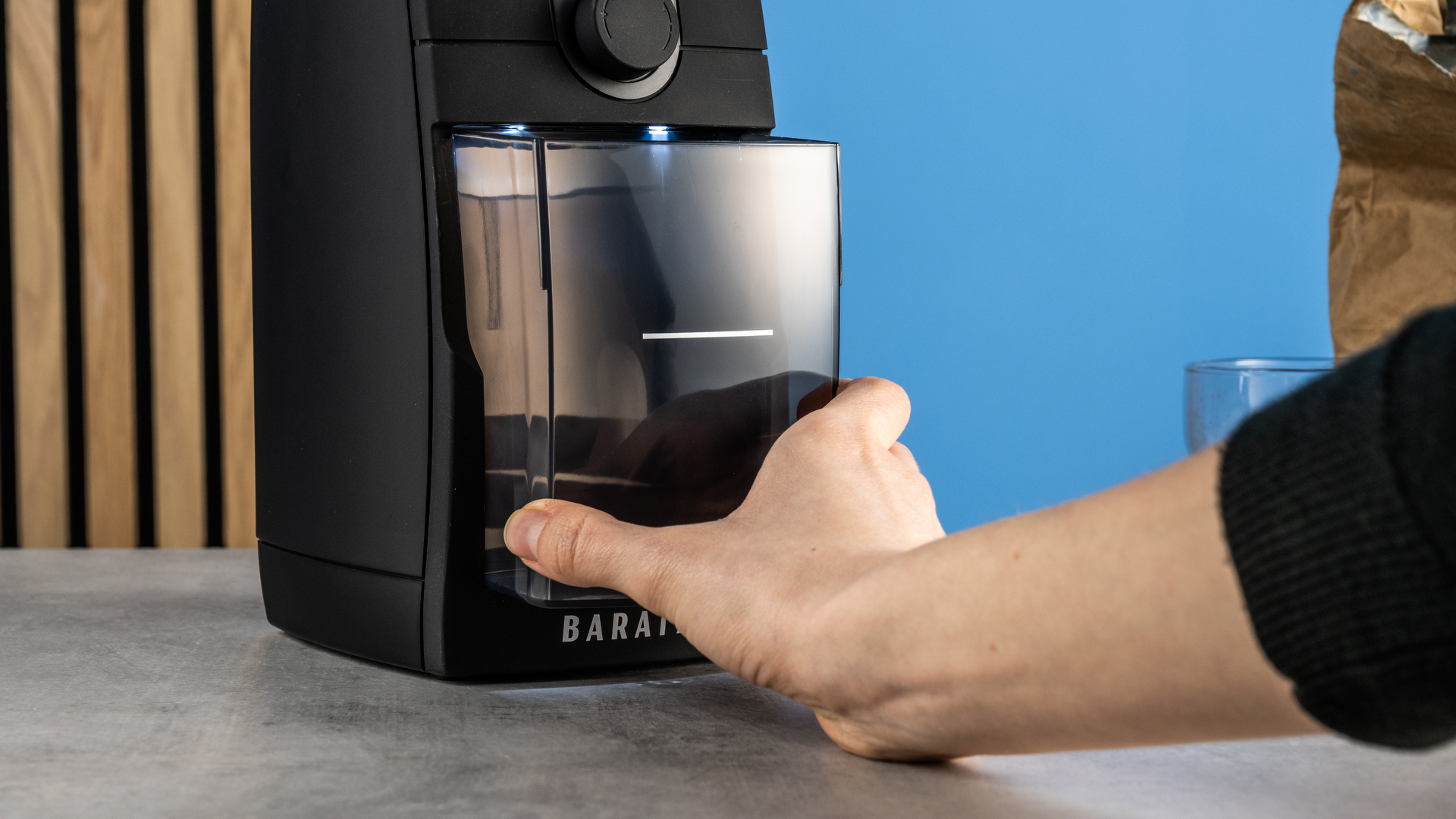
As you might expect from a grinder, there’s a 300-gram-capacity hopper, a stop/start grinding button, and two interchangeable catch canisters. The hopper lid is a little flimsy and tended to pop off when I tried to knock the retained grounds out of the hopper. You can choose the large plastic container or the tiny, single-serve container. I mostly used the single-serve container for espresso.
Unfortunately, this hopper is almost entirely plastic, which is disappointing, especially seeing as the identically priced Varia VS3 has a metal hopper. The VS3 just looks more premium and would feel more at home in an elevated home coffee setup.
I’m not saying the Encore ESP Pro is an unattractive grinder — quite the opposite, actually — but the $300 price tag does suggest a grinder with higher-quality materials, which is why I prefer the Varia VS3’s design over the Encore ESP Pro’s.
Baratza Encore ESP Pro review: Performance
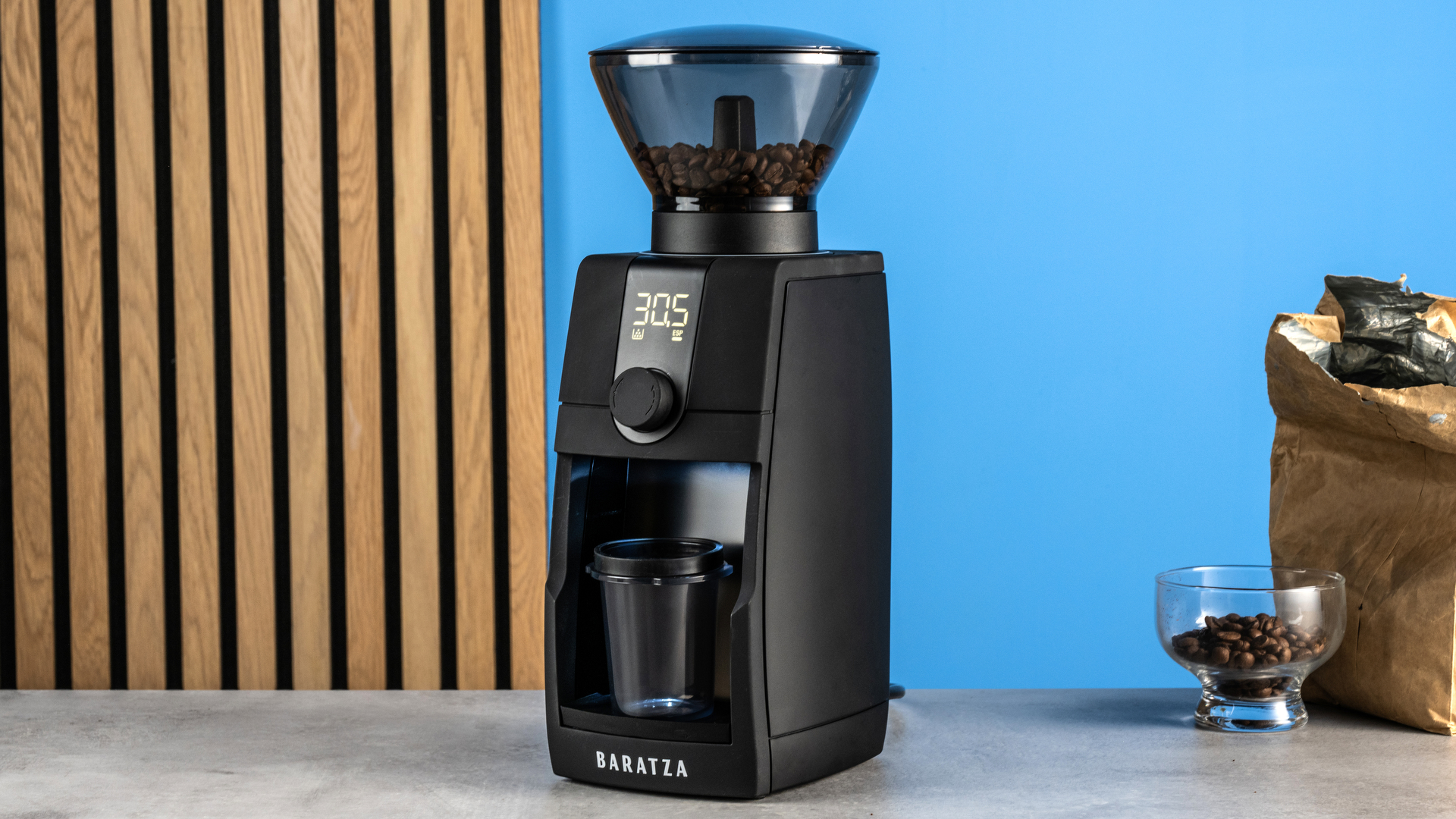
The Baratza Encore ESP utilizes 40mm stainless steel burrs, which are the same burrs as the previous model. I can’t help but be a little put out by this: I wanted some kind of innovation to justify the extra $100.
As with all grinders I review, I put the Encore ESP Pro through a series of tests. When I review a grinder, I take loads of factors into account: ease of use, static, clumping, uniformity, and retention.
How easy is the grinder to use? Could a beginner get going without doing any additional research? How much static does the grinder create? Are the coffee grounds clumped together? Are the coffee grounds all the same size? How much coffee sticks in the burrs?
The Encore ESP Pro operates at 86 volume, which is louder than the Varia VS3’s 67dB and 82dB of the Encore ESP.
Ease of use
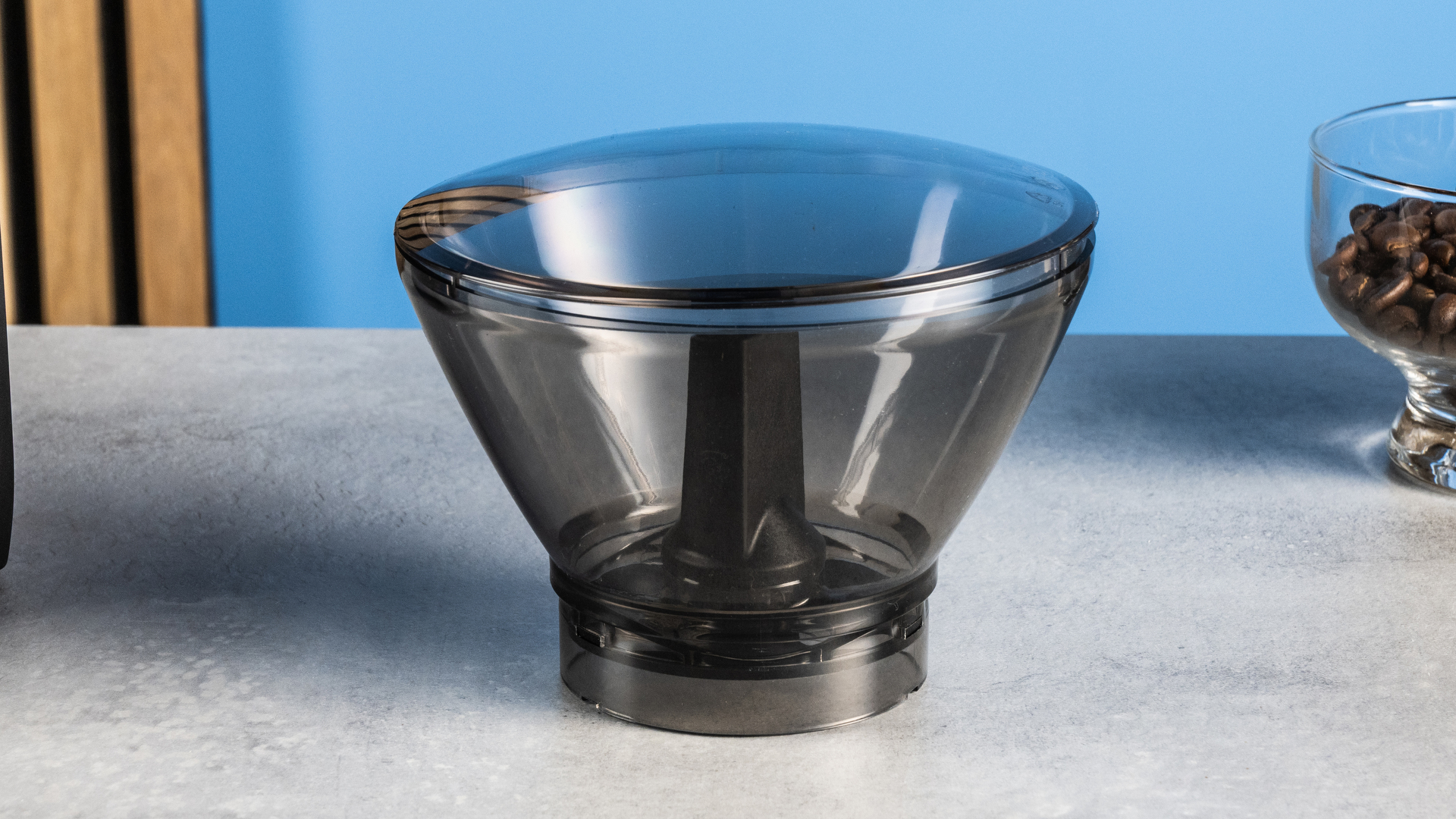
The Baratza Encore ESP Pro excels in the same area as its predecessor: its ease of use. The Encore series is so beginner-friendly that I genuinely have very few alternatives to recommend if you’re after an uber-straightforward coffee grinder.
You simply choose your grind size, put the beans in the hopper, press the button, and you’re ready to go. The Encore ESP Pro actually automatically stops when grinding is complete, leaving you with a cute little “END” message. On average, the grinder took 22 seconds to grind 20g of coffee. This isn’t particularly slow or fast, but is a heck of a lot faster than the Wirsh Geimori GU38’s 40 seconds.
New users should definitely take some time to get accustomed to the grinder before trying to make some fancy espressos, though. I would recommend using some cheap beans to get a feel for the grind settings.
The grinder can be set between 0-60 on its digital dial, in increments of 0.5. Technically, then, while this is a stepless grinder, because you can only set it to the numbers on screen, there’s no infinite level of adjustment like you’d get from a manual stepless adjustment dial with a long throw (as on the Eureka Mignon Specialita). That does make the ESP Pro easier to use, though.
The 0-40 range is apparently espresso-fine. Weird, right? Quite a wide range. Then, when you go from 40-60, the micron increase between steps is strangely large. I’d say you could safely use 20-40 as “normal” espresso grind, then anything out of that bracket is either ultra-fine or too coarse for espresso.
You cannot, however, grind fine enough for Turkish, as you’ll be able to see from my results below.
Step 60 is obscenely coarse — as in, chunks-of-beans coarse — but step 45 is ideal for pour-over. Conversely, the size difference between step 0 and step 20 is basically unnoticeable.
Static & clumping
The Encore ESP Pro has a considerable lack of static. Baratza says this is due to “ion-generation” technology, which is mostly just typical marketing jargon, but in real terms it means that the Encore ESP Pro is much, much less static than its predecessor.
Static was one of my main concerns regarding the Encore ESP, so I’m glad to see Barazta rectify this.
In terms of clumping, the Encore ESP Pro is lower-clumping than some, but still wouldn’t take the crown for least-clumping coffee grinder on the market.
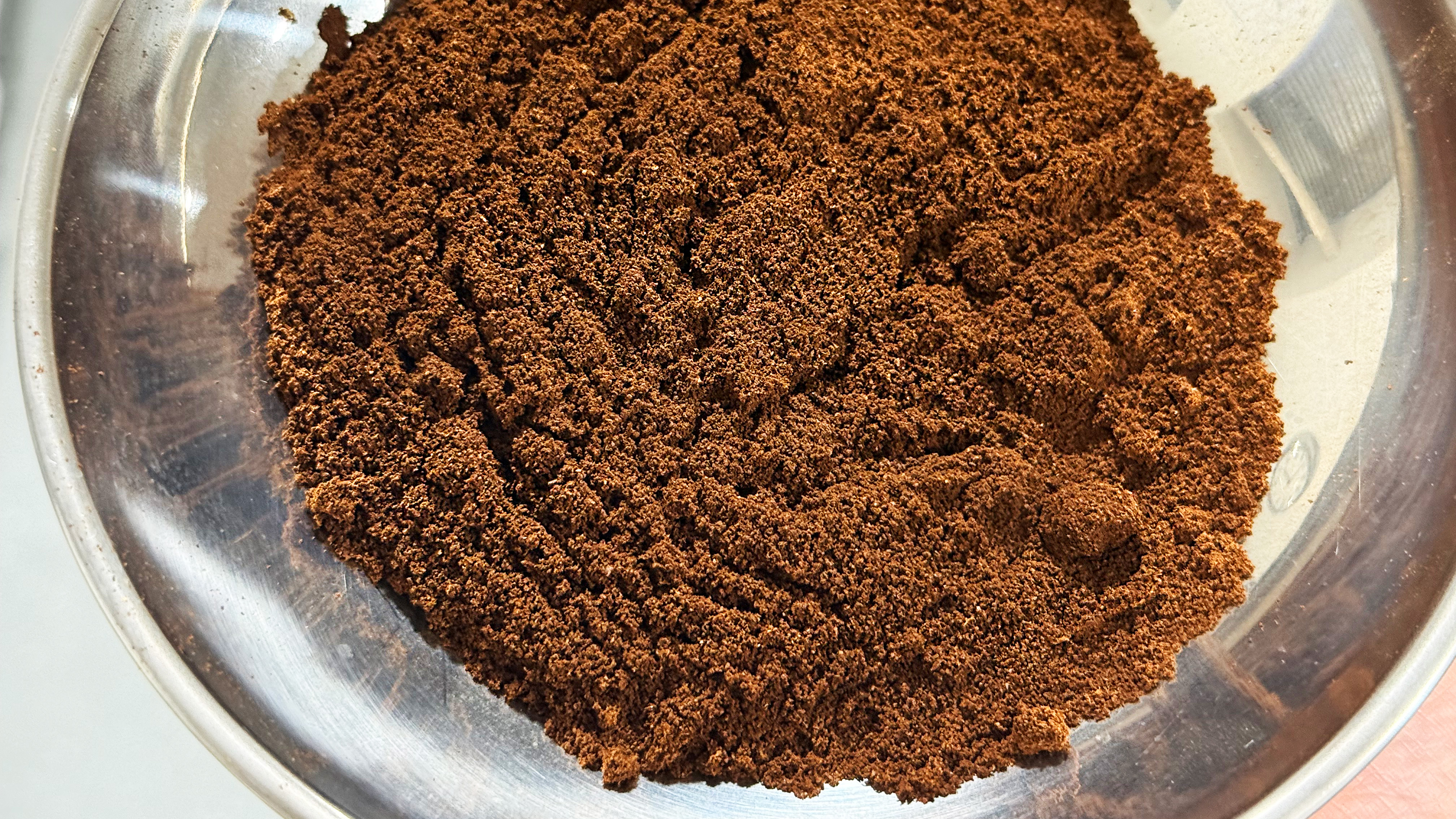

As you can see, there are a couple of clumps around the edge, but nothing that wouldn’t be fixed with a WDT tool. I’ve seen much worse grinders for clumping (Casabrews Tornado).
Uniformity
All right, now let’s get into the meat of the review. Uniformity is one of the most important aspects of a grinder.
This table refers to the consistency of the coffee grounds: are they all the same size? Each column refers to a micron size, so 300μm means <300μm, 500upm means <500μm, so on and so forth. I’m looking for big jumps here: 0% 500μm to 100% 800μm would be ideal.
|
Grind size |
300μm |
500μm |
800μm |
1100μm |
1400μm |
|---|---|---|---|---|---|
|
Fine – 2 |
0% |
90% |
100% |
100% |
100% |
|
Medium fine – 30 |
0% |
50% |
90% |
100% |
100% |
|
Medium – 45 |
0% |
30% |
95% |
99% |
100% |
|
Medium coarse – 48 |
0% |
20% |
50% |
70% |
80% |
|
Coarse – 53 |
0% |
10% |
40% |
60% |
80% |
As you can see, the uniformity isn’t particularly impressive. I was so disappointed when I received these results.
This uniformity is no better than the Encore ESP, which is kind of a given, seeing as the grinders have identical burrs, and is considerably worse than the identically priced Varia VS3.
Although we’d only really recommend the VS3 for espresso, and the Encore ESP Pro is more versatile, I’d personally go for the VS3 over the latter. If you’re mostly an espresso/AeroPress drinker, you might want to grab the VS3 instead, too.
Retention
Retention refers to how much coffee stays in the burrs when you’re grinding. So, if you’re making an espresso with 20g of beans, you ideally want all those 20 grams back out after grinding.
To do this test, I weighed 20g of coffee on my Fellow Tally Pro and ground it on click 20. I then weighed the grounds with the same scale, and cleaned out the burrs between uses.
|
Weight before grinding |
Weight after grinding |
Retention |
Average retention |
|---|---|---|---|
|
20g |
19.7g |
0.3g |
– |
|
20g |
19.6g |
0.4g |
– |
|
20g |
19.5g |
0.5g |
2% |
Again, this isn’t an overwhelmingly impressive result. The lowest-retention grinder I’ve ever tested is the Timemore Chestnut C2s, which had an average retention of 0.7%. For electric grinders, the lowest result I’ve ever got was the Mazzer Philos, at just 0.8%. That grinder is $1,500, though, so you would hope that a grinder of that price performed well.
Of grinders in the Encore ESP Pro’s price bracket, 2% retention is still pretty high.
The Varia VS3 had a retention of 0.75% and the Baratza Encore ESP 1.55%. Even so, 2% isn’t the highest I’ve ever seen — that undesirable award goes to the Breville Dose Control Pro’s 2.15%.
It pains me to say this, but I think I’d stick with the original Encore ESP and save your $100.
Baratza Encore ESP Pro review: Storage & maintenance
Baratza offers a 2-year warranty, which is the same as Breville’s warranty. Varia offers just one year, so could be another reason to go for a Baratza grinder over Varia.
As with the previous model, the Encore ESP Pro has a relatively small footprint compared to premium flat-burr grinders like the Mazzer Philos. However, at 13 inches tall, it’s still a relatively chonky product. If you’ve got a smaller kitchen like me, you’d probably be better off with a compact hand grinder like the 1ZPresso Q-Air or the Comandante C40 MK4.
If you’re completely new to coffee grinders, you might not know that you are absolutely, under no circumstances, supposed to use water to clean the grinder. If you want to really clean out the burrs, you’ll need a pair of bellows or an air blower.
Baratza Encore ESP Pro review: Verdict
I think the Baratza Encore ESP Pro has all the makings of a great coffee grinder, and it’s so close, but for $300, it’s simply way too expensive. The previous model was widely regarded as one of the best budget espresso grinders, and I don’t think the performance improvements are worth a price increase of 50%.
That’s not to say the Encore ESP Pro is a poor grinder, because that would be a mistruth. The grinder looks sleek, has a very easy-to-use interface, with a bright digital screen, and grinds quickly. I simply think the price does not correlate to the performance, especially when the previous model had already mastered the premium-on-a-budget vibe I’m sure the Encore ESP Pro is going for.
If you’ve already got an Encore ESP, you do not need to upgrade. If you’ve been eyeing up the Encore ESP, but you really want a nice little light to illuminate your coffee or you are craving a stepless grinder, the Pro might suit you fine. But me? I’m going back to its predecessor.
Source link