
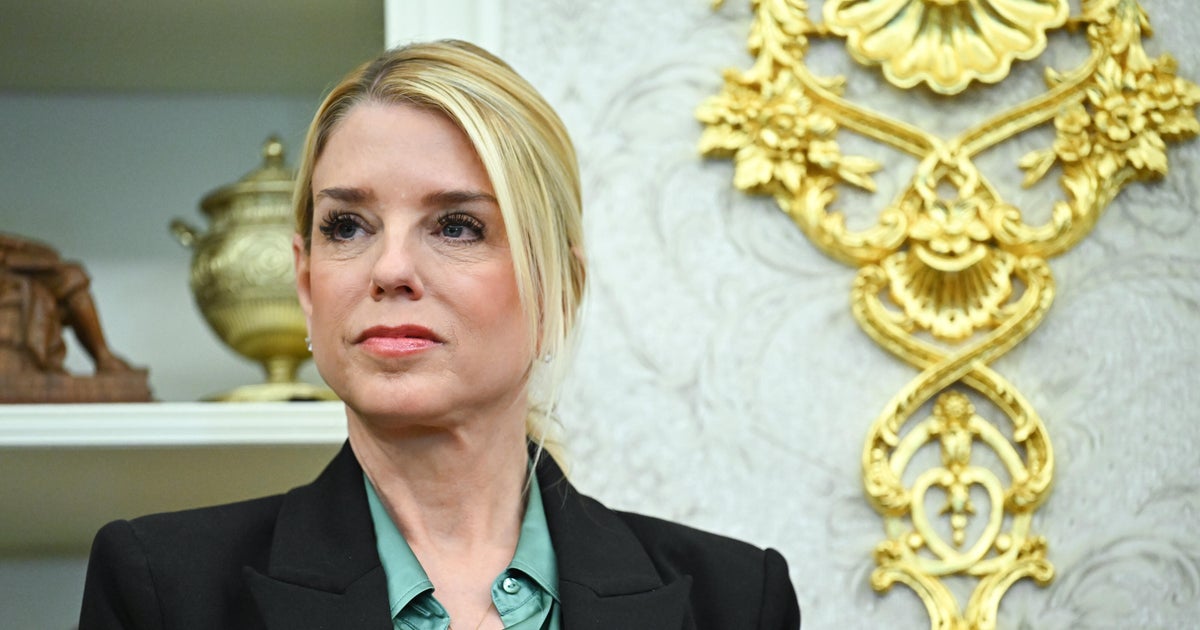
In early 2026, then-Attorney General Pam Bondi’s Justice Department took an unusually rapid approach to animal welfare enforcement, as part of her push to use the criminal justice system to crack down on animal cruelty.
Around New Year’s Eve, Bondi received a voicemail and a text from her friend Lauree Simmons, the founder of the Florida-based Big Dog Ranch Rescue, who told her that a German Shepherd breeder in East Texas was shooting her dogs, sources with direct knowledge told CBS News.
Simmons also texted another friend, Agriculture Secretary Brooke Rollins, to alert her.
In less than two weeks, Bondi’s office assembled a multi-agency team, and USDA agents executed a search warrant at the property of breeder Kristine Hicks, who was already facing state cruelty charges.
Hicks relinquished her dogs, and they were eventually shipped to Big Dog Ranch Rescue for adoption. She was indicted in March on a misdemeanor of operating without a USDA license and a felony wire fraud count stemming from her misrepresentation of the dogs’ lineage to buyers. USDA investigators uncovered her false statements about the dogs when they conducted DNA tests — a highly unusual investigative step — according to multiple sources who spoke with CBS News, the indictment shows.
A lawyer for Hicks declined to comment.
Several of the rescue dogs appeared in a video with Bondi, Simmons and Lara Trump, one of the group’s board members. “We have over 100 that need to be adopted,” Bondi said. “Come on, we’ve got to get all of these beautiful babies adopted.”
The same week that Hicks appeared in court, Bondi stood on stage at the Justice Department and presented Simmons with an award for providing “exceptionally helpful assistance to the Department in high-visibility litigation,” according to sources with direct knowledge and photos posted by Big Dog Ranch Rescue.
Bondi’s counsel Henry Whitaker stood next to them, holding a German Shepherd he adopted from the case that is now a frequent guest at the Justice Department.
The Texas case appears to be among the first of its kind, in what represents a faster and much more aggressive approach to animal welfare enforcement than the federal government has historically taken, animal welfare experts say.
Sources familiar with the inspection process by the USDA also told CBS News there has also been an uptick in interest in taking enforcement action against violations involving dogs. In some cases, USDA has been more proactive about suspending or revoking licenses after finding egregious welfare violations, whereas in the past such a move could have taken years to achieve, one of the sources added.
At the same time, Big Dog Ranch Rescue’s involvement could raise questions about its seemingly outsized role in Bondi’s animal welfare initiative, which has included everything from helping shape the government’s agenda to making criminal and civil referrals to both DOJ and USDA, sources say.
In the lead-up to Bondi’s animal welfare policy announcement in February, Big Dog Ranch Rescue was involved in discussions about the plans to create a law enforcement “tiger team” to assist with the execution of search warrants and seizures, government records show.
The rescue also participates in a newly created “Animal Welfare Executive Strategy Team,” according to Simmons, which is mostly made up of Justice Department officials who are supposed to devise enforcement strategies and coordination efforts.
On Wednesday, Simmons spoke along with Bondi and Acting Attorney General Todd Blanche at a training and animal welfare summit for federal prosecutors at the DOJ’s National Advocacy Center in South Carolina, several sources said, in what is likely to mark Bondi’s last event before she formally steps down, after President Trump ousted her as attorney general last week.
“An attorney general should try to avoid any appearance where your personal preferences, your personal predilections and your contacts with your friends are a major motivating factor in which crimes to pursue and prosecute,” said Gene Rossi, a former federal prosecutor.
“This is not about whether we like dogs. This is not about whether we like rescue dogs. Everyone, with few exceptions, loves dogs,” he added. “But this is about the priorities and the policies of the United States Department of Justice and the actions of the attorney general in executing her duties, and this appears to me that she is letting her personal relationships drive the priorities of the Department of Justice.”
Although many animal welfare advocates are optimistic about the federal government’s increased interest in the subject, Bondi’s initiative was launched without any input from many of the other more traditional animal welfare advocacy groups and appears to lack crucial regulatory elements, numerous legal experts on the subject told CBS News.
One of Big Dog Ranch Rescue’s board members, meanwhile, is also the target of an ongoing animal cruelty investigation in Florida, after she was accused of injecting a prescription drug into an elderly dog without a veterinary license or the owner’s permission last year, public records obtained by CBS News show. She denies the allegations.
In an interview with CBS News, Simmons said she met Bondi and Rollins years ago through their mutual interest in animal welfare advocacy efforts. She confirmed texting each of them about the woman shooting her dogs in Texas, adding that no formal tip line existed then to make such referrals.
“I wasn’t going to sleep that night,” she said. “They got it to the right people, and everyone jumped into action.”
“I feel strongly that this administration is taking animal welfare seriously,” she added. “For so, so many years, animal welfare issues got pushed under the rug… We’d report a bad puppy mill with abuse that never got investigated.”
She brushed aside questions about whether her personal friendships with senior government leaders could create ethical concerns about how cases are enforced and which ones get prosecuted.
“Stop that,” she said. “This is all about people that care about animals. I don’t care what party you’re with. We are a humane country and this needs to stop.”
A Justice Department spokesperson confirmed that Simmons contacted Bondi about the Texas case, after a video of Hicks shooting a dog went viral.
The spokesperson added that Simmons has also been involved in helping to develop animal welfare policy, saying “Ms. Simmons was involved along with others. DOJ welcomes any public reporting about violations of the law.”
“Miracle drug”
Simmons launched Big Dog Ranch Rescue in 2008. Her organization claims on its website to have rescued more than 80,000 dogs since its creation.
Simmons, a Trump supporter and Republican donor, said she first met Bondi when she was Florida’s attorney general and the two of them bonded over their support for a measure to ban greyhound racing.
Her nonprofit, which reported $18.6 million in revenue in 2024, throws elaborate multi-million dollar fundraisers at Mar-a-Lago that have been attended by President Trump himself, as well as Elon Musk and U.S. Attorney Jeanine Pirro. Mr. Trump’s daughter-in-law Lara Trump also sits on the group’s board.
The Big Dog Ranch Rescue board member at the heart of the state-led investigation, Melissa Bilodeau, is pictured at Mar-a-Lago in her photo on the group’s website.
The state’s investigation centers on allegations that Bilodeau, who is not licensed to practice veterinary medicine, last spring injected an elderly German Shepherd named Birk with a prescription medication called Librela that is used to treat osteoarthritis pain without consent or permission from Birk’s owner, police records show.
Birk died a few weeks later, and veterinarians told Birk’s owner Howard Leibowitz that Librela should not be administered to dogs with neurological conditions like those Birk had, according to Leibowitz and police records.
Leibowitz told investigators his dog declined in the weeks after the shot was administered, though it was not immediately clear whether Birk’s death was directly caused by the medication.
Bilodeau later expressed regret in messages she exchanged with Leibowitz’s attorney Bonnie Navin, saying “I did it. I had nothing but loving intentions, but it was wrong.”
But in an interview, Bilodeau denied the allegations, saying Leibowitz had previously pleaded with her to help his ailing dog, and that the veterinarians cited in the police reports shown to her by CBS News were not the dog’s primary doctors who were versed in his care.
Big Dog Rescue website 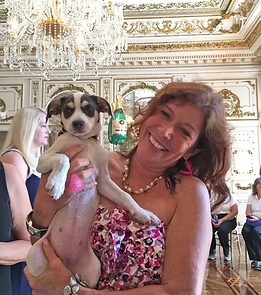

She added that she only provided non-medical advice about two different drugs that could help Birk and showed the owner an empty pill bottle and an empty vial, but never offered or administered any medication and told him to consult a medical professional.
“I am planning to remove myself from the board until this matter is resolved,” she said.
A spokesperson for the drug manufacturer that makes Librela declined to comment.
Leibowitz said he encountered Bilodeau at an equestrian facility, where she tried to offer him an opened bottle of pills prescribed for a different dog from a Big Dog Ranch vet to help Birk with his pain.
She returned a few weeks later, where she found Birk with Leibowitz’s colleague, Travis Houp, according to police reports. She asked Houp to hold the dog while she administered the shot, and he complied, mistakenly thinking she was a vet, according to police reports and an interview with Houp. He only realized something was wrong when she said: “Don’t tell Mr. Leibowitz. Let’s surprise him. It’s a miracle drug,” according to the police report.
It is a crime in Florida to practice veterinary medicine without a license. The severity of the offense depends on the facts and whether there is enough evidence to link the acts to injury or death.
Records obtained by CBS News from the Palm Beach County Sheriff’s office show that both the Florida Department of Law Enforcement and the state’s Department of Business and Professional Regulation are investigating the incident.
Spokespeople for both offices did not respond to requests for comment, though Leibowitz told CBS he was advised the case remains pending after he filed his complaint in April 2025.
“What I believe is that I am going to get Birk justice,” he told CBS News, saying he was frustrated by the lack of any meaningful updates on the case. “I’ll take this all the way, and nothing will stop it.”
Bilodeau said she corresponded briefly with a state investigator last year and told him she never acted as a veterinarian. She added she was not aware police reports existed until CBS shared them with her.
Simmons said she was not aware of the allegations against Bilodeau until CBS News brought them to her attention, though Leibowitz’s attorney Bonnie Navin told CBS News she left two detailed voicemails with Big Dog Ranch last year alerting the group about what happened.
Simmons said she did not believe Bilodeau did anything with malicious intent.
“She is a huge animal lover. She fosters a lot of dogs for us,” Simmons said. “I don’t feel like Melissa has a malicious bone in her body. But there are rules that need to be followed.”
Holes in the animal welfare strategy?
The Animal Welfare Act has not been historically at the center of many federal criminal prosecutions, largely due to the fact that most criminal violations of the law are misdemeanors, not felonies. It is primarily enforced civilly.
The U.S. Department of Agriculture’s Animal and Plant Health Inspection Service, or APHIS, is responsible for sending inspectors out to licensed businesses, from dog breeders to zoos and aquariums, to ensure compliance with basic standards of care.
Rollins said in a statement, “We will not allow a handful of bad actors to tarnish the reputation of responsible American breeders or compromise the humane treatment of animals,” and she said the president’s Cabinet is “stepping up enforcement on recurring bad actors and working to end dog fighting once and for all.”
A USDA spokesperson said that a referral submitted by Big Dog Rescue involved approximately 10 individuals and entities.
Most violations are handled administratively, though if conditions present an imminent danger to the animals, the Justice Department can use civil provisions of the law to seek an emergency court order to have them removed.
Apart from animal fighting prosecutions, it has been relatively uncommon for animal welfare violations to rise to the level of a federal criminal case, numerous experts told CBS News.
The USDA regulations are widely viewed as being out of date, weak and ineffective.
Staffing levels at the USDA as well as the DOJ are also facing historical lows, without ample inspectors, agents, prosecutors or civil trial attorneys dedicated to working on animal welfare matters. A key position at the DOJ — the role of the counselor for animal welfare — has been vacant since the spring of 2021.
The highest-profile prosecution in an animal welfare case in the recent past centered on animal research breeder Envigo over its mistreatment of beagles.
In that case, Justice Department lawyers who handled civil animal welfare matters filed a lawsuit in May 2022 alleging the company was failing to meet basic standards of care for the dogs, and the company surrendered more than 4,000 beagles shortly thereafter.
The parallel criminal case, by contrast, did not get resolved until about two years later, with the company pleading guilty to animal welfare and environmental violations.
Bondi’s animal welfare initiative appears to focus its efforts heavily on criminal enforcement of the Animal Welfare Act, even though most of the law is enforced civilly, experts said.
The Animal Welfare Act “is almost exclusively civil enforcement, because otherwise it is a misdemeanor,” said Mary Hollingsworth, who previously worked on the civil part of the Envigo investigation during her time at the DOJ’s Environment and Natural Resources Division.
“Given that puppy mills are a priority, the fact that the civil component hasn’t been emphasized — it’s a missing piece.”
Bondi’s initiative also makes no reference to other animal protection laws, like the Lacey Act or the Endangered Species Act — two statutes used by the Justice Department in the conviction it won against of “Tiger King” reality TV star Joseph Allen Maldonado, known as “Joe Exotic,” for killing tigers.
The reasons for these omissions were not immediately clear, though a number of people in the animal welfare advocacy world told CBS News that they had not been consulted by Bondi’s office in advance, even after offering to meet.
“Our coalition has been trying for more than a year to meet her,” said Delcianna Winders, an associate professor of law and Director of the Animal Law and Policy Institute at the Vermont Law and Graduate School.
Other members of the coalition include the Animal Welfare Institute, the Animal Legal Defense Fund and People for the Ethical Treatment of Animals.
“There’s a clear disconnect if they’re purporting to be committed to animal welfare, and yet ignoring these groups with decades of collective expertise on these precise statutes who are offering, proactively, their assistance,” Winders added.
A Justice Department spokesperson disputed that notion, citing a meeting that took place between the American Society for the Prevention of Cruelty to Animals and the head of the Environment and Natural Resources Division last year.
Source link
-

-

-

-
-


