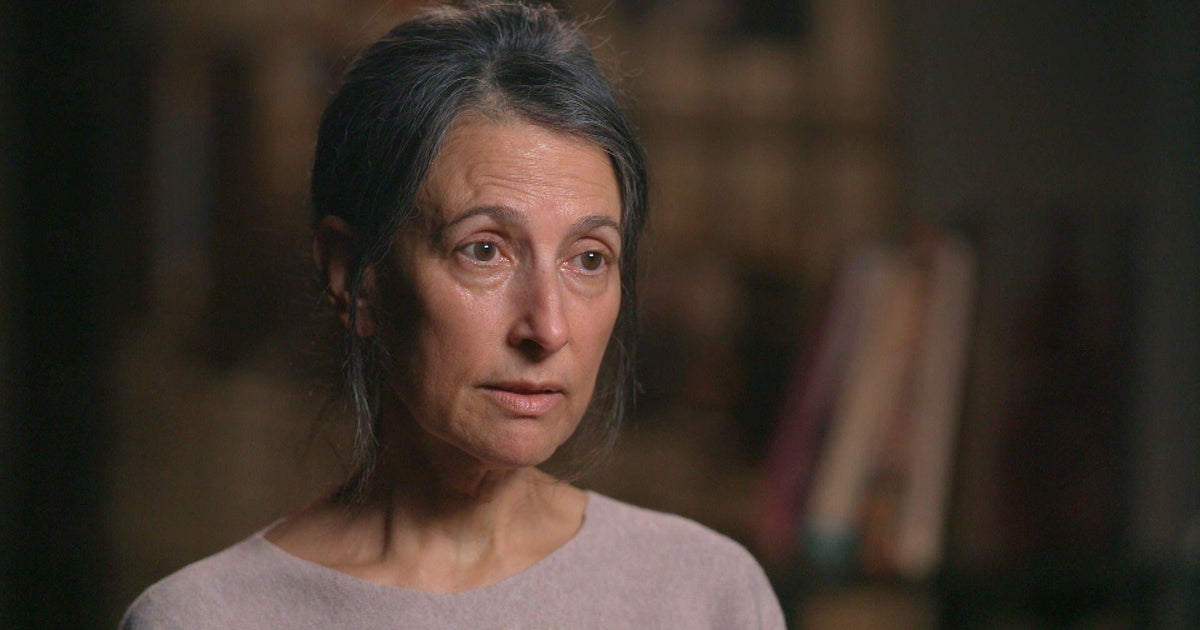
On May 16, 1998, the federal government used 600 pounds of explosives to destroy Marie Harrison’s home, Geneva Towers, the largest residential implosion in California history. It was one of three detonations that rattled her community and inspired her life’s work. The second came on June 18, 2008, when her activism helped light the fuse to implode San Francisco’s old Pacific Gas & Electric Co. power smokestacks, long decried as an environmental and health hazard.
Yet those earthshaking episodes paled next to one decades earlier and thousands of miles away that would haunt Harrison and her Bayview-Hunters Point community for the better part of a century. On July 25, 1946, the United States detonated a nuclear bomb under a fleet of Navy target ships in Bikini Atoll in the Marshall Islands. Those damaged vessels were towed across the Pacific Ocean to be “cleaned” at the Hunters Point Naval Shipyard, where they left an environmental catastrophe that lingers.
These battles around housing, energy and pollution turned a self-identified “milk and cookies” mom into an environmental justice warrior, joining a long line of Bayview-Hunters Point activists, a role she embraced for the rest of her life.
“Even when she had her breathing machine, in the last months of her life, and her doctor told her not to drive from Stockton out to San Francisco for some protest, she would go anyway,” said Arieann Harrison, who carries on her mother’s legacy through a nonprofit called The Marie Harrison Community Foundation: Can We Live? The organization focuses on uplifting Bayview Hunters Point families to be “masters of their own destinies.”
“My mother didn’t let dust get on her feet,” the younger Harrison said.
Marie Harrison did not initially choose to be an activist. She wanted only steady employment and stable housing so she could raise a family. What happened instead raises the questions that make Marie Harrison’s life so worth examining:
If the government knocked on your door and said your home would be dynamited, what would you do? If you thought the old smokestack within view of your next home caused nosebleeds to your grandchild, how would you react? If a history of redlining forced your community to settle next to a Superfund cleanup site, a zone currently being refurbished so developers can build thousands of new housing units, would you still feel you deserved a home there?
Geneva Towers: housing disaster
The rise and fall of Geneva Towers “made plain” (one of Harrison’s favorite phrases) that when outside interests fail an impoverished community, the community pays the price. Geneva Towers taught Harrison that privilege was as much about having the resources to survive mistakes as it was about enjoying successes.
While almost 80 years apart, Mayor Daniel Lurie’s “family zoning plan” strategy and Geneva Towers share a basic concept for adding housing in San Francisco: build up. The Great Migration of the 1960s pulled many African Americans here from across the country. Joseph Eichler, famous for his Frank Lloyd Wright-inspired California ranch houses, saw the need for equitable access to housing and built the two soaring condominium buildings. The San Francisco Chronicle featured “moving day” into the unfinished complex in December 1965: “The first families began moving in yesterday at Geneva Towers in Visitacion Valley — the largest housing project of its kind in the country. They came to the monumental Eichler structure from a wide spectrum of backgrounds: Negro, Chinese, Jewish, Lutheran … .”
By late 1966, Eichler already needed extensions on mortgage payments to stay afloat, and it became clear his financing would not match his idealism. Harrison moved her family into Geneva Towers in the early 1980s, believing she had taken the first step into middle-class stability. But the towers were all but abandoned by the city by the end of the 1980s and then converted to Section 8 subsidized housing in 1991, dramatically changing the makeup of the resident population.
“The two towers were mostly rental for the airport,” said Art Agnos, who was regional director for the U.S. Department of Housing and Urban Development when the towers were demolished, just before he was elected mayor. “Eichler thought that as the airport was expanding, flight attendants, pilots and maintenance workers would look for housing. That vision was not realized. It didn’t work.”
Geneva Towers, where Harrison experienced firsthand a city abandoning its citizens, turned Harrison into an activist. In 1993, Mary Ratcliff, editor of The Bay View National Black Newspaper, recruited Harrison at a community meeting there to write for her paper.
“One good thing” about Geneva Towers, Harrison wrote in one of her many back-page columns for The Bay View, “is that if you could persevere there with all the misinformation and knowing that others thought ill of you because you lived there, well, you could survive everything else they could throw at you. One thing for sure: you were not a wimp.”


PG&E power plant: air pollution source
After Geneva Towers was destroyed in 1998, Harrison moved in with daughter Arieann in the Hunters View apartments. Built in 1957, they were erected as temporary dwellings for dockyard workers like Harrison’s father, who had moved the family from Missouri to San Francisco in 1966 to gain employment and escape Jim Crow. But so-called urban renewal in the city’s Fillmore District that demolished thousands of purportedly “blighted” structures and racially discriminatory redlining practices everywhere else forced Black residents to take refuge in the shoddily constructed homes.
Harrison said poor housing conditions, industrial pollution and other environmental factors compromised her family’s health. Amid the many industrial businesses in the neighborhood, Harrison and other activists focused their rage on the 150-foot smokestack of the local utility’s ancient electrical generation substation.
Harrison wrote in her Bay View column in 2001: “In Bayview Hunters Point, PG&E is hitting us with a double whammy: higher bills and more pollution, too, from the over 70-year-old outdated, dilapidated Hunters Point power plant that is running day and night and pouring out poison.”


In 2003, Harrison’s 4-year-old grandson, Roman, suffered an asthma attack complicated by a nosebleed that forced her and Arieann to rush him to San Francisco General Hospital.
“Roman was screaming, ‘Don’t let them kill me,’” Harrison told San Francisco Magazine in 2008.
Harrison said PG&E was to blame for the pollution that led to her grandson’s breathing problems. The battle to close the plant took years. Harrison and other activists blamed the spoils of a deregulated energy market for keeping the plant open, putting the interests of investors before public health. After years of protests — Harrison even chained herself to the power plant gates — PG&E agreed to close and demolish the plant in 2006.
“To say the least, I am elated,” Harrison told the San Francisco Chronicle. Although the polluting stacks are gone, not all the activists’ goals were realized. Many argued that disregard for community concerns required wresting control of San Francisco’s power supply from PG&E, a so-far unrealized dream.
Hunters Point Shipyard: underground toxins
Explosives were the cause — not the cure — of Harrison’s final and most complicated environmental justice battle, the Hunters Point Naval Shipyard.
The 2022 Civil Grand Jury Report “Buried Problems and a Buried Process: The Hunters Point Naval Shipyard in a Time of Climate Change” warned that the “intersection of rising ground water and buried contaminants poses a credible risk to human health and well-being.”
While Harrison did not live to see the report, she anticipated its findings, suspecting that the “toxic soup” of industrial chemicals and radioactive waste spread haphazardly around the former naval base caused her grandfather’s illnesses.
“At the time we had no idea how badly he was exposed at the Shipyard,” Harrison said. “But, when he died from cancer many years later, after only living here in the Bayview, we all knew that the toxic conditions out at the Navy Shipyard had to have contributed to the health problems.” (Although any direct link of causation between cancer and the toxic shipyard remains elusive, suspicion has long since replaced trust in Harrison’s community on many public health issues.)
Well before the Civil Grand Jury Report on the hidden dangers of contaminated groundwater, Harrison and other activists urged city leaders to treat the Hunters Point Shipyard as a public health menace, not a real estate opportunity. When radioactive objects were found in “clean” parcels or when contractors went to prison for falsifying soil samples, Harrison was astounded that the building of homes continued.


But Harrison also said the city’s decisions around the shipyard represented San Francisco’s chance to empower her community. She called for action.
“Support the community in their effort to have oversight of this cleanup because, trust me, your community will make sure that every stone is turned and that site is clean,” Harrison told Mayor London Breed and the Board of Supervisors in 2018, when she accepted a certificate commendation that celebrated her “leadership, advocacy and lifelong dedication to the environmental and health issues in the Bayview-Hunters Point community.”
An activist’s legacy
In her lifetime, Harrison saw the fair-housing dream of a legendary architect turn to dust, a polluting stack kept running for years, and an attempted real estate flip of a toxic site that could happen only in land-mad San Francisco.
Her daughter continues her mission to defend the interests of Bayview Hunters Point residents. As the city develops flood-protection plans around Yosemite Slough, Arieann Harrison wants the needs of her community to be front and center.
“The Marie Harrison Community Foundation carries forward my mother’s vision of a healthier, safer and more equitable Bayview,” Arieann Harrison said. “It’s in the gardens we plant that replace blight with beauty. It’s in the air quality monitors we deploy so families know when it’s safe to let their children play outside. It’s in the community meetings we host that demand accountability from polluters and policymakers.”

Related
Source link
-

-

-

-
-