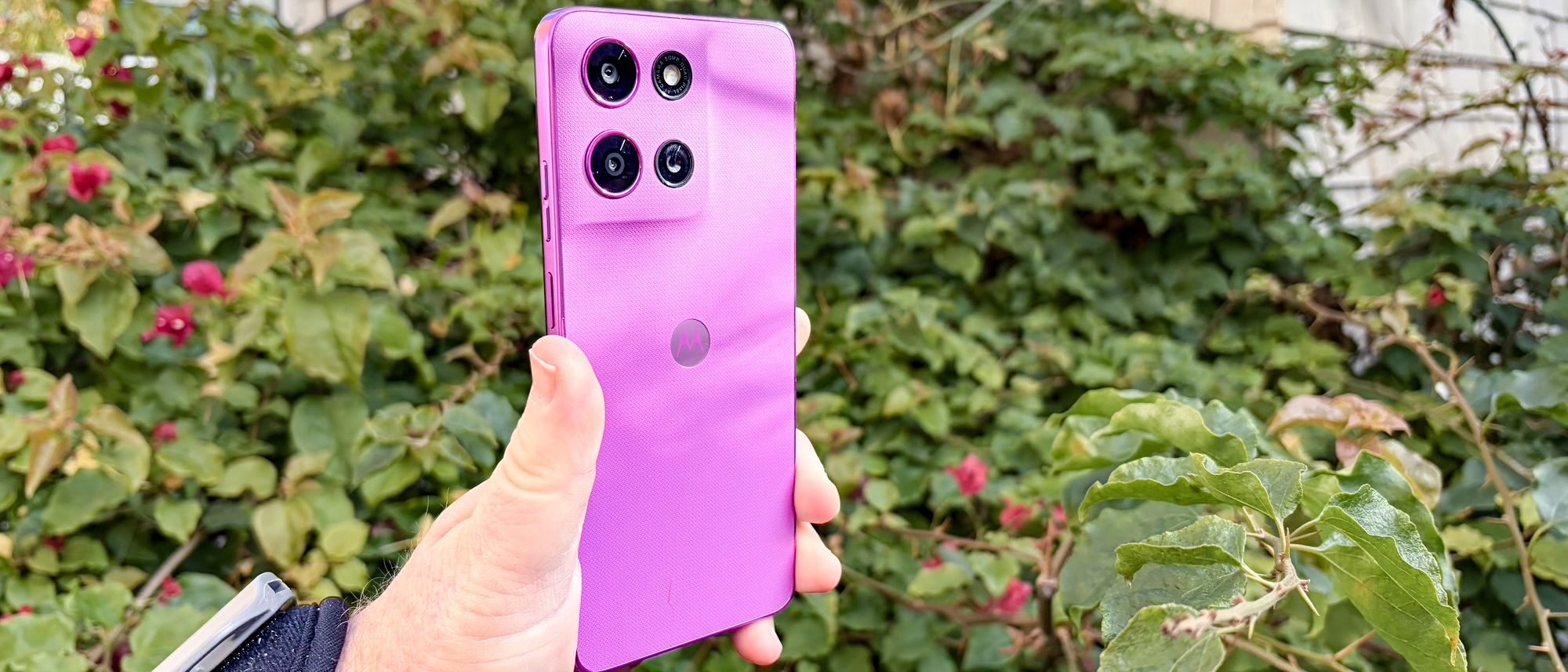
For the past year, when someone needed a decent phone on the cheap, I steered them toward the Moto G (2025), which managed to pack in a fair amount of value in a device that didn’t cost more than $200. As a result, the brand new Moto G (2026) arrives with a fairly high bar to clear, especially for a cheap phone.
Fortunately, the latest budget model is up to the task. It delivers better battery life than its predecessor while still offering a stylish look that suggests you’ve paid a lot more than $200 for your phone.
Moto G (2026) review: Specs
|
Price |
$199 |
|
Screen size |
6.7-inch LCD (1604 x 720; 120Hz) |
|
Chipset |
MediaTek Dimensity 6300 |
|
RAM |
4GB (+ up to 8GB more with RAM Boost) |
|
Storage |
128GB |
|
Rear cameras |
50MP (f/1.8) main; 2MP (f/2.5) macro |
|
Front camera |
32MP (f/2.2) |
|
Battery size |
5,200 mAh |
|
Charging speed |
30W wired |
|
Size |
6.6 x 3 x 0.33 inches (167.2 x 76.4 x 8.44mm) |
|
Weight |
7.1 ounces (202 grams) |
Moto G (2026) review: Price and availability
The Moto G costs $199, and went on sale at Motorola on December 11. Amazon and Best Buy start selling the phone on January 15 if you want to buy an unlocked version of the Moto G. The phone comes with 128GB of storage and just 4GB of memory, though a RAM boost feature lets you commandeer up to 8GB of storage for additional memory.
Carriers currently offering the Moto G include Verizon, Total Wireless, Straight Talk, Simple Mobile, Tracfone, Walmart Family, and Visible. Motorola says that T-Mobile, Metro by T-Mobile, Boost Mobile, Cricket Wireless, AT&T, Google Fi, Xfinity Mobile, Consumer Cellular, Optimum Mobile and USCellular will be offering the Moto G as well.
Moto G (2026) review: Why get this phone
Let’s be honest. You’re considering a Moto G (2026) purchase because the phone is so cheap. And while a low price tag is a big consideration for any Moto G device, this particular model has a few other things going for it.
A low price
Still, price is first and foremost among the arguments in favor of the Moto G (2026). For a little less than $200, you’re getting a capable phone that’s not going to put a serious dent in your bank account.
It’s worth mentioning that the Moto G (2026) isn’t Motorola’s cheapest available phone. That’d be the Moto G Play (2026), which starts at $20 less than the regular Moto G but comes up short in performance, camera output and display. Among Motorola phones, the Moto G is the better balance of price and features.
A long-lasting battery
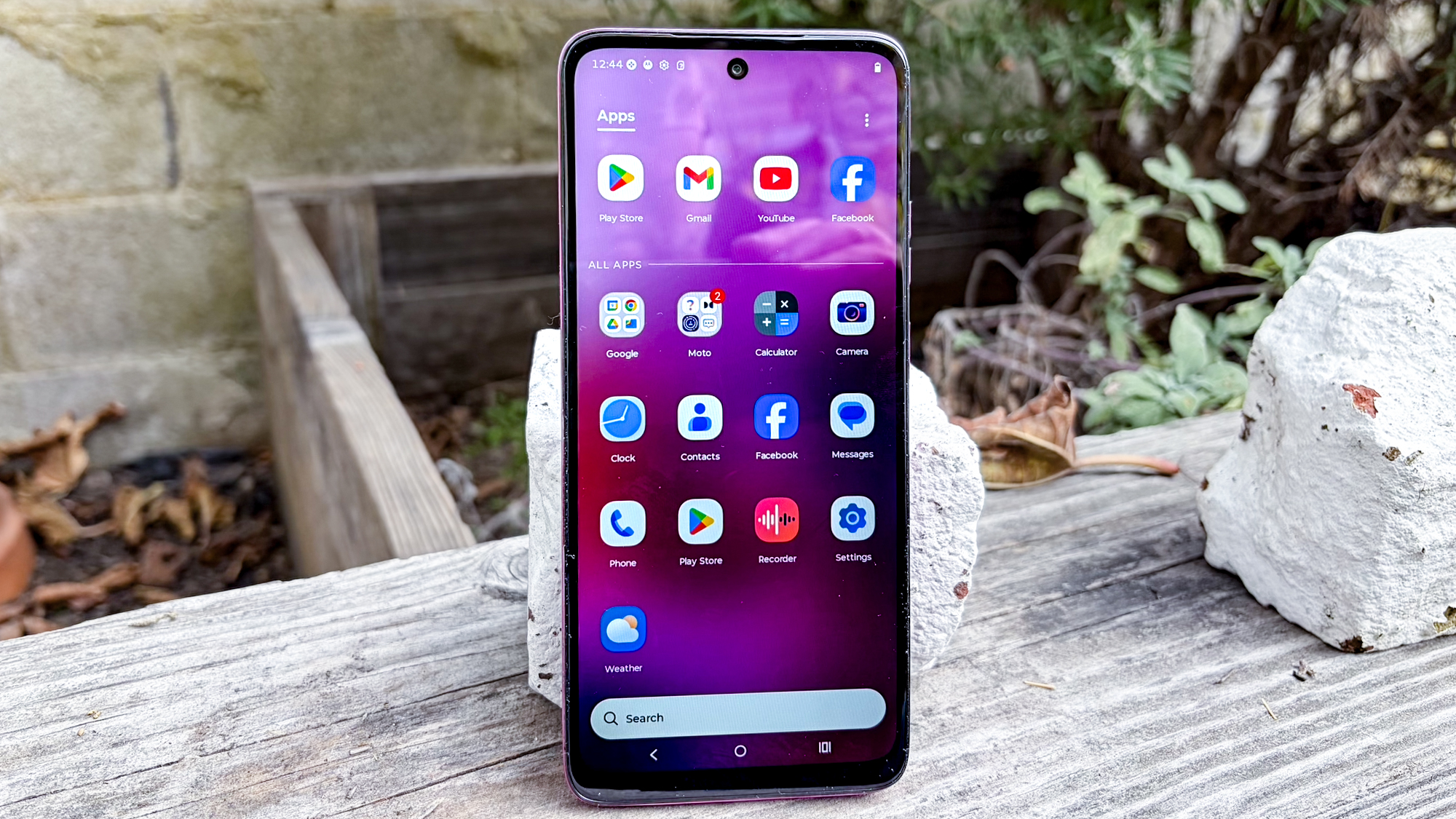

Besides its low price, the Moto G’s other calling card is a long-lasting battery. The phone comes with a 5,200 mAh power pack that Motorola claims can provide up to two days of battery life. And that’s not just hype.
Our battery test is a pretty demanding one in which we have phones surf the web over cellular until they run out of power. The Moto G (2026) held out for 19 hours and 11 minutes on that test, making it the longest-lasting budget phone we’ve ever tested. Put to more typical use, I could easily see this phone going more than a day without needing a charge.
To put that result in context, the Moto G (2026)’s time is around 40 minutes better than what the 2025 model produced. It’s also ahead of the latest Moto G Play and its 18-hour, 50 minute mark. Only three phones rank ahead of the Moto G on our best phone battery life list, and they’re all more expensive by some measure.
One last note on our battery test: we got that 19-hour-plus time with the display refresh rate set to the adaptive Smart & Balanced mode which takes advantage of the Moto G’s 120Hz refresh rate when you scroll through web pages. Locking the refresh rate at 120Hz still yielded a result of 18.5 hours, so the Moto G can stand up to heavy power demands.
A stylish design for the price
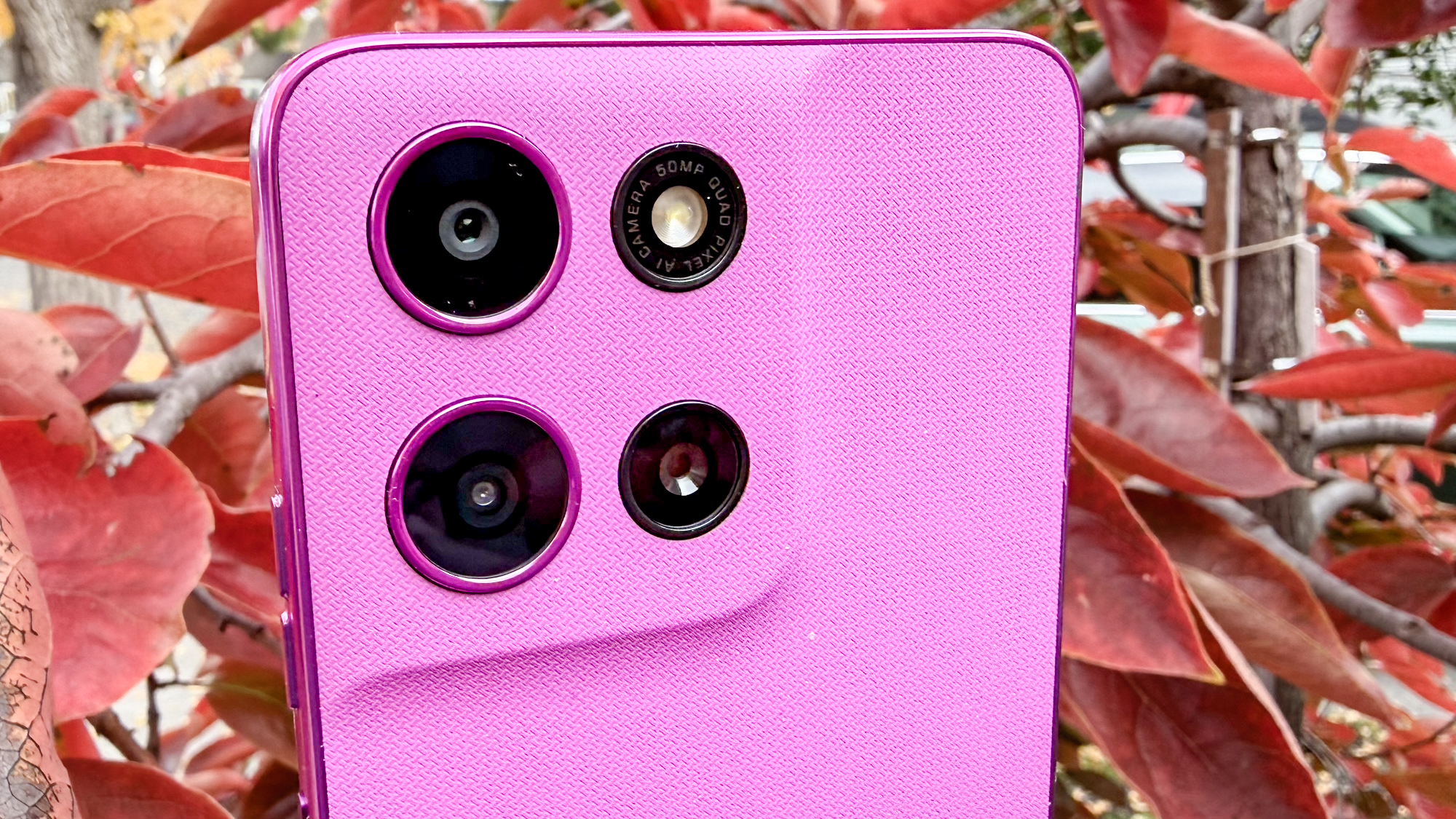
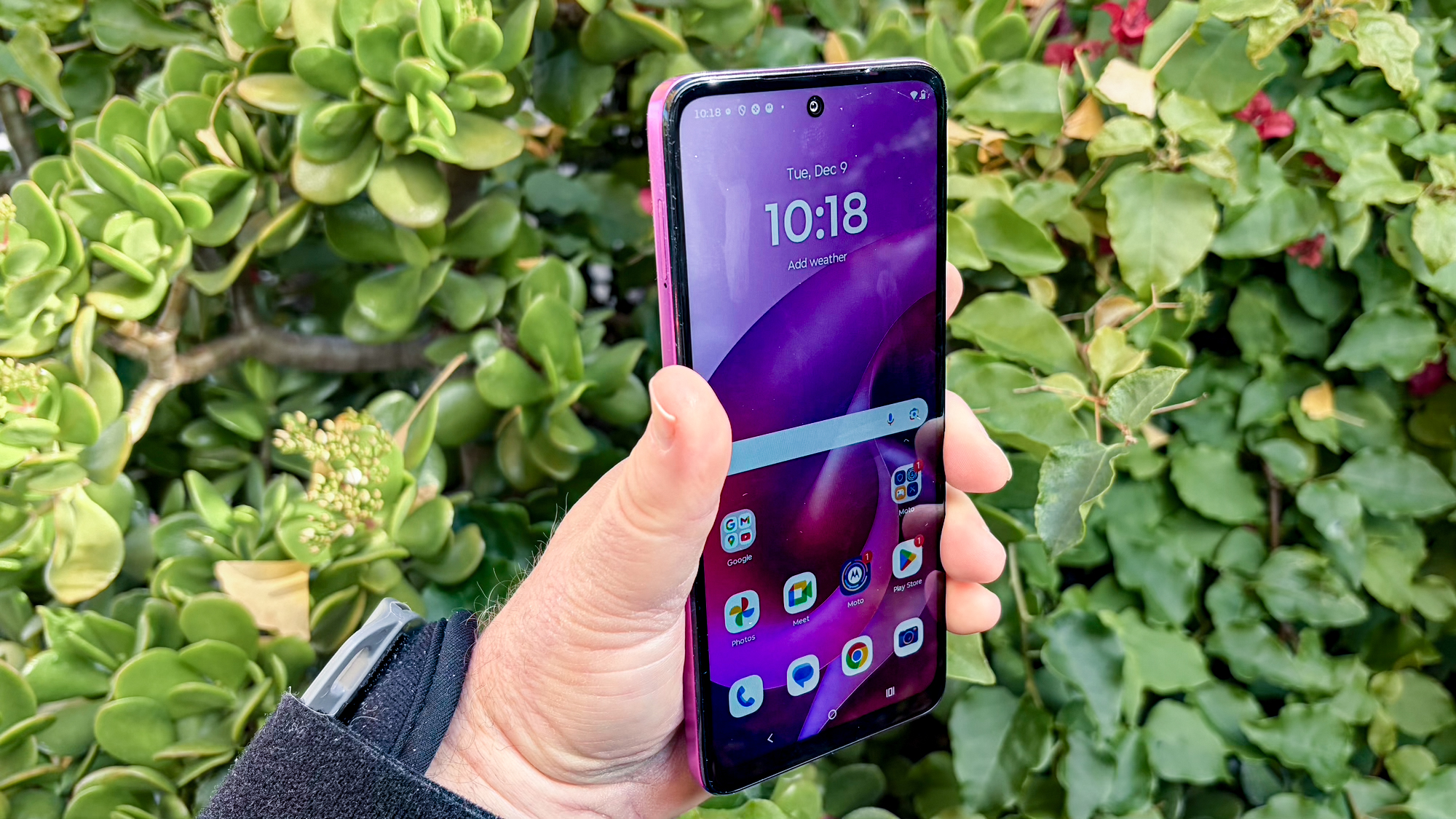
The 2026 edition of the Moto G marks the third straight year of Motorola’s phones punching above their weight in terms of looks. Rather than a slapdash design you’d expect from a $200 handset, the Moto G features a textured vegan leather back that feels good in the hand while not leaving the kind of fingerprints and smudges you see on other cheap devices. I also appreciate the subtle ridge of the rear camera array, which doesn’t jut out like on other phones.
My Moto G review unit came in Cattleya Orchid, an absolutely eye-catching magenta developed by Pantone that stands out from the drab colors that characterize a lot of low-cost phones. You can also get the phone in the more metallic looking Slipstream, though that color strikes me as less out of the ordinary.
Don’t expect strong water protection from a phone this cheap, as the Moto G’s IP52 means it can withstand rain and splashes of water, but not a full dunk in a sink or pool. Gorilla Glass 3 does offer some resistance to scratches and scuffs on the phone’s 6.7-inch display.
Better camera performance than you’d expect
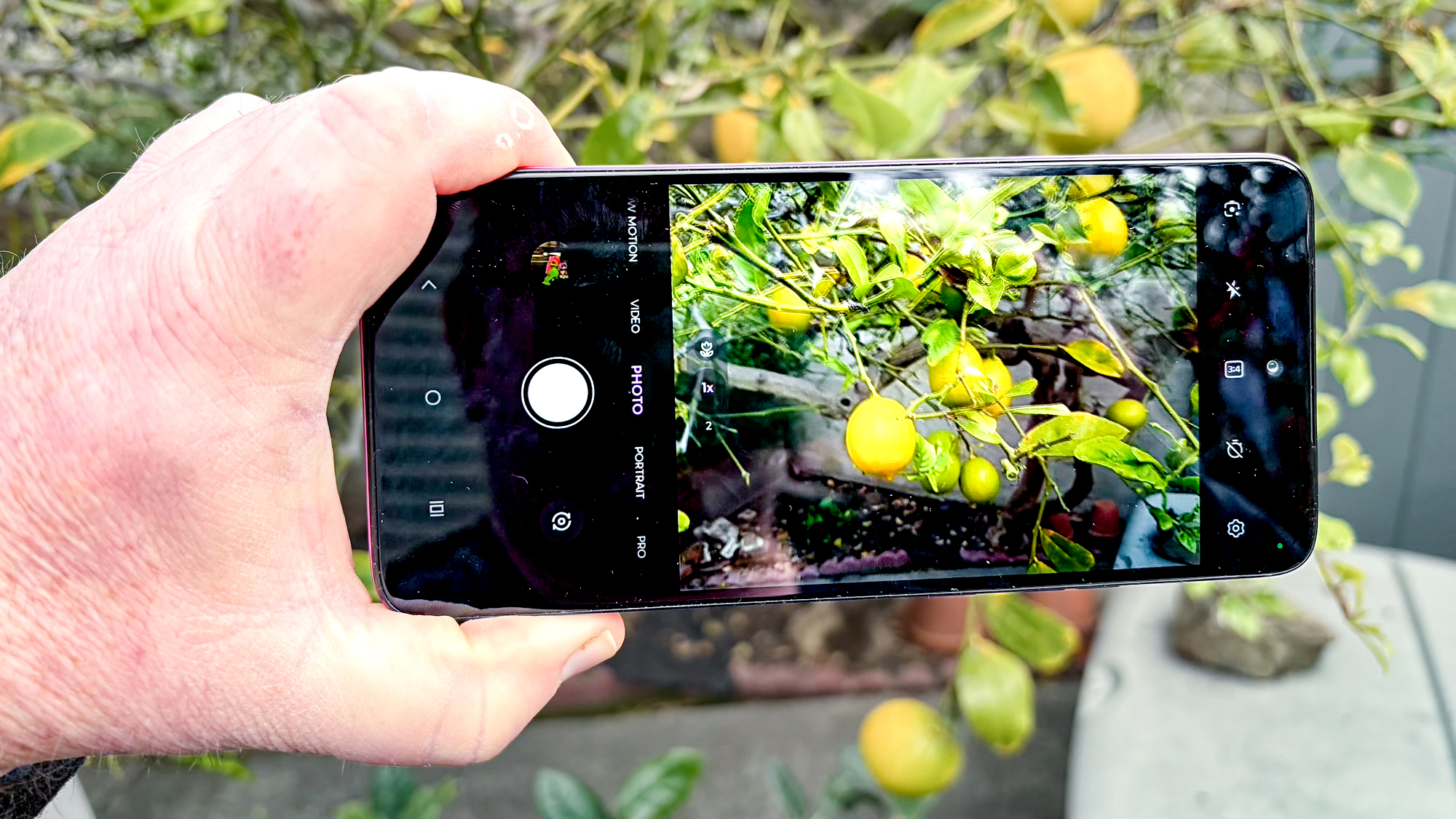
No one buys a $200 device expecting to wind up with the best camera phone, and I don’t think the Moto G (2026) upends that expectation. Still, the 50MP main camera produces some solid images and selfie fans will appreciate the 32MP front shooter.
A 2MP macro sensor joins the main camera on the back of the Moto G (2026) and does little to distinguish itself. Any zooms are performed by the main camera, and in my experience, become shakier should you zoom past a 2x digital close-up.
To see how the Moto G cameras performed, I took some head-to-head shots with the Nothing Phone 3a, another relatively low-cost device whose cameras punch above their weight. Some spartan holiday decorations in a not particularly well-lit corner of my house look better in the Moto shot, as the red felt balls stand out more clearly, and you can see the waxy texture of the candle. The Nothing phone loses too much detail in the shadows.
Both phones do a reasonable job capturing a persimmon tree just before its reddish-orange leaves fall away for the winter. The Moto G handles the colors well, though it lets some softness creep in around the edges of the leafs. The Nothing Phone takes a much sharper-looking photo, though the Moto G effort is acceptable to me.
I think the front camera on the Moto G does a good job capturing the details of my face, with an accurate depiction of my skin tone. I applied a portrait effect to this shot, and the bokeh blur in the background adds a nice sense of depth to the picture.
One of the lemons from the tree in the background gets caught up in the blur, giving my reading glasses a yellow tint on the right side, but that’s still better than what the Nothing Phone did, where the blur has completely erased the right side of the glasses frame.
I’ve seen better low-light images than what the Moto G manages to produce, as there’s still a dark cast over the picture, and details like the shimmery Santa hat are lost in the background. Still, the Moto G shot appears more natural than what the Nothing Phone produces, as there’s an artificial light to the scene that almost overexposes some of the stuffed animals.


I wasn’t terribly impressed by the Moto G’s macro lens. (There’s no such feature on the Nothing Phone, so no comparisons here.) While you get some detail on the geranium petals, the details in the center of flower are lost. Indeed, I took several photos with the macro lens on the Moto G and could never get a shot that was entirely in focus. It’s really a waste of a lens.
The Moto G isn’t going to threaten the Pixel 9a’s crown as the best camera phone under $500. But if you opt for Motorola’s phone, you will wind up with some decent pictures particularly if you rely on selfie cams for your photo needs.
Moto G (2026) review: The trade-offs you’ll make
You may get long battery life and surprisingly decent photos from the Moto G (2026). But you will have to give up a few things in exchange for the phone’s lower price. And some of those may be key to what you look for in a phone.
Spotty performance
Motorola uses a MediaTek Dimensity 6300 system on chip for the Moto G (2026), the same silicon it uses in the new Play model. And like that phone, you’ll get some pretty underwhelming results when you put the Moto G through benchmark tests.
|
Phone (chipset) |
Geekbench (single core/multicore) |
3DMark Wildlife Unlimited (FPS) |
|
Moto G 2026 (Dimensity 6300) |
804 / 2,124 |
8.2 |
|
Moto G Play 2026 (Dimensity 6300) |
807 / 2,136 |
8.2 |
|
Pixel 9a (Tensor G4) |
1,707 / 4,512 |
57.4 |
|
Galaxy A36 (Snapdragon 6 Gen 3) |
1,016 / 2,902 |
20.9 |
As you’d expect, the Moto G (2026) turns in similar numbers to the Moto G Play, whether you’re running the Geekbench test that measures overall performance or 3DMark’s Wild Life Unlimited test measuring GPU output. In both those tests, the Moto G trails the Tensor G4-powered Pixel 9a and the Snapdragon 6 Gen 3-powered Galaxy A36, and neither of those midrange phones are exactly speed demons when it comes to performance.
In real world use, the Moto G runs solidly if not spectacularly. It can handle most of the basic tasks you’d expect from a smartphone, with the occasional stutter when you swipe through screens. Graphically intensive games like PUBG Mobile run okay, though I spotted the occasional dropped frame when scrolling around a battle scene.
Dim display
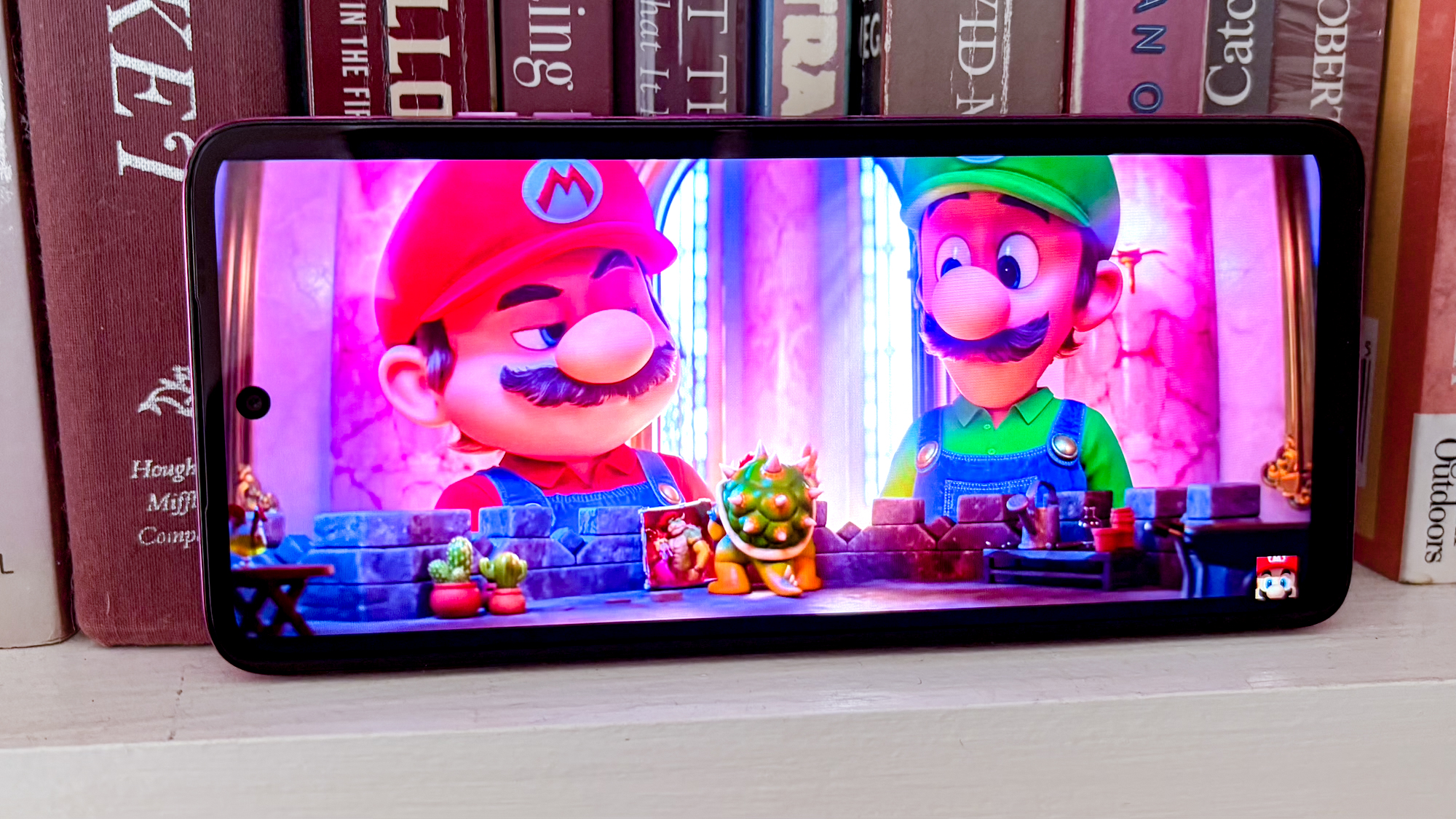
The bigger disappointment with the Moto G (2026) is the phone’s display. The LCD panel is certainly large enough, though the 6.7-inch space is offset somewhat by some wider-than-usual bezels which look very noticeable when you’re trying to watch a full-screen video.
The real problem is the display’s brightness, as in it just isn’t that bright. The Moto G doesn’t support HDR, but in SDR mode, we measured the screen at 916 nits with adaptive brightness on. The Pixel 9a reached 1,634 nits under the same conditions.
| Row 0 – Cell 0 |
Moto G (2026) |
Google Pixel 9a |
Samsung Galaxy A36 |
|
Brightness (nits) |
916 |
1634 |
1055 |
|
DCI-P3 % |
92 (Vivid); 76.6 (Natural) |
94.2 (Adaptive), 83.8 (Natural) |
109.4 (Vivid), 92.3 (Natural) |
|
Delta-E color accuracy (lower = better) |
0.27 (Vivid), 0.26 (Natural) |
0.24 (Adaptive), 0.2 (Natural) |
0.23 (Vivid), 0.2 (Natural) |
In practical terms, that makes the Moto G display very hard to see in direct sunlight, as the details of the “Wake Up Dead Man” trailer appeared washed out even with the display brightness maxed out. Viewing angles aren’t very generous, either. Your best bet is to view content head-on in very friendly lighting.
On the bright side, the stereo speakers on the Moto G crank out very good sound. And this is one of the limited number of phones to still offer a headphone jack if you want more flexibility when it comes to listening on headphones.
Slow charging speeds
It’s a good thing that the battery on the Moto G lasts such a long time, because charging up the phone takes some doing. It’s not just that the phone doesn’t offer wireless charging support — that’s to be expected on a device this cheap — but that the 30W wired charging speeds turn out to be pretty pokey in practice.
We tried charging the Moto G using a 45W Samsung charger. After 30 minutes, the battery had reached a 27% charge. In that same time, the Pixel 9a and its slower 23W charging speed got up to a 47% charge.
Not much software support
As with the 2025 model, the Moto G (2026) gets two years of Android updates plus an additional year of software support. Considering the phone ships with Android 16 preinstalled, you’re set through the Android 18 update in 2027.
Nevertheless, Motorola’s software support policy remains stingy by the standards of most phone makers. The Nothing Phone 3a gets three years of software support and six years of security updates, in contrast, and update policies are even more generous for the Galaxy A36 and Pixel 9a.
Limited support isn’t a deal breaker, but it does cut into the value proposition of the Moto G. Sure, you’re paying less than $200 for a phone now, but you’re also setting yourself up to require an upgrade much sooner than you would with a slightly more expensive phone.
Moto G (2026) review: Verdict
The Moto G (2026) won’t be for everyone. If you can afford more, a device like the Pixel 9a brings greater capabilities to the table while still not breaking the bank. And if performance and bright displays are high on your wish list, you should look elsewhere.
Nevertheless, the Moto G’s price is hard to beat, especially when you take the epic battery life into account. Camera performance is certainly good enough for a phone this cheap, and if that’s important to you, Motorola’s new model blends affordability with enough key features to justify what you do give up.
Source link