WASHINGTON, DC — Prime Minister Benjamin Netanyahu famously sees Winston Churchill as his model of wartime leadership.
A bust of Britain’s World War II prime minister keeps a stern and watchful eye over his office, and the premier regularly invokes Churchill in his landmark speeches, especially in his addresses to the US Congress. (Netanyahu surpassed Churchill as the world leader to give the most such speeches when he delivered his fourth in 2024).
Yet while Netanyahu presents Churchill in his speeches as a brave lone voice insisting on the necessity of war against evil over naive diplomacy, in fact, after World War II, the British prime minister argued for high-level Cold War diplomacy to avoid military conflict. “Meeting jaw-to-jaw is better than war,” said Churchill during a 1954 luncheon in Washington, DC.
And though Netanyahu may mold himself after the wartime bulldog, US President Donald Trump has displayed a clear preference for the postwar Churchill’s approach.
Trump is certainly willing to order the targeted use of US military force — as seen in Yemen, Iran, Syria, Venezuela, Somalia and Nigeria — but he believes in giving direct talks and international summits a chance.
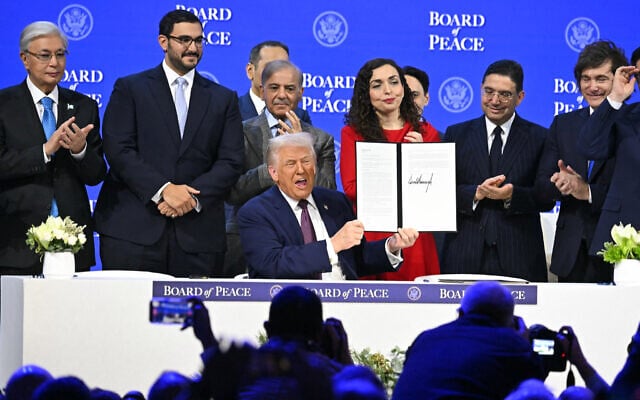
In his October Sharm El-Sheikh summit marking the ostensible end of the fighting in Gaza, Trump had world leaders standing awkwardly behind him as he called them up one by one to thank them.
“Together, we’ve achieved what everybody said was impossible. At long last, we have peace in the Middle East,” beamed Trump. “After years of suffering and bloodshed, the war in Gaza is over.”
On Iran, too, Trump is creating space for diplomacy.
He issued a series of unequivocal threats against the Islamic Republic if it killed protesters. “I have let them know that if they start killing people, which they tend to do during their riots… we’re going to hit them very hard,” he said in early January.
Then Iran went ahead and killed thousands of protesters and, while he ordered significant US firepower to the region, Trump agreed to hold high-level talks with the regime.
Time for war
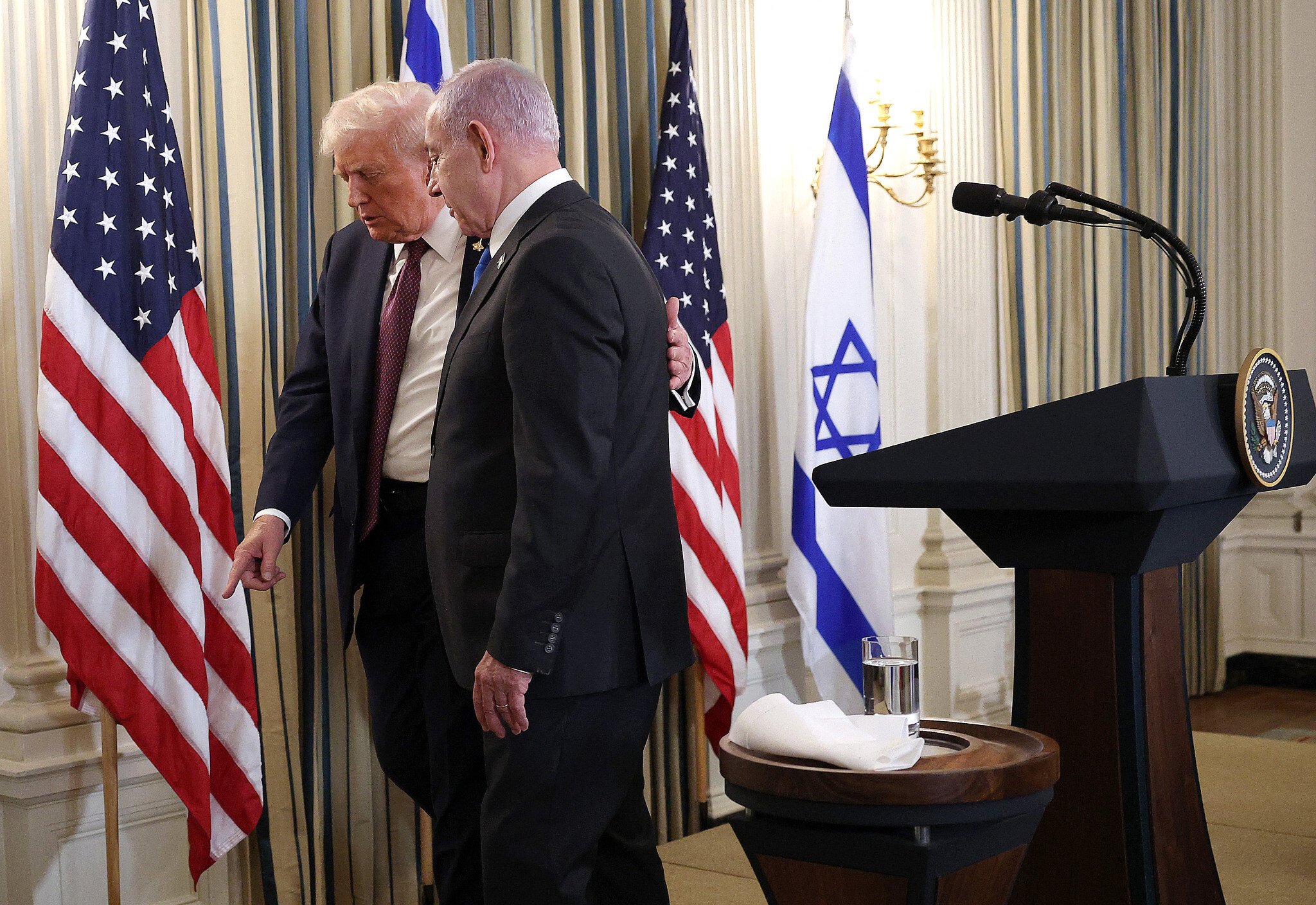
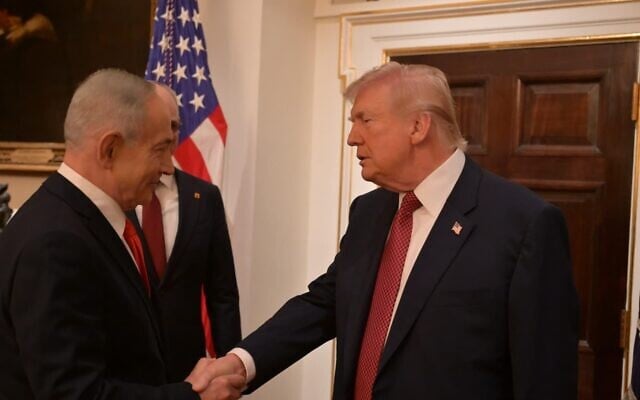
Netanyahu came to the White House on Wednesday to discuss what to do when meeting enemies eye-to-eye or jaw-to-jaw stops being viable.
When he announced the last-minute trip, Netanyahu said he would insist that “any negotiations must include restrictions on ballistic missiles and an end to support for the Iranian axis.”
Iran says that it won’t talk about anything beyond its nuclear program, and even there it is unlikely that Tehran is willing to concede enough to meet minimum US demands.

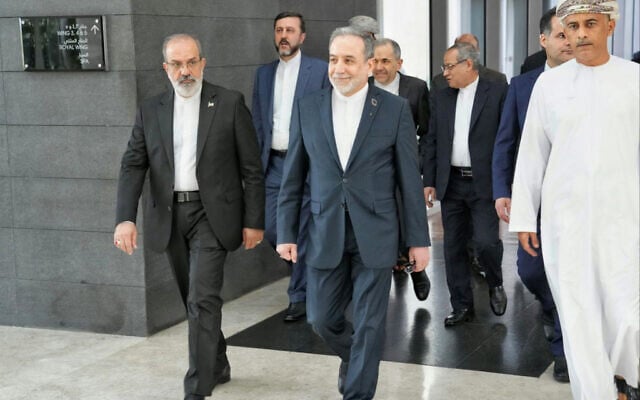
The fact that Netanyahu saw a need to urgently make his way to the White House after only one round of US-Iran talks seems to show how concerned he is about the possibility of Trump deciding to drop the demands on Iran’s missiles and proxies, and rush toward a deal on the nuclear file alone.
If talks do fall apart, as they are likely to do, Netanyahu wants to be sure the US and Israel have coordinated on what happens next, and what role Israel will have in military action, if any.
On Gaza as well, Netanyahu is less interested in discussing diplomacy than in coordinating how to deal with its failure to achieve demilitarization.
An Israeli source with knowledge of the details told The Times of Israel shortly before the prime minister took off from Israel that Netanyahu planned to tell Trump that the second phase of the Gaza ceasefire “is not moving.”
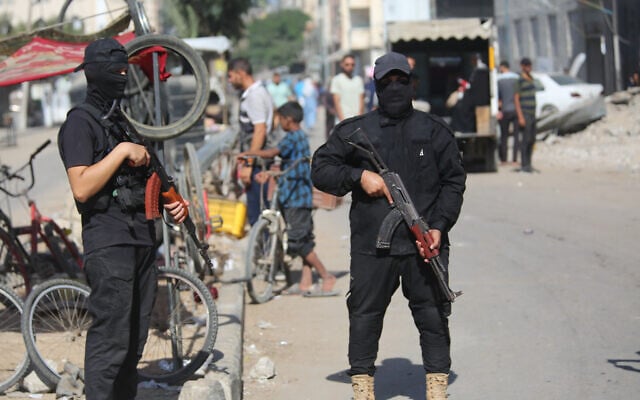
The US-brokered ceasefire plan reached in October foresees the demilitarization of Gaza and the disarmament of Hamas, as well as the withdrawal of Israeli troops from the enclave. Hamas, however, has not agreed to give up its weapons, a matter that both Israel and the US consider to be nonnegotiable, though there are signs the two may not agree on the exact contours of disarmament.
The source said Israel has been telling the US that another Israeli military operation is necessary to rid Hamas of its firepower.
The Israel Defense Forces is already drawing up plans for a renewed offensive aimed at that goal, and is just awaiting a green light from the political leadership, The Times of Israel has learned.
The message to Trump is that if he wants his ambitious vision for the Middle East to have any chance of becoming a reality, he must concede the need for more war first.
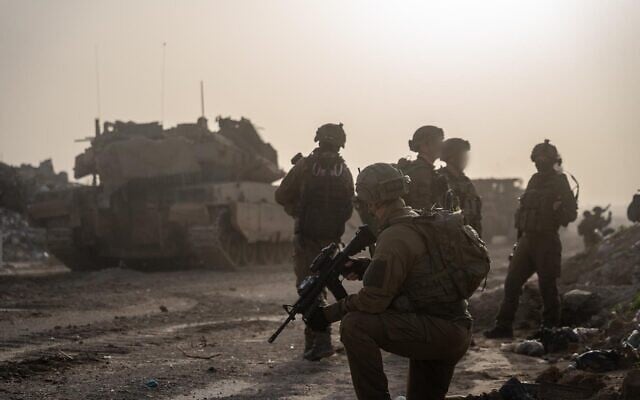
A potential fresh IDF campaign would be faster and more effective than previous operations in Gaza, since there are no more hostages to avoid in military operations, though a senior military official conceded last week that it would still take several years to fully disarm the terror group.
For the time being, Trump is keeping the Israeli tanks idling and pressing ahead with his international diplomatic plan for Gaza. Publicly, Netanyahu has little choice but to go along.
Meeting with US Secretary of State Marco Rubio, the prime minister boasted about signing a document officially joining the Board of Peace. But the veneer could barely hide his lack of enthusiasm for diplomacy when he sees battle as the only way ahead.
Negotiations to continue, for now
Even with world leaders convening in Washington next week to talk about the future of Gaza, with Hamas openly and defiantly refusing to disarm, an Israeli military operation is looking more and more like the only way to get to a post-Hamas future in Gaza.
And Iran’s Foreign Minister Abbas Araghchi on Sunday ruled out Tehran ever giving up uranium enrichment, a position that would mean talks with the US are doomed and Trump would be left with no more excuses to push off a strike.
But Netanyahu has yet to convince Trump that there is more work to be done before it is time for diplomatic moves.
“There was nothing definitive reached other than I insisted that negotiations with Iran continue to see whether or not a Deal can be consummated,” Trump posted on social media after his three-hour meeting with Netanyahu at the White House.
“If it can, I let the Prime Minister know that will be a preference. If it cannot, we will just have to see what the outcome will be,” he added cryptically.
Even after the Allies’ total victory in World War II, Churchill recognized the need to create institutions aimed at staving off future conflicts, to ensure that “what has been gained with so much sacrifice and suffering shall be preserved for the future glory and safety of mankind.”
“Opportunity is here now, clear and shining for both our countries,” Churchill declared, arguing for a US-backed United Nations. “To reject it or ignore it or fritter it away will bring upon us all the long reproaches of the after-time.”
In Iran and in Gaza, there has not been a surrender on the level that the allies achieved in World War II.
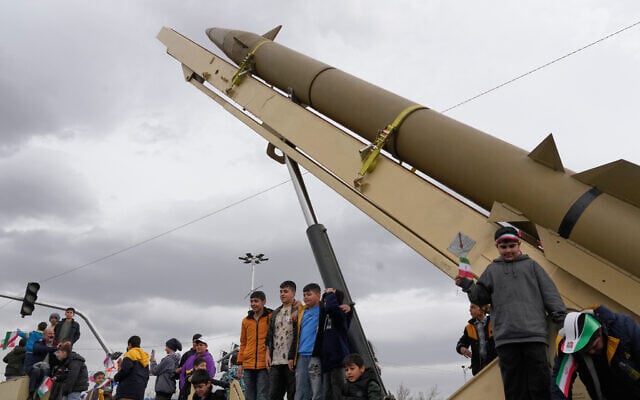
Conditions may not be ripe yet for the grand diplomatic moves that Trump is pushing, and in Netanyahu’s view, it seems that further military operations may well be the only way to force Hamas and its patrons in Tehran to give in to US and Israeli demands.
At some point, though, like his WWII role model, Netanyahu will be forced to reckon with the need to stop making war and instead embrace complementary diplomatic processes to cement the gains achieved on the battlefield.
-

-
-

-

-