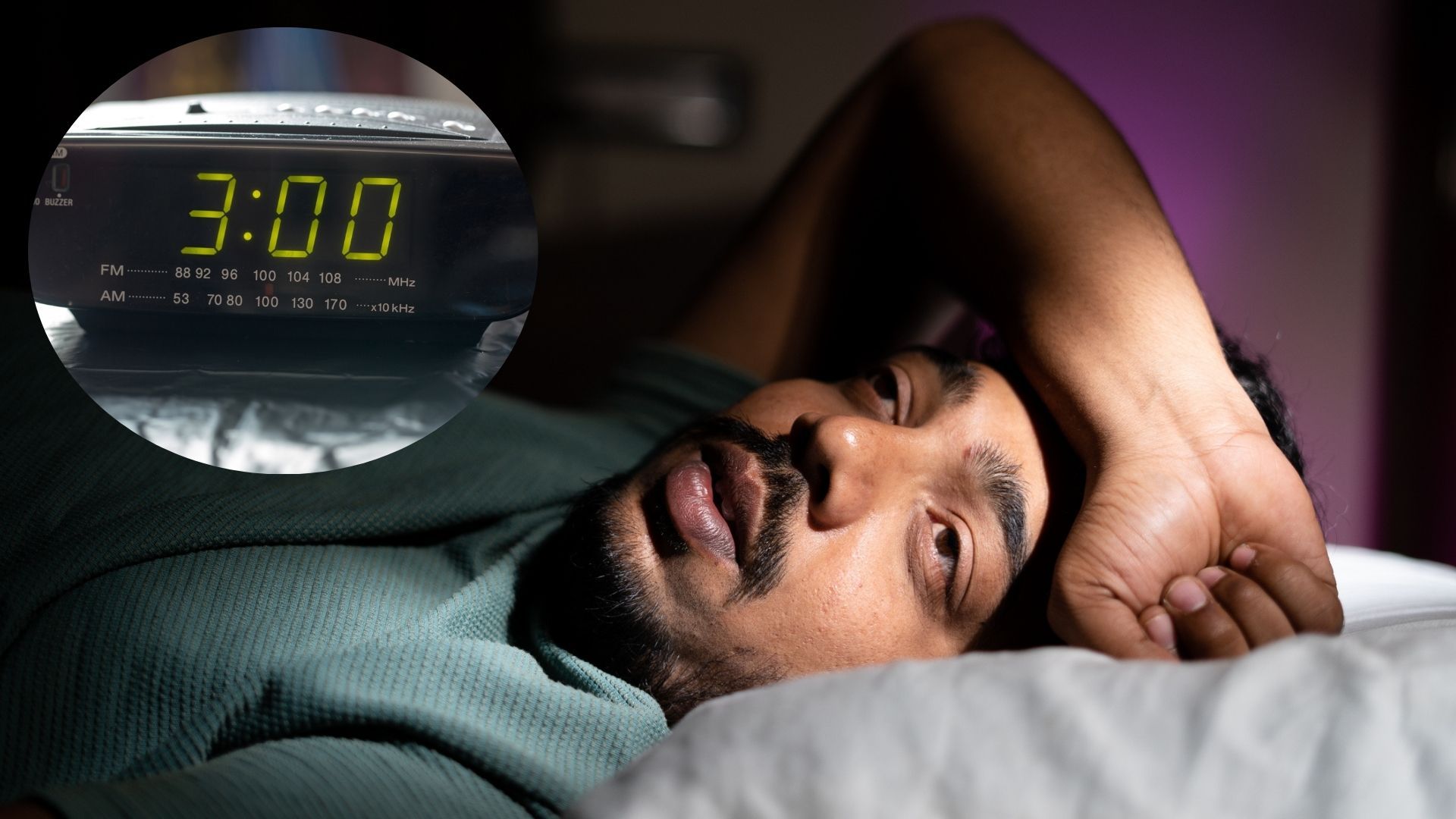
You’re not imagining it, the news cycle feels alarming right now and it’s almost impossible to get even a wink of sleep. If, like me, your bedtime is punctuated by 3 a.m. wake-ups or lying awake struggling to quieten racing thoughts, there are steps you can take to wind down and fall asleep.
“Your body won’t let you sleep right now. Not because you’re broken — because your nervous system thinks you’re in danger,” Dr. Christopher Allen, a sleep medicine physician, wrote on Instagram.
Here, alongside Dr. William Lu, also a sleep medicine physician, the two leading sleep doctors share their advice on how to calm our collective nervous systems in order to get a decent night’s rest. This is what they recommend…
How stress impacts your ability to sleep
Whether current events or circumstances in your private life are keeping you awake, a stressed out nervous system is a natural destroyer of sleep.
I know from my own experience of waking up at 3 a.m. that when your baseline level of cortisol (that’s the ‘stress’ hormone) is elevated, it can lead to nighttime disturbances.
If you’re awake at 3 a.m. doomscrolling… lying in bed with your heart racing… that’s not insomnia. That’s your nervous system on high alert
Dr Christopher Allen, a sleep medicine physician
Cortisol levels naturally begin to rise at around 3 a.m., before reaching a peak shortly after you wake in the morning, to help us feel alert. That’s called your Cortisol Awakening Response (CAR).
However, stress also triggers the production of cortisol.
So, when you go to bed feeling stressed or anxious, your baseline level of cortisol is higher than normal. That means when cortisol production naturally increases in the early hours, it’s enough to wake you up.
“If you’re awake at 3 a.m. doomscrolling… lying in bed with your heart racing, or feeling too wired to even close your eyes… that’s not insomnia. That’s your nervous system on high alert,” Dr Allen, a double-board certified physician in sleep medicine and pediatric neurology, wrote in an Instagram post.
7 expert-approved ways to calm your nervous system for better sleep
For me, waking up in the middle of the night with a pounding heart and whirring thoughts feels like game-over for my sleep. Here, two sleep doctors share their tips for falling back to sleep after waking at night, and how to skip the 3 a.m. wake-ups entirely…
1. Avoid news consumption too close to bedtime
If your stress is specifically triggered by world events, it’s important to set clear limits surrounding both the timing and length of your news consumption and how you are consuming your news.
“When you watch news that is alarming, especially close to bedtime, your brain can see it as a threat and activate stress systems designed to keep you alert,” explains Dr Lu, Medical Director at digital sleep clinic Dreem Health.
“This raises your cortisol and adrenaline, which prevents you from fully shutting down and relaxing. While you still may fall asleep, it would likely be lighter with increased wakeups throughout the night.”
Instead of ricocheting from news story to news story late into the night, Dr Allen recommends putting clear boundaries in place surrounding where, how and for how long you consume your news.
“Stop watching the news 60-90 minutes before bed,” Dr Allen writes. “Not because you ‘don’t care’… But because your brain can’t witness crisis after crisis and then power down like nothing happened. News earlier in the day. One trusted source. On a timer. Your empathy doesn’t require your insomnia.”
2. Try a pre-bed brain dump
Ruminating over an endless to-do list or world events can make it difficult to fall asleep, whether it’s at the beginning or middle of the night. Dr Allen recommends jotting down your thoughts before heading to bed to help quieten the endless stream of consciousness.
For prompts, Dr Allen suggests writing for three minutes on topics like; “what I’m carrying right now, what I cannot control, one thing I can do tomorrow.”
It’s important that you make these notes in a separate room to the one you sleep in to avoid forging a negative association with your bedroom.
3. Make your nighttime routine longer

In periods of high stress, a nighttime routine is crucial to helping wind down before bed. “On normal nights, twenty minutes to wind down is enough. Right now? You might need 45-90 minutes,” Dr Allen writes.
Your nighttime routine doesn’t have to be perfect, but it should be consistent and predictable, Dr Lu explains. “About 60 to 90 minutes before bed, start dimming lights and reducing stimulation so your body gets a clear signal that the day is winding down,” he recommends.
Your nighttime routine might include reading, gentle stretching or having a warm bath — anything that can shift your body into a calmer state.
4. Don’t check your phone
In the event that you find yourself wide awake at 3AM with your heart racing, your first thought might be to reach for your phone — don’t.
Not only will the blue light from your screen reduce the production of melatonin (the sleep hormone) you’re likely to find content on your phone that triggers the production of cortisol, whether it’s an email you need to respond to or a social media post you find upsetting.
Instead, Dr Allen recommends sitting up and breathing deeply for two minutes and reminding yourself that “this is my nervous system, not reality.”


5. Leave the room after 20 minutes of being awake
If after 20 minutes you haven’t managed to drift back to sleep, both Dr Allen and Dr Lu recommend leaving the bedroom entirely.
“If after 20 minutes you are still wide awake, it can be beneficial to get out of bed and do something very calm and mindless, like reading a few pages,” says Dr Lu.
6. Try the 4-7-8 breathing method
A racing heart and short, shallow breaths are the hallmarks of stress and anxiety. In order to relax and steady your breathing, Dr Allen recommends the 4-7-8 beathing method.
This is when you inhale for four seconds, hold your breath for seven seconds and then exhale for eight seconds. However, if holding your breath for seven seconds feels unrealistic during periods of high anxiety, tweak it accordingly.
Inhale for four seconds, hold for four seconds and exhale for six seconds, advises Dr Allen, who credits the breathing exercise with signaling ‘safety’ to your nervous system.

7. Practice cognitive shuffling
This isn’t mindfulness BS, this is neuroscience pulling you out of fight or flight
Dr Chris Allen, a sleep medicine physician
“If your mind won’t stop racing, [try] naming objects in the room, mentally listing categories,” advises Dr. Lu. This helps your brain switch off, enabling you to fall back to sleep.
For pointers on where to begin, Dr Allen suggests naming five things you can see, four things you can feel, three things you can hear, two things you can smell and one thing you can taste.
“This isn’t mindfulness BS,” Dr Allen concludes. “This is neuroscience pulling you out of fight or flight.”


Follow Digitpatrox on Google News and add us as a preferred source to get our up-to-date news, analysis, and reviews in your feeds.
-

-

-

-

-